

Présentez votre vente aux enchères à des collectionneurs du monde entier !
Soyez référencé dès maintenantEn vous abonnant, vous acceptez la politique de confidentialité. Désabonnez-vous à tout moment.
Barnebys HQ
Brahegatan 10
BOX 5038
114 37 Stockholm
Toutes les enchères / Mobilier, Design & Miroirs / Y PAOLO BUFFA (ITALIAN, 1903-1970), SIDEBOARD, CIRCA 1940
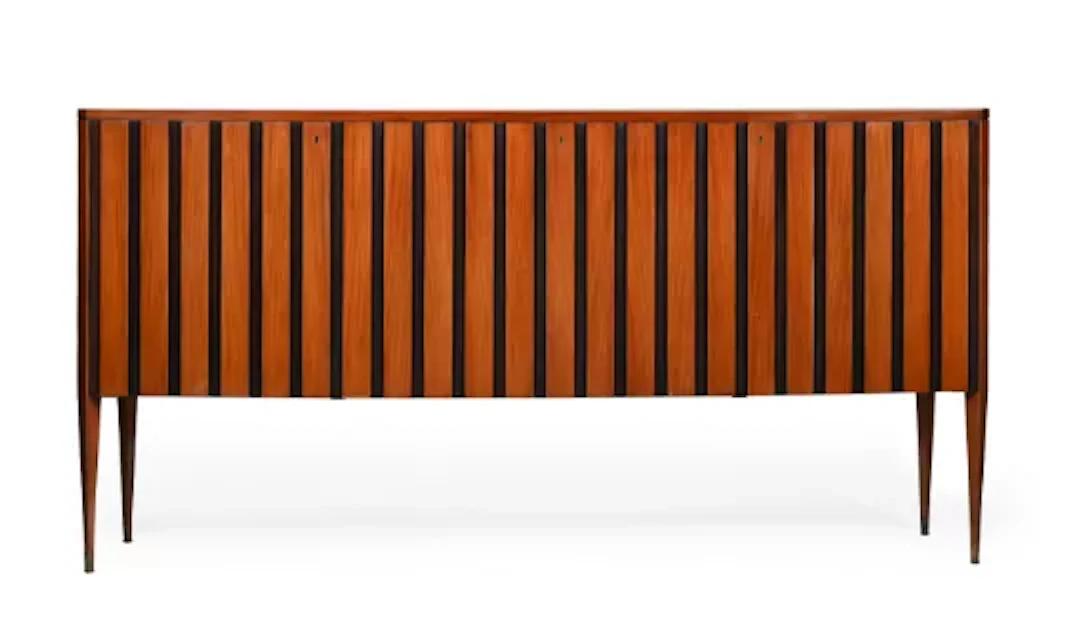
Y PAOLO BUFFA (ITALIAN, 1903-1970) SIDEBOARD, CIRCA 1940 East Indian rosewood, dark stained hardwood, cherrywood (interior), brass, mirror glass Made by Enrico Caimi, Cantù, Italy. Together with a certificate of expertise from the Paolo Buffa Archive. 124cm high, 240cm wide, 43cm deep Literature: Roberto Aloi, Esempi di arredamento moderno di tutto il mondo: Sale di soggiorno, camini, Milan, 1954, fig. 196 for a similar example Roberto Rizzi, I mobile di Paolo Buffa, exh. cat., Mostra Internazionale dell'Arredamento, Cantù, 2002, pp. 33, 35, 37 for a similar example Paolo Buffa was a Milanese architect and designer whose furniture combined the formal language of Neoclassicism and Art Deco with the cleaner lines of modern design. After graduating from the Politecnico di Milano in 1927, he briefly worked in the studio of Gio Ponti and Emilio Lancia before establishing his own practice with Antonio Cassi Ramelli. From the 1930s onwards, Buffa worked principally for a sophisticated Milanese clientele, producing individually conceived furniture in fine materials. This sideboard is characteristic of Buffa's furniture of the 1940s, combining the warmth and richness of East Indian rosewood with the graphic contrast of dark-stained hardwood. The tall, slender legs give the unusually wide cabinet an elegant lightness, while the repeated vertical bands across the doors create a strong architectural rhythm. Small brass key escutcheons provide restrained accents to the otherwise highly controlled façade, with the use of cherrywood to the interior reflecting the care given to both the visible and functional elements of the piece. Buffa was particularly noted for his use of precious woods, often enhanced by fine linear decoration and brass details. Cantù, the town situated north of Milan, had long been an important centre of Italian cabinetmaking and furniture production and Buffa worked closely with the highly skilled local craftsmen to realise his designs. His furniture was consequently distinguished not only by its design but also by the quality of its execution. Condition Report Disclaimer, Y, Y PAOLO BUFFA (ITALIAN, 1903-1970) SIDEBOARD, CIRCA 1940 East Indian rosewood, dark stained hardwood, cherrywood (interior), brass, mirror glass Made by Enrico Caimi, Cantù, Italy. Together with a certificate of expertise from the Paolo Buffa Archive. 124cm high, 240cm wide, 43cm deep Literature: Roberto Aloi, Esempi di arredamento moderno di tutto il mondo: Sale di soggiorno, camini, Milan, 1954, fig. 196 for a similar example Roberto Rizzi, I mobile di Paolo Buffa, exh. cat., Mostra Internazionale dell'Arredamento, Cantù, 2002, pp. 33, 35, 37 for a similar example Paolo Buffa was a Milanese architect and designer whose furniture combined the formal language of Neoclassicism and Art Deco with the cleaner lines of modern design. After graduating from the Politecnico di Milano in 1927, he briefly worked in the studio of Gio Ponti and Emilio Lancia before establishing his own practice with Antonio Cassi Ramelli. From the 1930s onwards, Buffa worked principally for a sophisticated Milanese clientele, producing individually conceived furniture in fine materials. This sideboard is characteristic of Buffa's furniture of the 1940s, combining the warmth and richness of East Indian rosewood with the graphic contrast of dark-stained hardwood. The tall, slender legs give the unusually wide cabinet an elegant lightness, while the repeated vertical bands across the doors create a strong architectural rhythm. Small brass key escutcheons provide restrained accents to the otherwise highly controlled façade, with the use of cherrywood to the interior reflecting the care given to both the visible and functional elements of the piece. Buffa was particularly noted for his use of precious woods, often enhanced by fine linear decoration and brass details. Cantù, the town situated north of Milan, had long been an important centre of Italian cabinetmaking and furniture production and Buffa worked closely with the highly skilled local craftsmen to realise his designs. His furniture was consequently distinguished not only by its design but also by the quality of its execution. PAOLO BUFFA (ITALIAN, 1903-1970), Literature:, Condition Report Disclaimer
Estimation:€3,497.76
Vers la vente aux enchèresVoir tous les objets deDreweattsouMobilier, Design & Miroirs
Estimation:
€3,497.76
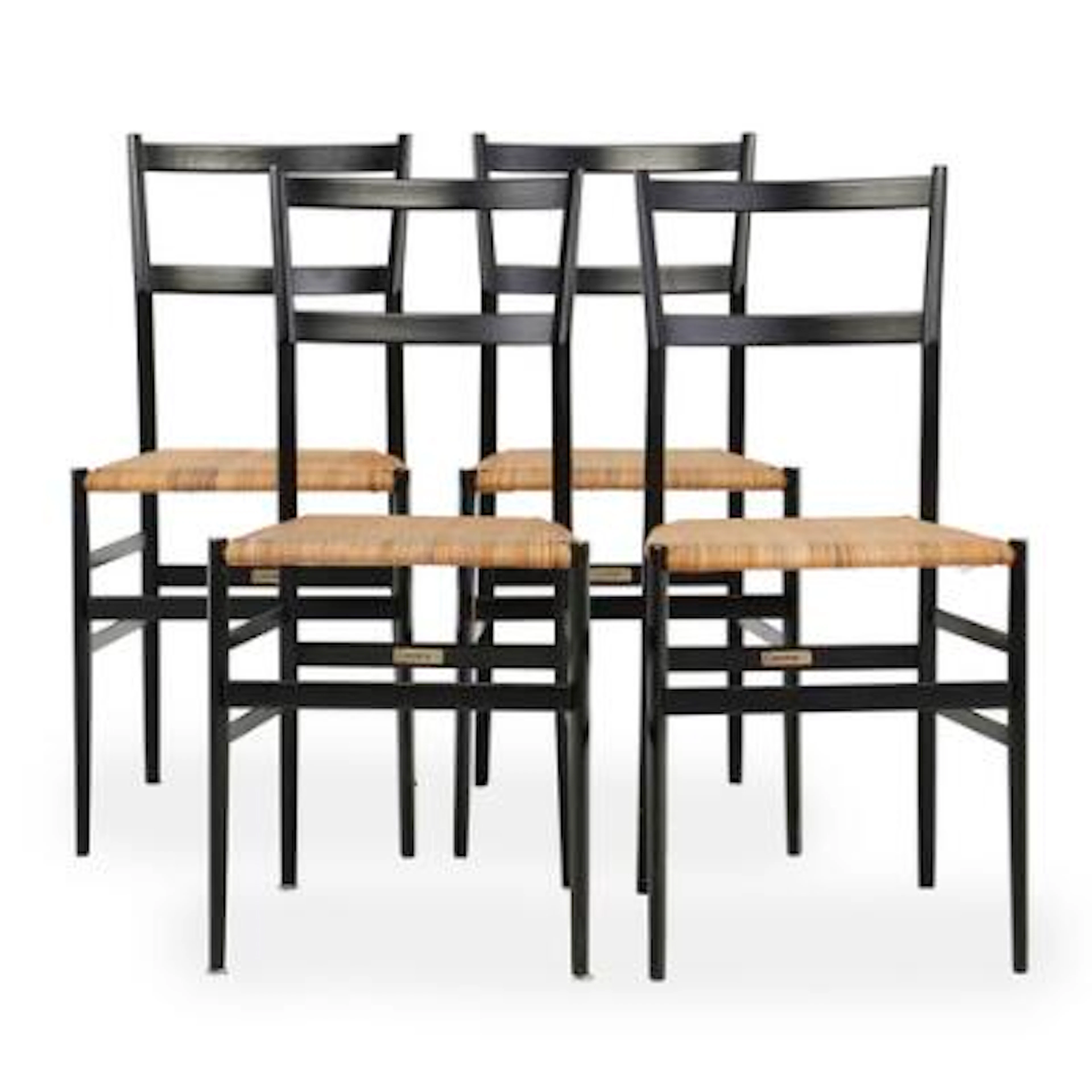
Gio Ponti: “Superleggera”. Four dining chairs with black lacquered
09/22/2026

€1,939.62
Est. : €2,675.58
Présentez votre vente aux enchères à des collectionneurs du monde entier !
Soyez référencé dès maintenant
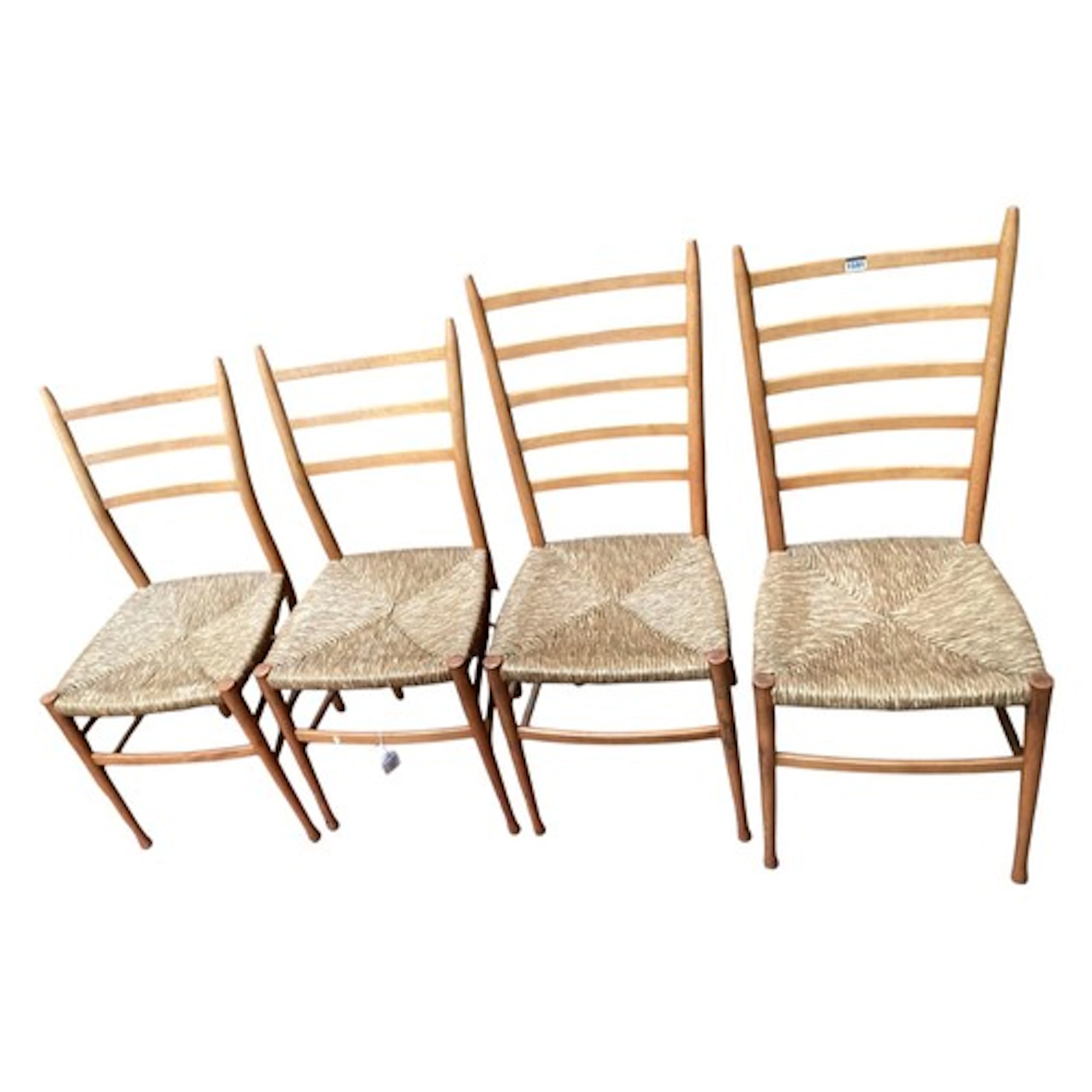
Two pairs of Gio Ponti Style ladderback dining chairs with r...
08/26/2026

€69.99
Est. : €35.06
Gio Ponti: “Superleggera”. Four dining chairs with black lacquered
08/25/2026
€2,140.22
Est. : €2,675.26