


Toutes les enchères / Art Contemporain / Vincenzo Bianchini (1903-2000) - S/T (Retrato)

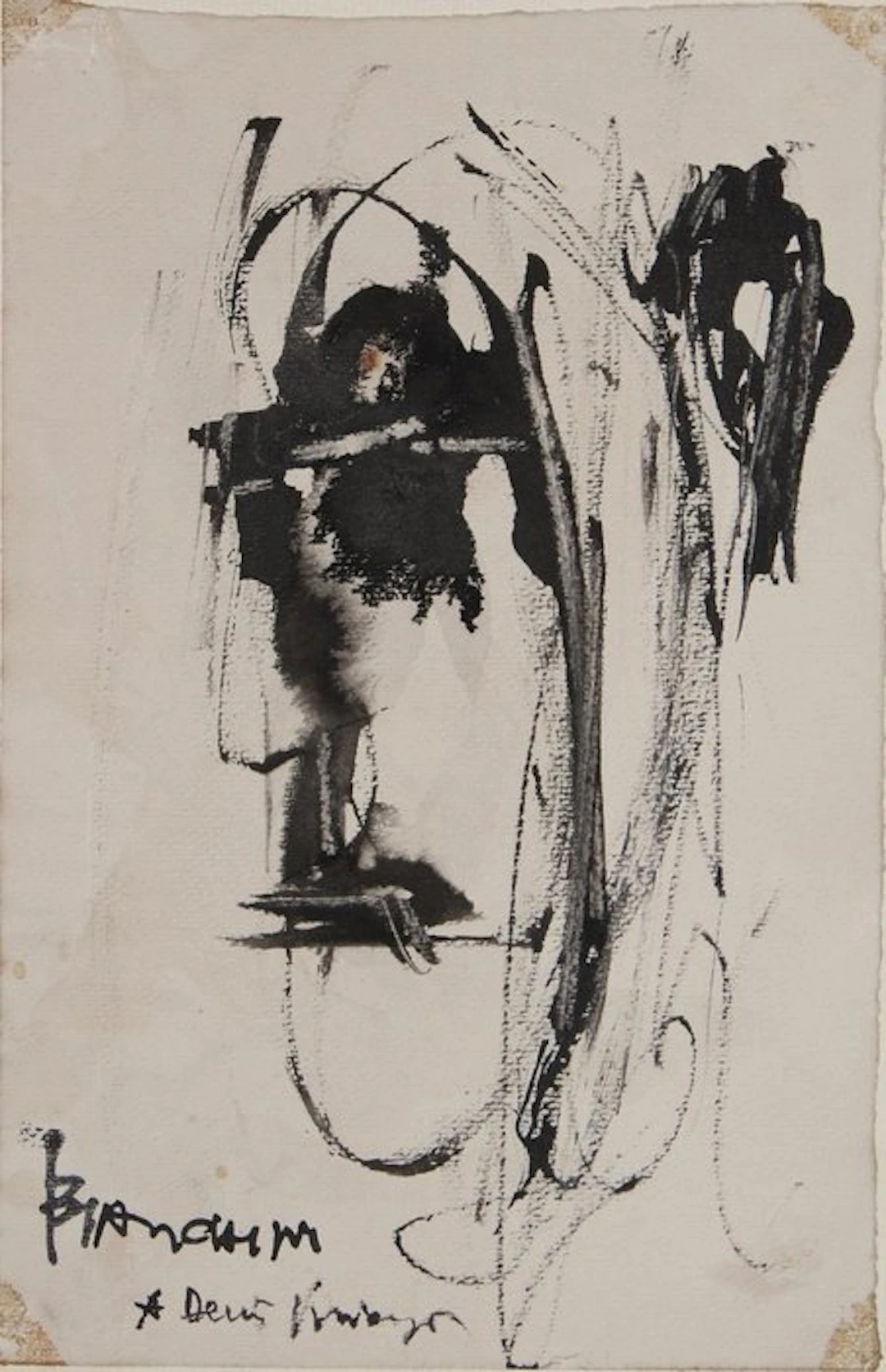
Materials: ink on paper glued to cardboard (no longer framed since both the glass and the back and the frame were in very poor condition). Inscriptions: bottom left, in black ink: «BIANCHINI / * Deu[…] K[…]» (could this be the name of the portrait subject?) Provenance: Private collection, Lambersart, Lille, France, by purchase and house clearance. Born in 1903, Vincenzo Bianchini studied Music and Classical Civilization before studying Medicine in Rome. He began to practice as a doctor in Sardinia and, subsequently, travelled to other countries, even to Ethiopia. In the 1950s, Bianchini moved to Iran to continue practicing medicine with the aim of serving residents in rural areas where people lacked access to adequate health care, such as Abadan, in Khuzestan Province, in the southwest of the country. This new personal mission would mark the beginning of one of his greatest adventures, not only as a physician but also as an emerging artist, since art had always been his most enduring source of inspiration. During the 1960s and up to the mid-1970s, he integrated into the artistic and intellectual milieu of modernist Iran and interacted closely with renowned figures such as Bahman Mohasses, Parviz Tanavoli, and Ebrahim Golestan, among many others. He stood out especially for his sensitive, painterly exploration of the local rural landscape and the communities that inhabited it, but also for his monumental sculptures, his poetry, and his philosophical writings. His radical approach to painting and his bold juxtaposition of primitivism and expressionism established him as a truly innovative artist during a period of deep social and cultural changes in the region. Bianchini’s work is distinguished by prioritizing feeling; perhaps one can even sense that the painter came from the medical field given the meticulous analysis he conducts of his subjects. The artist’s deep humanism, combined with his respect for local cultures, endowed his work with a sense of spirituality and a supernatural grace, which can be appreciated in the present work. This canvas, with rich texture, offers a beautiful representation of one of the Middle East’s favorite themes—the ubiquitous camel—though it finds a new expression under Bianchini’s reverent brush. His extensive travels through Iran and his interaction with local communities and the landscape also laid the groundwork for two of his most famous novels: Acqua del Diavolo (1964) and Deserti al Brado (1972). Bianchini dedicated his life to helping others, and it was in those encounters that he found the inspiration to unleash his artistic passion. He held numerous exhibitions between the 1950s and 1970s at the Palazzo delle Esposizioni in Rome (1942), the Montenapoleone Gallery in Milan (1958), the Borghese Gallery in Tehran (1958), the Italian Cultural Institute in Tehran (1960), and the European Art Center in Milan (1974), among many others. Many of his works are part of the permanent collection of the Tehran Museum of Contemporary Art (TMCOA), which confirms the artist’s deep devotion to Iran, where, over time, he felt more at home than in his native Italy. Excluding a period he spent in the Congo with the World Health Organization (WHO), Bianchini remained in Iran until 1978, a year that proved difficult but also decisive in his life. He was then compelled to return quickly to Europe, as he had lost his sight. He died peacefully in Switzerland in 2000, feeling more at home than in his native Italy. [Source: catalog note of an international auction] As a painter, he exhibited in both group and solo exhibitions. Group exhibitions - Rome – Palazzo delle Arti (1938) - Rome – Palace of Expositions (1942) - Tehran – 1965 International Fair - Tehran – 1970 International Fair - Paris – L’Humanité Festival (1971) Solo exhibitions - Tehran – Franco-Iranian Institute (1955) - Paris – Galerie Quentin Bochard (1956) - Paris – Galerie Duncan (1956) - Rome – La Marguttiana Gallery (1958) - Milan – Montenapoleone Gallery (1958) - Viterbo – Santoro Palace (1958) - Tehran – University – Faculty of Architecture (1958) - Florence – Il Numero Gallery (1959) - Tehran – Italian Cultural Institute (1960) - London – Christ Church Hall (1961) - Coquilathville (Congo) – Atheneum (1963) - Bari – La Vela Circle (1965) - Shiraz – University (1967) - Abadan – Salon de L’Annexe (1969) - Tehran – University – Faculty of Fine Arts (1971) - Algiers – National Library (1971) - Milan – Amicis Circle (1973) - Milan – European Art Center (1974) - Los Angeles – Ait Center Azari (1982) In addition to numerous shows in Brindisi, Taranto, Lecce, and Grottammare. [Source: Wikipedia]
Estimation:€450
Vers la vente aux enchèresVoir tous les objets deCatawikiouArt Contemporain
Estimation:
€450
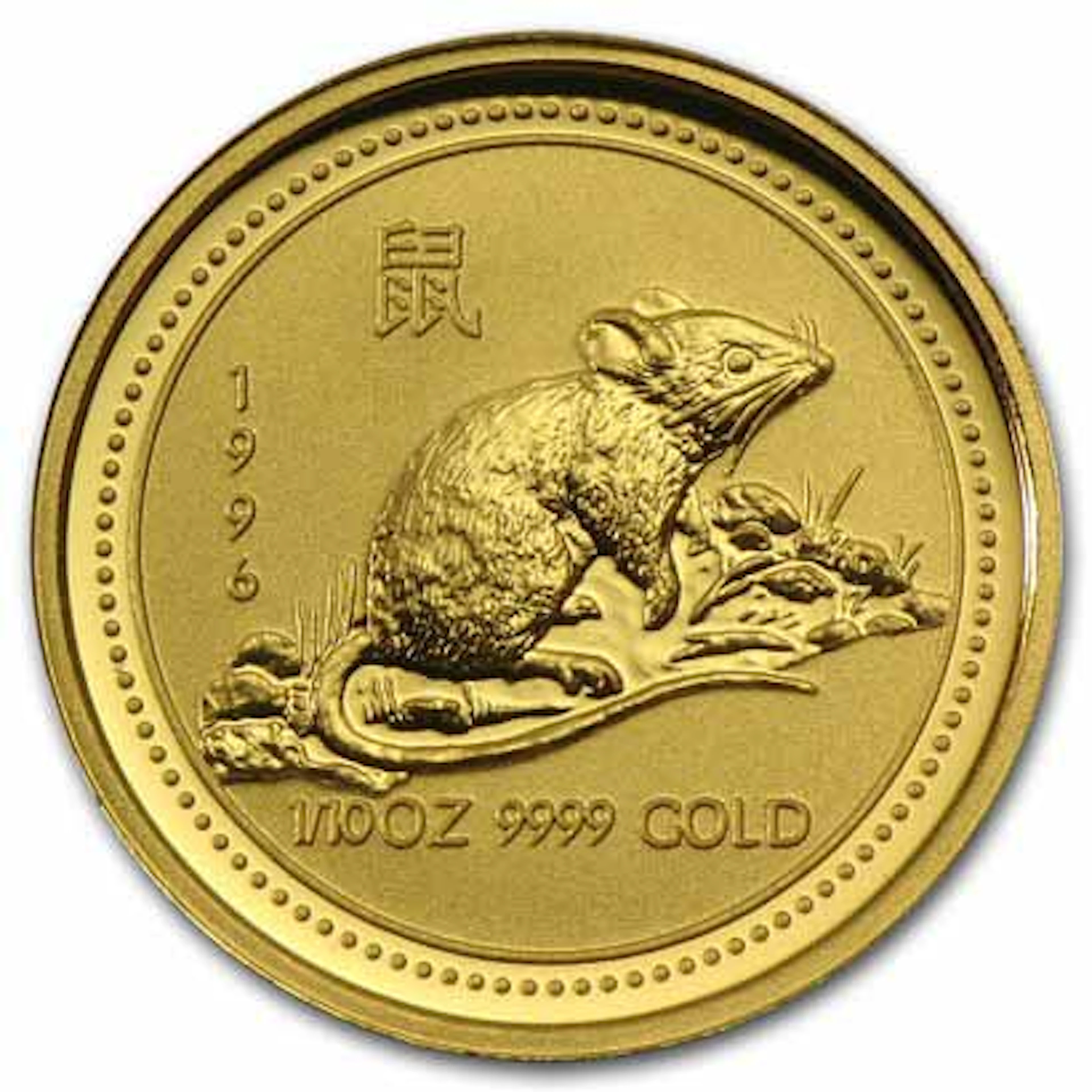
1996 Australia 1/10 oz Gold Lunar Rat (Series I)
12/06/2017
€399
Est. : €495.6
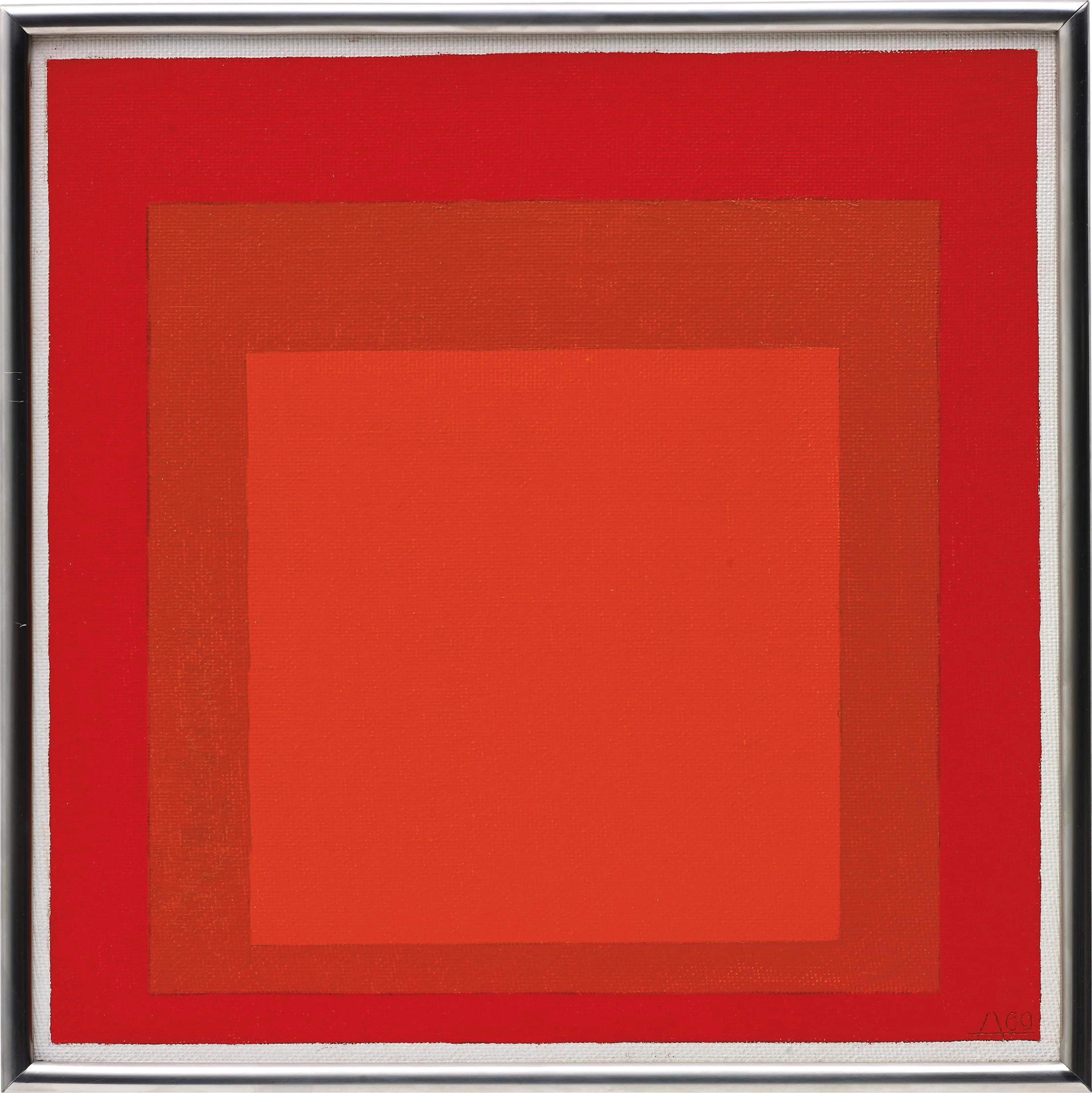
Study for Homage to the Square: Wet and Dry – Josef Albers
03/08/2017

€497,250
Est. : €175,500
Présentez votre vente aux enchères à des collectionneurs du monde entier !
Soyez référencé dès maintenantEn vous abonnant, vous acceptez la politique de confidentialité. Désabonnez-vous à tout moment.
Barnebys HQ
Brahegatan 10
BOX 5038
114 37 Stockholm
