




Toutes les enchères / Arts asiatiques / Two Egyptian Late Period Faience Amulets - Taweret & Pataikos

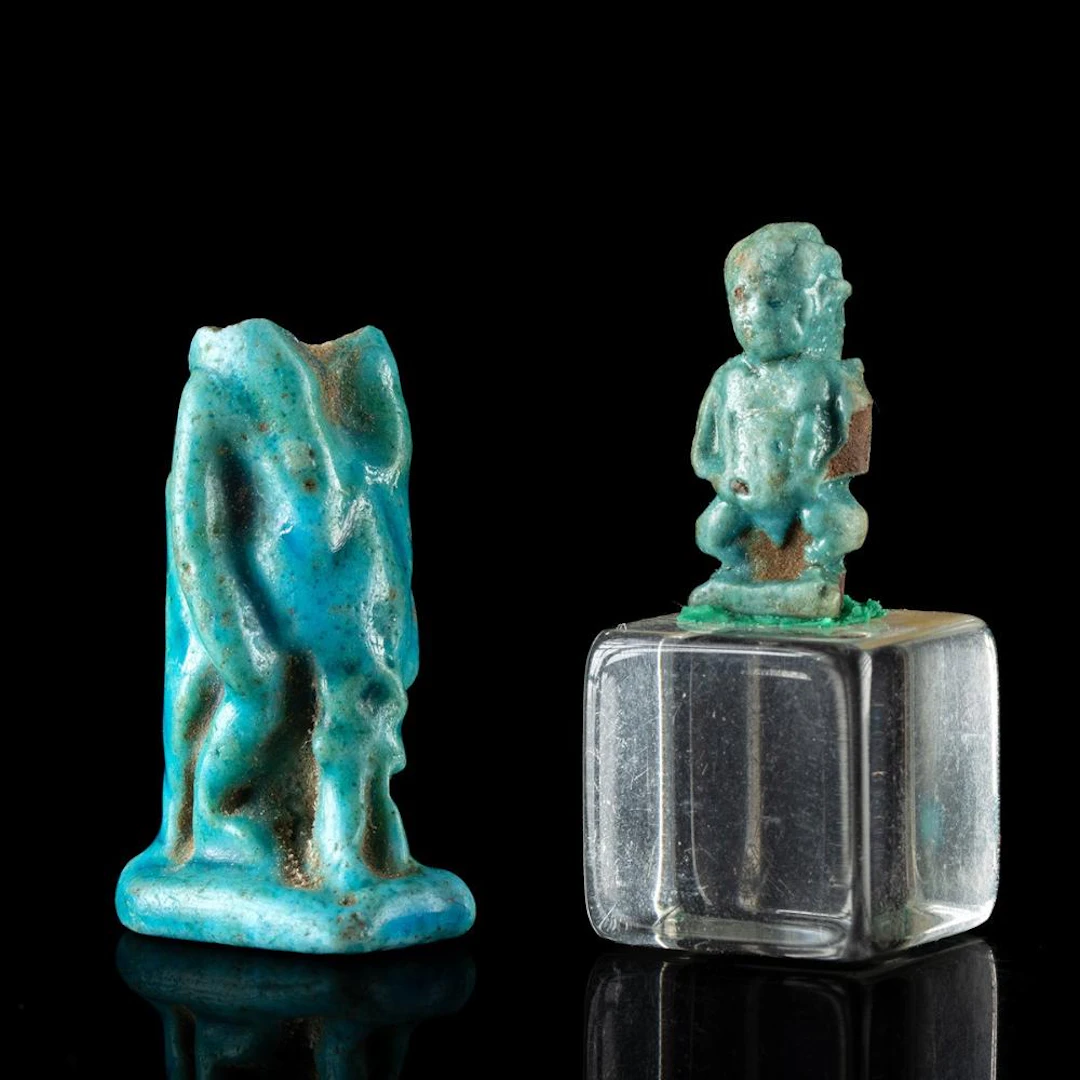
North Africa, Egypt, Late Period. A pair of miniature faience amulets in bright turquoise-blue glaze, each invoking a protective household deity. The larger, now headless, preserves the swollen belly, pendulous breasts, and upright hippopotamus stance of Taweret, the crocodile-tailed goddess who guarded women in childbirth; the sa glyph of protection supports her body from behind. The smaller depicts Pataikos, the squat dwarf god associated with Ptah, standing bow-legged with hands at his thighs, a form worn to repel snakes, scorpions, and malign spirits. Both were mold-formed in a silica paste and fired to a glassy alkaline glaze whose copper coloring approximated turquoise, a stone of regenerative power. Amulets of this scale were strung as personal jewelry in life and wrapped among the linen bandages of the dead. The Pataikos is presented on a clear display base. Taweret ("the Great One") was among the most widely owned deities in Egypt, a composite of hippopotamus body, lion limbs, and crocodile back and tail. Her ferocity was borrowed rather than feared: the hippopotamus cow's aggression in defending her calf made her the ideal guardian of pregnancy, labor, and the vulnerable first months of infancy. She belonged to domestic religion rather than temple cult, appearing on beds, headrests, cosmetic jars, and the amulets worn against the skin. Pataikos occupies the same apotropaic register. Named by Herodotus after the Phoenician Pataikoi figureheads, the dwarf god is understood as a youthful, potent manifestation of Ptah, the Memphite creator. Fuller versions of the type stand on crocodiles, grasp serpents in each fist, and wear a scarab atop the head, an iconographic compression of every threat a household needed warded off. By the Late Period both types were produced in enormous quantity in two-part molds, feeding a devotional market that extended from the living body to the mummy wrapping. Item # 204782
Estimation:€200.58
Vers la vente aux enchèresVoir tous les objets deArtemis Fine ArtsouArts asiatiques
Estimation:
€200.58
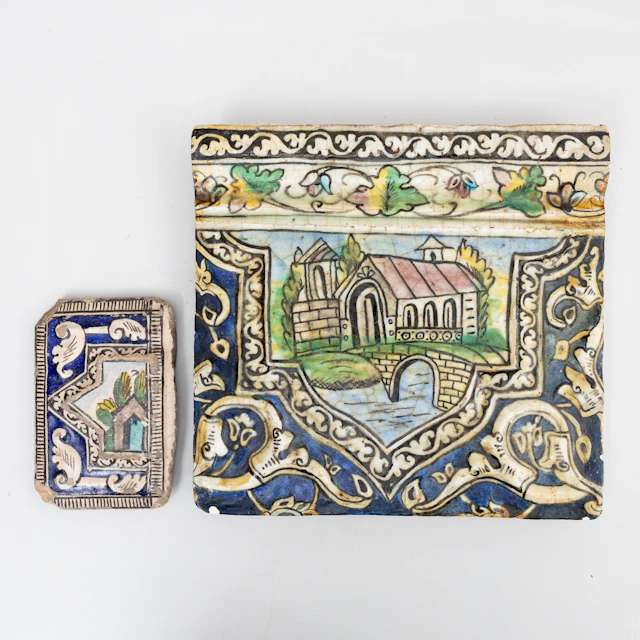
VÄGG/TAKDEKOR, keramik samt trä, Iran, 1900-tal.
10/24/2026
€31.43
Est. : €71.9
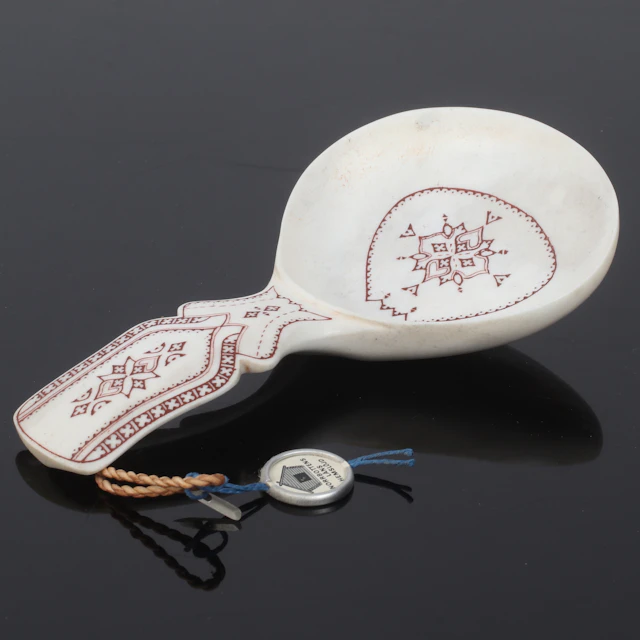
ANDERS SUNNA. Kåsa, helhorn, signerad. 1900-talets senare del.
10/24/2026
€125.72
Est. : €134.82
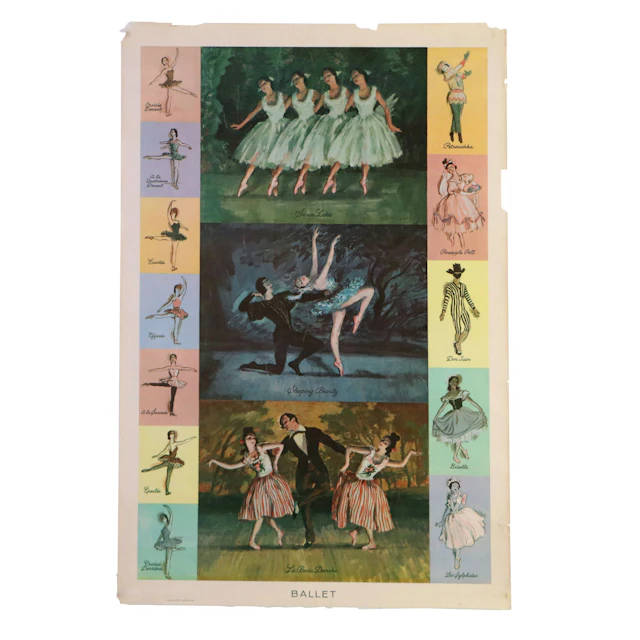
Mid Century Modern Offset Lithograph Instructional Poster "Ballet," 1959
10/24/2026
€40.11
Est. : €16.93




OCT 27 | 4:00 PM
Présentez votre vente aux enchères à des collectionneurs du monde entier !
Soyez référencé dès maintenantEn vous abonnant, vous acceptez la politique de confidentialité. Désabonnez-vous à tout moment.
Barnebys HQ
Brahegatan 10
BOX 5038
114 37 Stockholm
