
OCT 8 | 3:00 PM

Présentez votre vente aux enchères à des collectionneurs du monde entier !
Soyez référencé dès maintenantEn vous abonnant, vous acceptez la politique de confidentialité. Désabonnez-vous à tout moment.
Barnebys HQ
Brahegatan 10
BOX 5038
114 37 Stockholm
Toutes les enchères / Arts asiatiques / SIR EDWARD COLEY BURNE-JONES (BRITISH 1833-1898), STUDY OF A WOOD
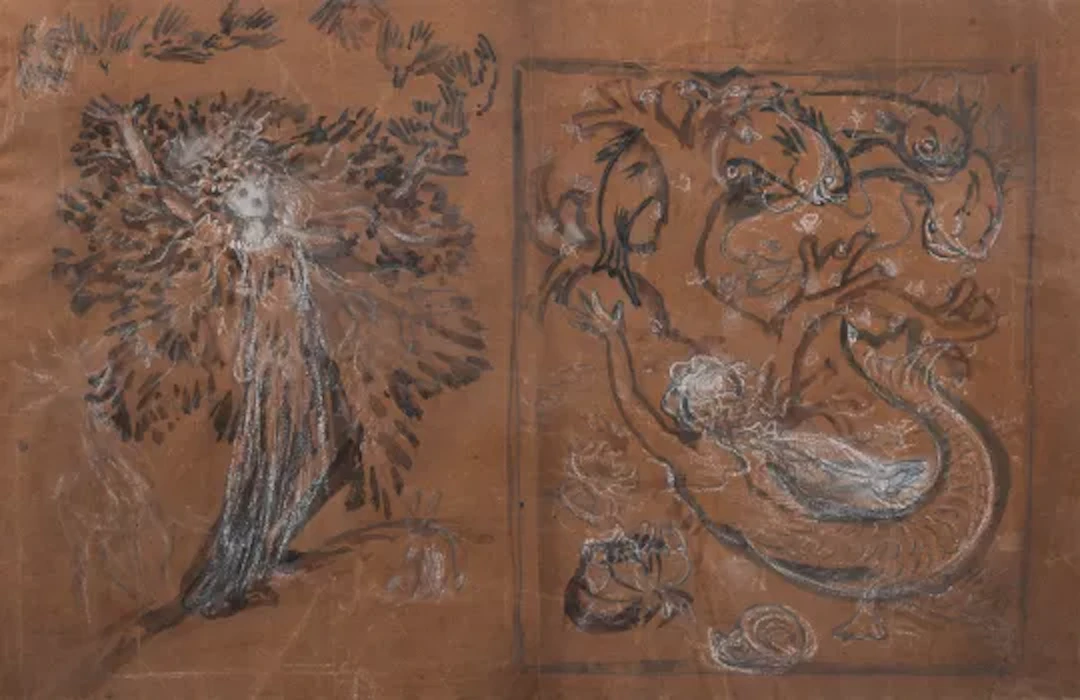
SIR EDWARD COLEY BURNE-JONES (BRITISH 1833-1898) STUDY OF A WOOD NYMPH AND A SEA NYMPH Brown and grey wash, white chalk over pencil on brown paper 35.5 x 51cm (13¾ x 20in.) Provenance: Hartnoll & Eyre, 1972 The collection of the Hon. Patrick and Lady Amabel Lindsay Exhibited: London, Hartnoll & Eyre, An Exhibition of Drawings and Watercolours by T. M. Rooke, 5-22 December 1972, no. 13 The present drawing, despite being included in Hartnoll & Eyre's 1972 exhibition of drawings by T.M. Rooke (1842-1942), is an early first design for Burne-Jones's Designs for sculptural reliefs: Sea-Nymph and Wood-Nymph, 1878 which preceded his important painting, A Sea-Nymph, 1881 (private collection) and its companion, A Wood Nymph, 1883 (South African Museum, Cape Town), which were commissioned by Burne-Jones's patron William Connal, (see J. Christian, Daughter's of Delight, exhibition and sale catalogue, Christie's, London, 2005). As Christian noted, op.cit. Burne-Jones fondness for the theme of the sea-nymph is usually linked to his acquisition of a house at Rottingdean, four miles east of Brighton in 1880, though as is often the case with Burne-Jones, the idea had been used earlier and subsequently recycled. Such subjects had their roots in earlier decorative work and his work record for 1875 records 'mermaids for woven stuffs', where we see two of these mer-figures, one moving from left to right holding fishes, one moving from right to left clasping mer-babies, they were Burne-Jones's contribution to a repeating pattern of fabric or wallpaper for William Morris. In 1878 Burne-Jones noted that he had designed three panels for low relief, one of a wood nymph, a water nymph and Hesperides. These were the Designs for sculptural reliefs: Sea-Nymph and Wood-Nymph, sold Christie's, London, 15 December 2010, lot 34, executed in bodycolour on brown paper and are framed within a narrow border. There is some evidence that these designs were originally conceived as a relief to decorate either end of a cassone or chest with the longer Hesperides panel decorating the front section. The present drawing is an early idea for the related Burne-Jones paintings, evidenced by the differences in the present drawing to the sculptural designs- the wood nymph is standing full-length, rather than emerging from the tree itself and the mermaid swims with her back to us and other sea creatures are included such as a pencilled-in whale and a large sea snail. The mermaid is reminiscent of a watercolour and bodycolour work by Burne-Jones, from 1882, see Christian, op.cit, fig. 23. The humorous element in the present work is characteristic of Burne-Jones (and not seen in Rooke's drawings) particularly the striking and comical depictions of the gaping eel-like fish, identified as gurnies and for which Burne-Jones executed independent studies, also on brown paper, sketches of which are in The Whitworth, University of Manchester and Palazzo Butera. The overdrawing in white chalk is typical of Burne-Jones and stylistically the birds are in keeping with his hand. Condition Report: Condition Report Disclaimer, SIR EDWARD COLEY BURNE-JONES (BRITISH 1833-1898), STUDY OF A WOOD NYMPH AND A SEA NYMPH, SIR EDWARD COLEY BURNE-JONES (BRITISH 1833-1898) STUDY OF A WOOD NYMPH AND A SEA NYMPH Brown and grey wash, white chalk over pencil on brown paper 35.5 x 51cm (13¾ x 20in.) Provenance: Hartnoll & Eyre, 1972 The collection of the Hon. Patrick and Lady Amabel Lindsay Exhibited: London, Hartnoll & Eyre, An Exhibition of Drawings and Watercolours by T. M. Rooke, 5-22 December 1972, no. 13 The present drawing, despite being included in Hartnoll & Eyre's 1972 exhibition of drawings by T.M. Rooke (1842-1942), is an early first design for Burne-Jones's Designs for sculptural reliefs: Sea-Nymph and Wood-Nymph, 1878 which preceded his important painting, A Sea-Nymph, 1881 (private collection) and its companion, A Wood Nymph, 1883 (South African Museum, Cape Town), which were commissioned by Burne-Jones's patron William Connal, (see J. Christian, Daughter's of Delight, exhibition and sale catalogue, Christie's, London, 2005). As Christian noted, op.cit. Burne-Jones fondness for the theme of the sea-nymph is usually linked to his acquisition of a house at Rottingdean, four miles east of Brighton in 1880, though as is often the case with Burne-Jones, the idea had been used earlier and subsequently recycled. Such subjects had their roots in earlier decorative work and his work record for 1875 records 'mermaids for woven stuffs', where we see two of these mer-figures, one moving from left to right holding fishes, one moving from right to left clasping mer-babies, they were Burne-Jones's contribution to a repeating pattern of fabric or wallpaper for William Morris. In 1878 Burne-Jones noted that he had designed three panels for low relief, one of a wood nymph, a water nymph and Hesperides. These were the Designs for sculptural reliefs: Sea-Nymph and Wood-Nymph, sold Christie's, London, 15 December 2010, lot 34, executed in bodycolour on brown paper and are framed within a narrow border. There is some evidence that these designs were originally conceived as a relief to decorate either end of a cassone or chest with the longer Hesperides panel decorating the front section. The present drawing is an early idea for the related Burne-Jones paintings, evidenced by the differences in the present drawing to the sculptural designs- the wood nymph is standing full-length, rather than emerging from the tree itself and the mermaid swims with her back to us and other sea creatures are included such as a pencilled-in whale and a large sea snail. The mermaid is reminiscent of a watercolour and bodycolour work by Burne-Jones, from 1882, see Christian, op.cit, fig. 23. The humorous element in the present work is characteristic of Burne-Jones (and not seen in Rooke's drawings) particularly the striking and comical depictions of the gaping eel-like fish, identified as gurnies and for which Burne-Jones executed independent studies, also on brown paper, sketches of which are in The Whitworth, University of Manchester and Palazzo Butera. The overdrawing in white chalk is typical of Burne-Jones and stylistically the birds are in keeping with his hand. Provenance:, Exhibited:, An Exhibition of Drawings and Watercolours by T. M. Rook, Designs for sculptural reliefs:, Sea-Nymph, Wood-Nymph, A Sea-Nymph, A Wood Nymph, Daughter's of Delight, op.cit. designed three panels for low relief, one of a wood nymph, a water nymph and Hesperides, Wood-Nymph, op.cit, Condition Report:, Condition Report Disclaimer
Estimation:€2,357.86
Vers la vente aux enchèresVoir tous les objets deDreweattsouArts asiatiques
Estimation:
€2,357.86
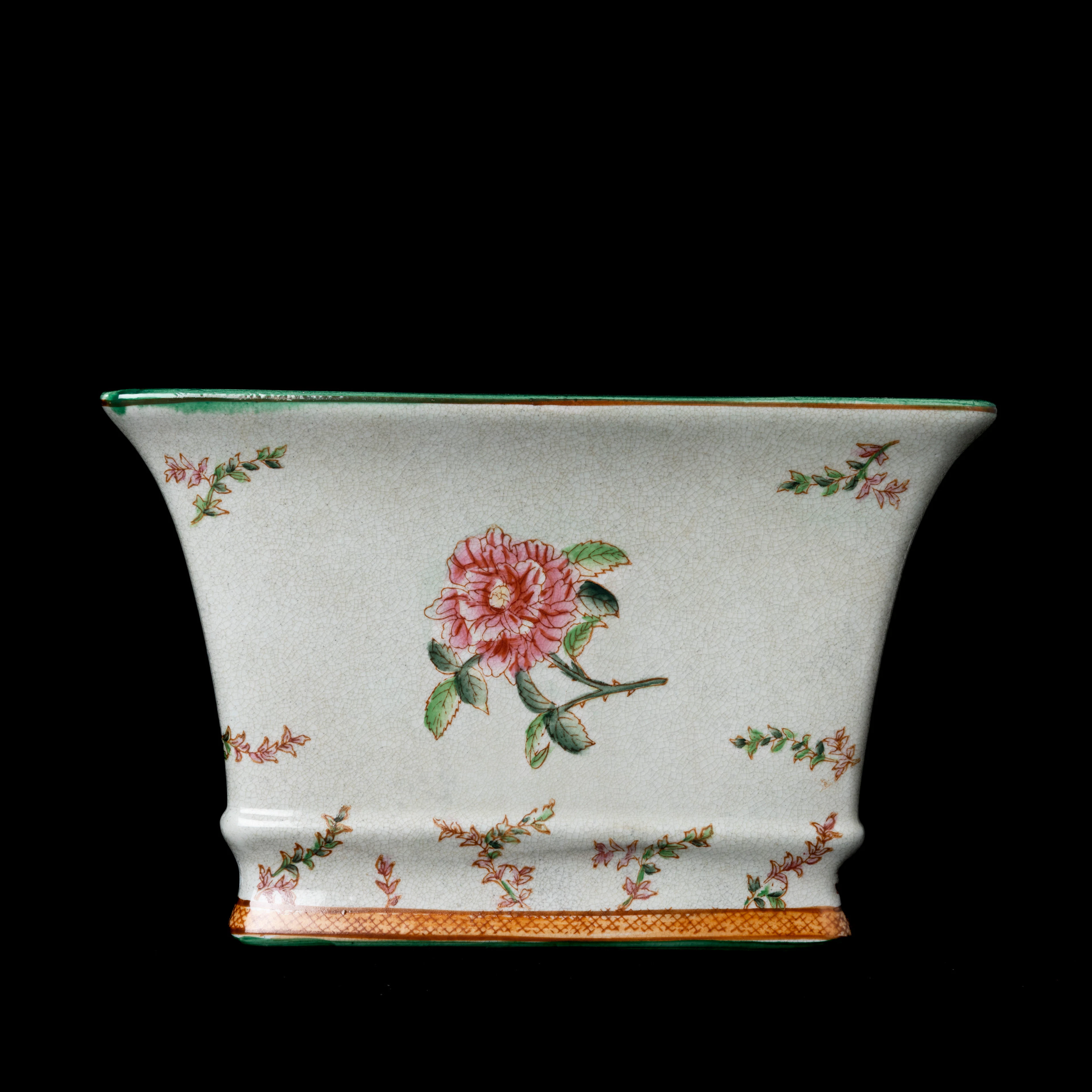
JARDINIERE, porslin, Simply Scandinavia, 2020-tal.
10/06/2026
€40.17
Est. : €71.04
OCT 8 | 3:00 PM


Présentez votre vente aux enchères à des collectionneurs du monde entier !
Soyez référencé dès maintenant
€4,000
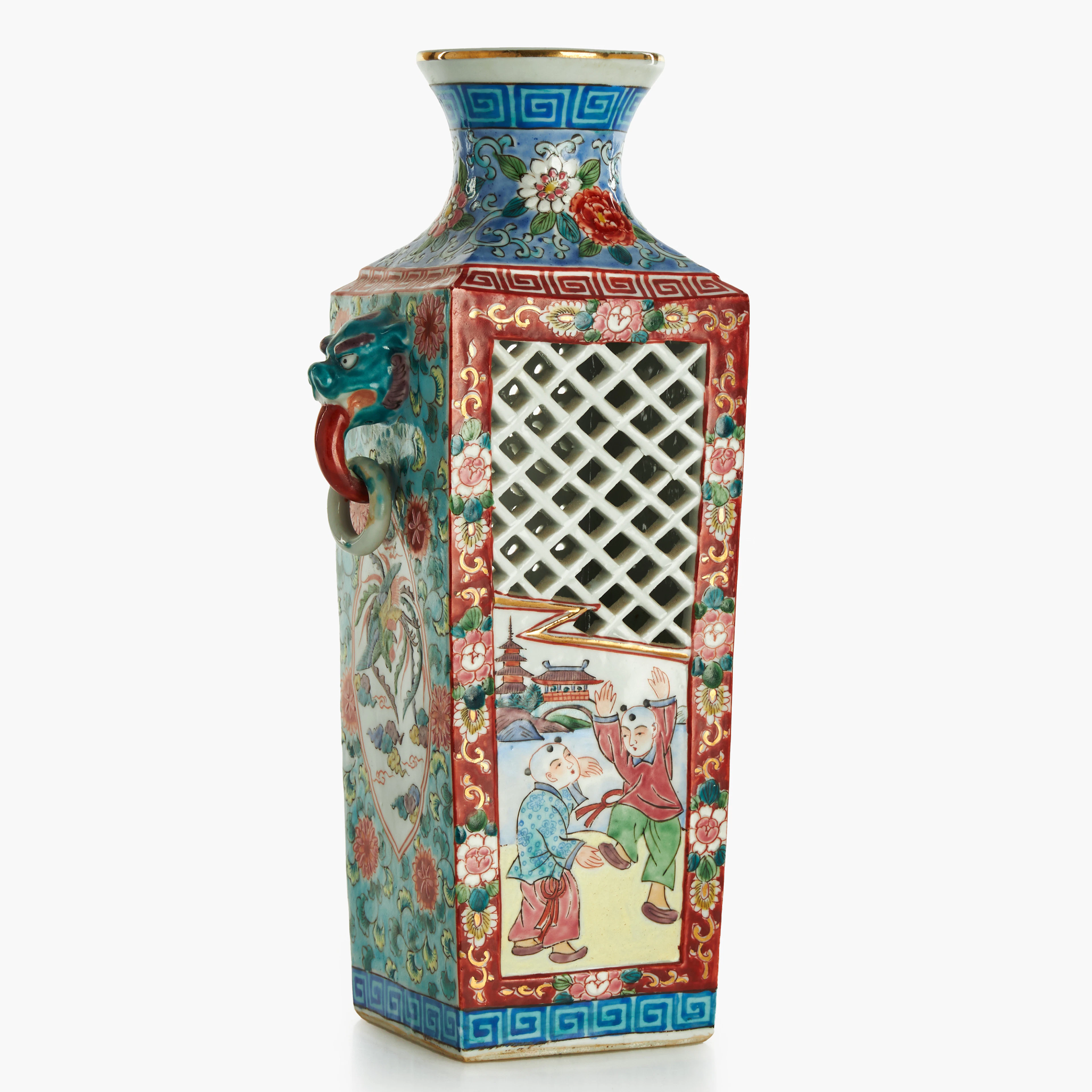
VAS, porslin, Kina, dekor i emaljfärger av figurscener, blommor och
10/06/2026
€26.78
Est. : €71.04
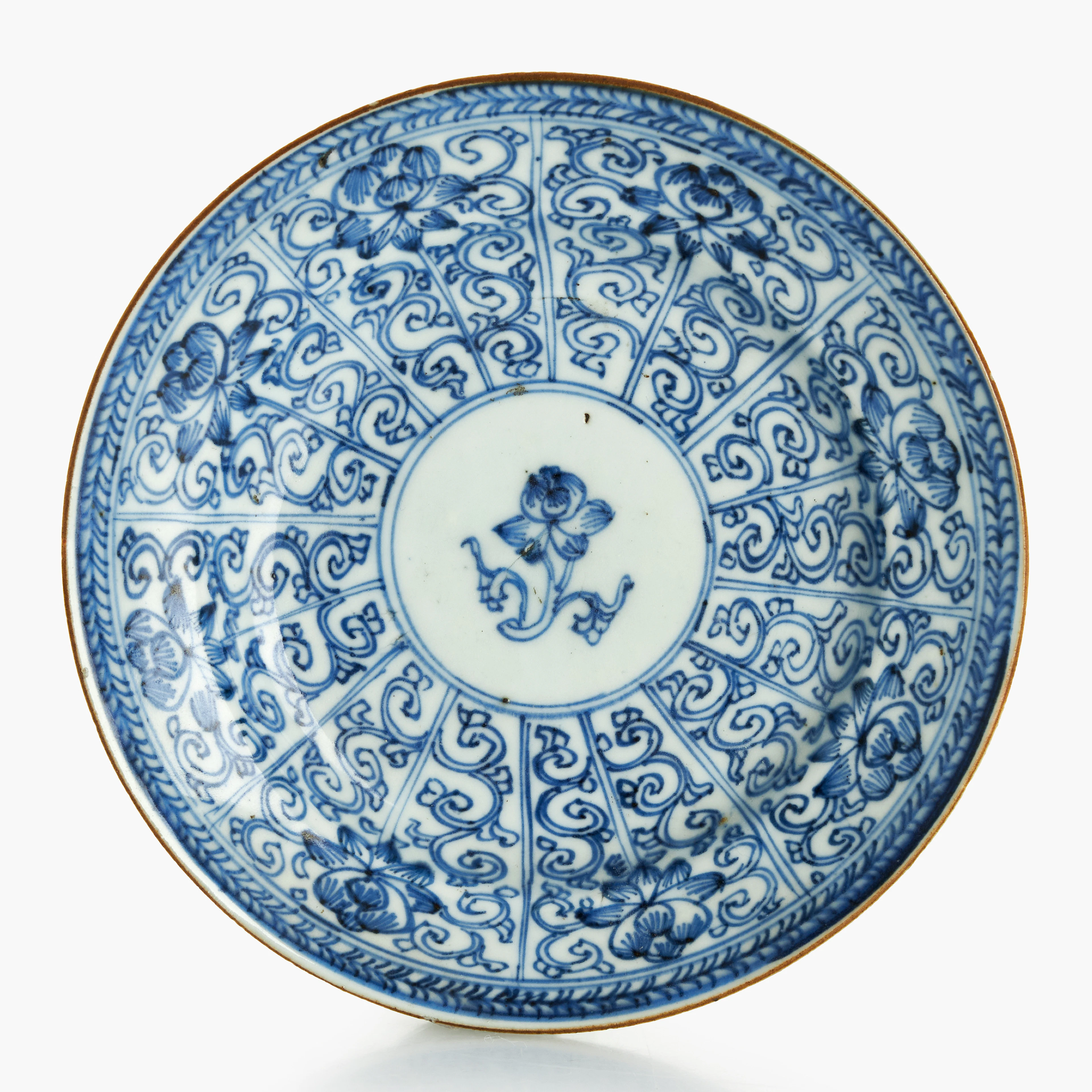
FAT, porslin, Kina, Kangxi (1661-1722), dekor i underglasyrblått.
10/06/2026
€93.75
Est. : €71.04