




Toutes les enchères / Ethnographie / rare trio of large shark jaws Taxidermy full body mount...

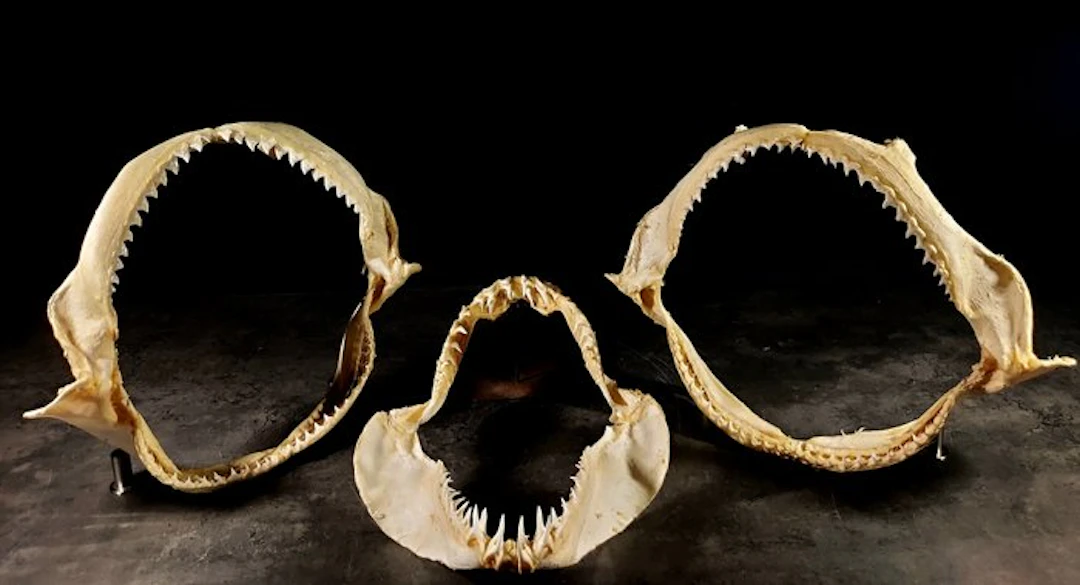
The Mako Shark (Isurus oxyrinchus) is a shark belonging to the Lamnidae family. Its maximum measured length is about 4 meters; it lives in tropical and subtropical waters. In the Mediterranean Sea it is present but not common. The mako is perhaps the shark with the most interesting anatomy; it looks like a perfect machine. It has a hydrodynamic snout, small pectoral fins to reduce drag, a rigid dorsal fin to stabilize the attitude, a cylindrical body with grooves for a streamlined gait, wide gill slits to retain more oxygen. Unpredictable in attacks, it uses its blazing acceleration to catch fast prey like tuna and bluefish. It is one of the few shark species, like the great white or the reef blacktip shark, able to perform breaching, that is, to jump out of the water, even well beyond the length of its body: in particular, the mako can rise, leaping, up to 6 meters high above the surface. It can swim at speeds of 70 km/h. It feeds on bluefish and squid, but also hunts large fish (including marlin and swordfish). The mako shark has large, particularly sharp teeth that protrude outward from the mouth even when it is closed. Width 25 cm. Height 34.5 cm. Depth 10 cm. The bronze shark is a large shark belonging to the genus Carcharhinus and to the family Carcharhinidae, the only member of the genus that is found mainly at temperate latitudes. The species is distributed in the Atlantic Ocean, in the waters off South Africa, in the Pacific Ocean, near Australia and New Zealand, and with some sightings in equatorial regions. The species inhabits brackish rivers, shallow bays and ports, but also waters up to 100 meters deep and offshore. Females live separated from males for most of the year, and undertake seasonal migrations. This is a large animal, reaching 3.3 meters in length, and is difficult to distinguish from other Carcharhinus. The distinctive feature are the upper teeth, hooked and slender, the absence of a interdorsal ridge, and the uniform bronze coloring. A rapid predator, its diet mainly consists of cephalopods, bony fish, other cartilaginous fish, often gathering in large groups to leverage numerical advantage. In South Africa, the species congregates in schools to pursue migration of sardines. Although not listed among species dangerous to humans, the bronze shark has featured in some non-fatal attacks, mostly against fishermen with hooks and bathers. Width 40 cm. Height 29.5 cm. Depth 10 cm. The brown shark, Carcharhinus obscurus, is a shark species in the family Carcharhinidae and genus Carcharhinus, which lives in warm tropical and temperate waters worldwide. A generalist superpredator, it inhabits the coastal zone up to the outer continental shelf and the surrounding pelagic waters, and has been recorded to depths of about 400 meters. The various populations of this species migrate seasonally toward the poles in summer and toward the equator in winter. They can swim hundreds or even thousands of kilometers during these migrations. Being one of the largest species in its genus, it reaches lengths of 4.2 meters and body masses of 347 kg. The body is slender and elongated and is recognized by the short, rounded snout, long, crescent-shaped pectoral fins, the interdorsal crest, and the weakly marked tips of the fins. Adults have a very varied diet, consisting mainly of bony fish, cartilaginous fish and cephalopods, but also crustaceans, starfish, Bryozoa, sea turtles, marine mammals, carcasses, and waste. The species is viviparous and the reproductive cycle lasts three years. The female gives birth to 3 to 14 pups after a gestation of 22-24 months and takes another year to be ready to become pregnant again. It can also store sperm for a long time, since rarely does a suitable mating pair meet, due to the nomadic lifestyle of the species and the inherently small population size. Growth is slow, as they reach maturity at about 20 years. Given the low reproductive rate, the species is exposed and vulnerable to human activity. It is valued in commercial fishing for its fins, used in shark fin soup, as well as for its meat, skin, and liver oil. It is also hunted for recreational purposes. The International Union for Conservation of Nature (IUCN) has classified the species as globally endangered and vulnerable along the United States coasts, where the population has fallen by 15-20% in thirty years. In general, the species is potentially dangerous to humans due to its size, but confirmed cases of attacks on humans are rare. Width 36 cm. Height 31.5 cm. Depth 9.5 cm. Well-executed taxidermy, often of substantial size, three splendid jaws to start a new collection or to enrich an existing one. Good auction.
Estimation:€450
Vers la vente aux enchèresVoir tous les objets deCatawikiouEthnographie
Estimation:
€450
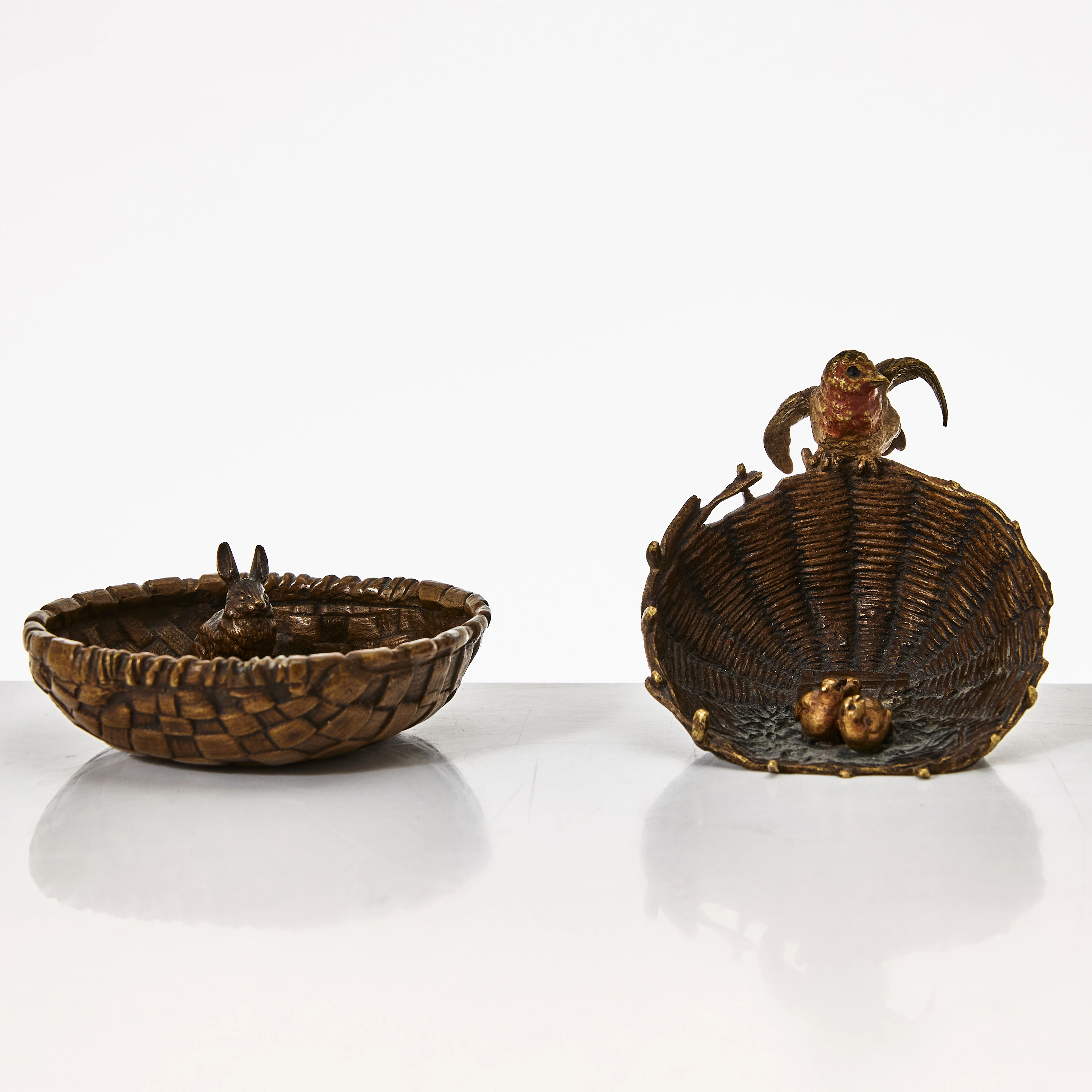
SKULPTURER, 2 st., Wienerbrons, omkring år 1900, i form av kanin i
10/17/2026
€224.64
Est. : €269.33
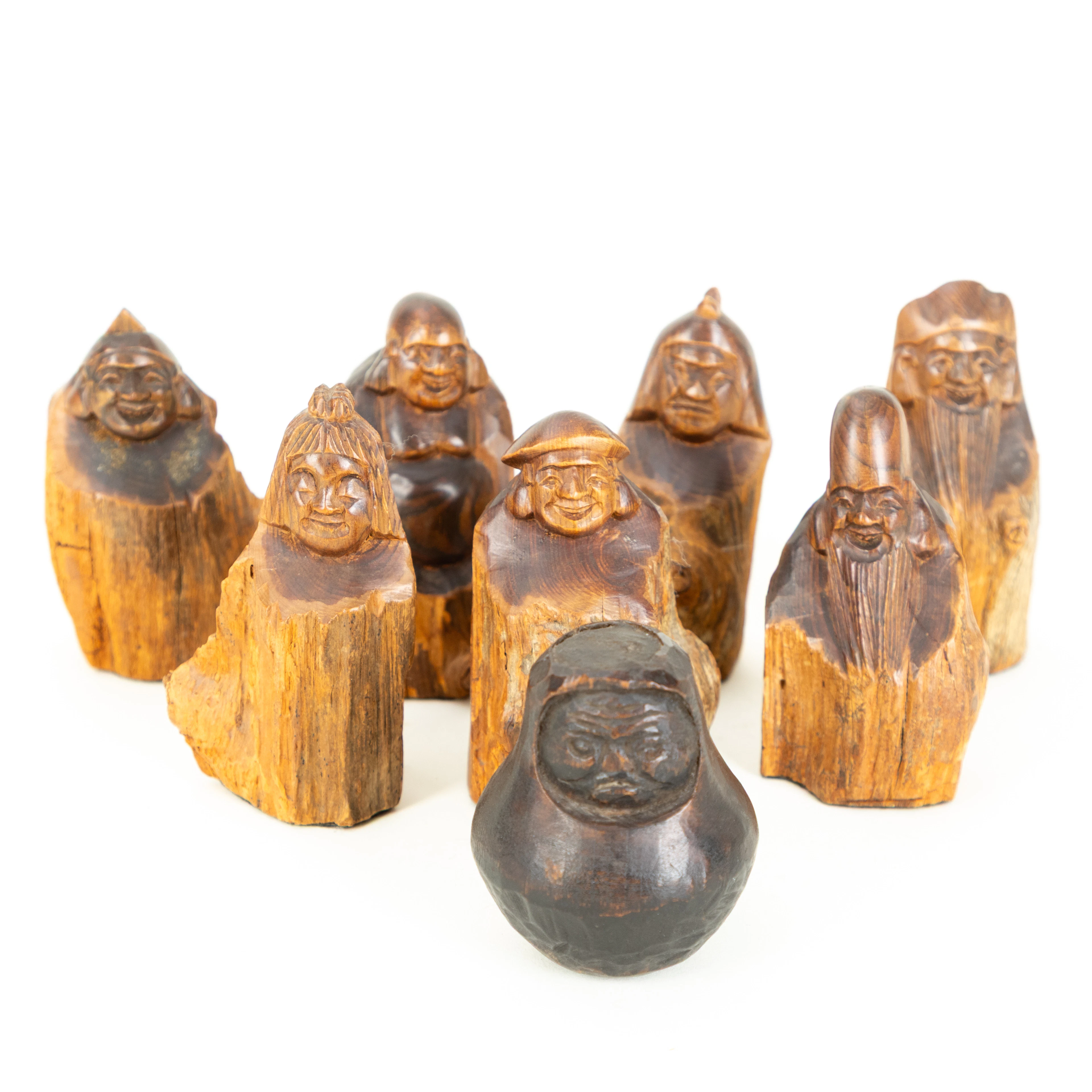
Sieben Glücksgötter und ein Stehauf-Daruma, Japan, 1. Hälfte 20. Jh. (8).
10/17/2026
€30
Est. : €100


1¢ SMILIN' SAM FROM ALABAM' FIGURAL SALTED PEANUT VENDING MACHINE
10/17/2026

€1,095.62
Est. : €1,777.26




OCT 23 | 8:00 AM
Présentez votre vente aux enchères à des collectionneurs du monde entier !
Soyez référencé dès maintenantEn vous abonnant, vous acceptez la politique de confidentialité. Désabonnez-vous à tout moment.
Barnebys HQ
Brahegatan 10
BOX 5038
114 37 Stockholm
