




Toutes les enchères / Argenterie & Orfèvrerie / Queen Anne silver taperstick London 1704 Richard Syngin (Syng)

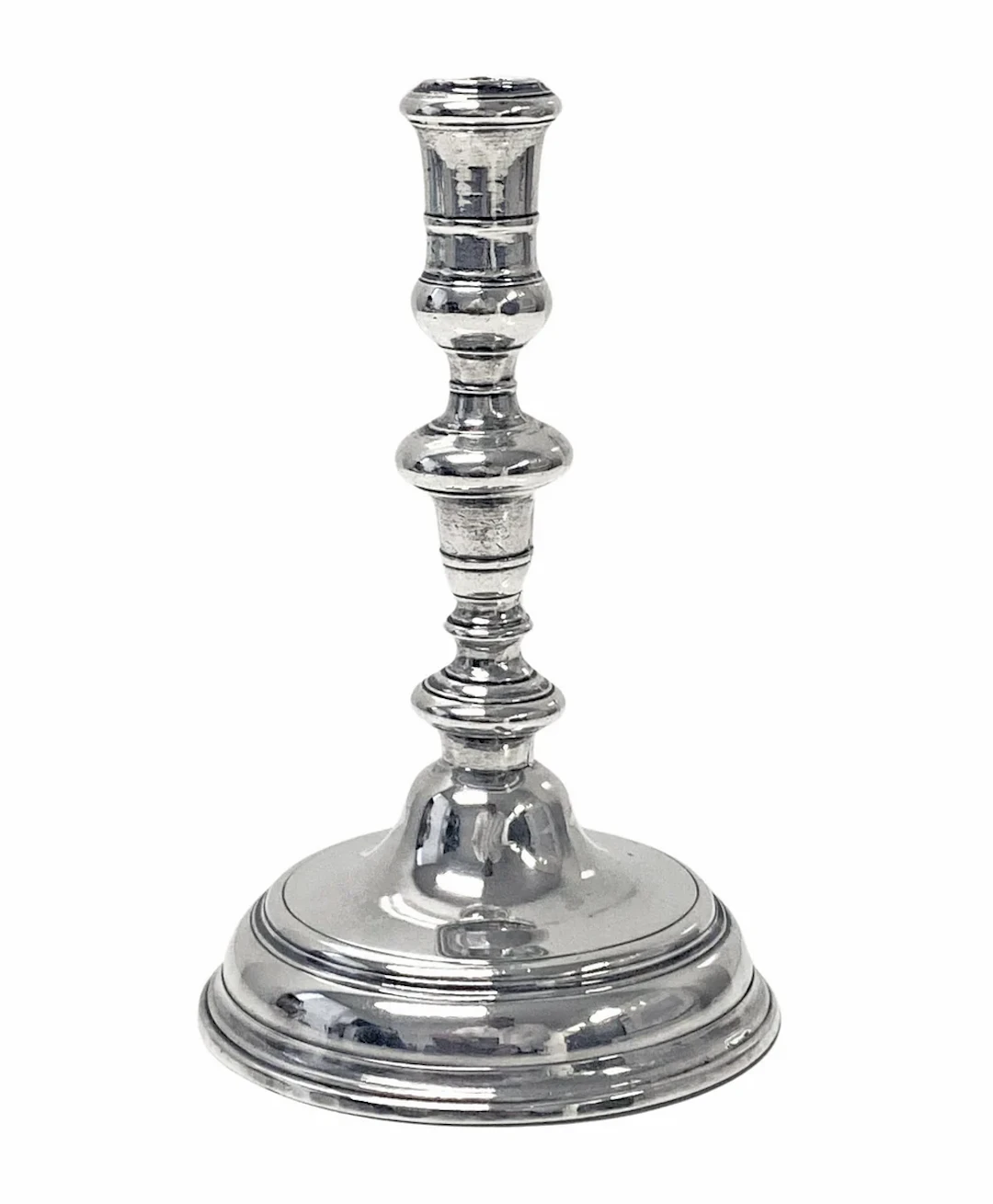
Queen Anne silver taperstick London 1704 Richard Syngin (Syng). The taperstick of plain early design with knopped stem and moulded circular base. Britannia standard silver. Weight 106 grams, 3.40 troy ounces. Height 10.7cm. Base diameter 7.0cm. Marks. Stamped underneath with a full set of clear English Britannia silver hallmarks. Literature. Silver tapersticks, averaging about 4- 5 inches high, are miniature table candlesticks used to hold a wax taper. Tapersticks would typically be found on a desk as they were not used for lighting; the melted sticks of wax were used for sealing letters, to give a flame for tobacco pipes or to light large candles. They are rarer than candlesticks and very few existed prior to the Queen Anne period. They usually appear in singles and pairs and are highly sought after. Condition: Very slightly out of round base (could easily be aligned but have left as not of any real concern, stands flat and straight). Good clear hallmarks to underside of base. Good colour and patina. Reflections purely from photography only. Note: Tapersticks were not made until the early 18th century. This is a very early example and unusual circular form for a taperstick. Provenance James Robinson Inc New York 1959 Louis Wine Ltd Toronto 2024, Queen Anne silver taperstick London 1704 Richard Syngin (Syng). The taperstick of plain early design with knopped stem and moulded circular base. Britannia standard silver. Weight 106 grams, 3.40 troy ounces. Height 10.7cm. Base diameter 7.0cm. Marks. Stamped underneath with a full set of clear English Britannia silver hallmarks. Literature. Silver tapersticks, averaging about 4- 5 inches high, are miniature table candlesticks used to hold a wax taper. Tapersticks would typically be found on a desk as they were not used for lighting; the melted sticks of wax were used for sealing letters, to give a flame for tobacco pipes or to light large candles. They are rarer than candlesticks and very few existed prior to the Queen Anne period. They usually appear in singles and pairs and are highly sought after. Condition: Very slightly out of round base (could easily be aligned but have left as not of any real concern, stands flat and straight). Good clear hallmarks to underside of base. Good colour and patina. Reflections purely from photography only. Note: Tapersticks were not made until the early 18th century. This is a very early example and unusual circular form for a taperstick. th, Provenance, James Robinson Inc New York 1959, Louis Wine Ltd Toronto 2024
Estimation:-
Vers la vente aux enchèresVoir tous les objets deLouis Wine LTDouArgenterie & Orfèvrerie
Estimation:
-
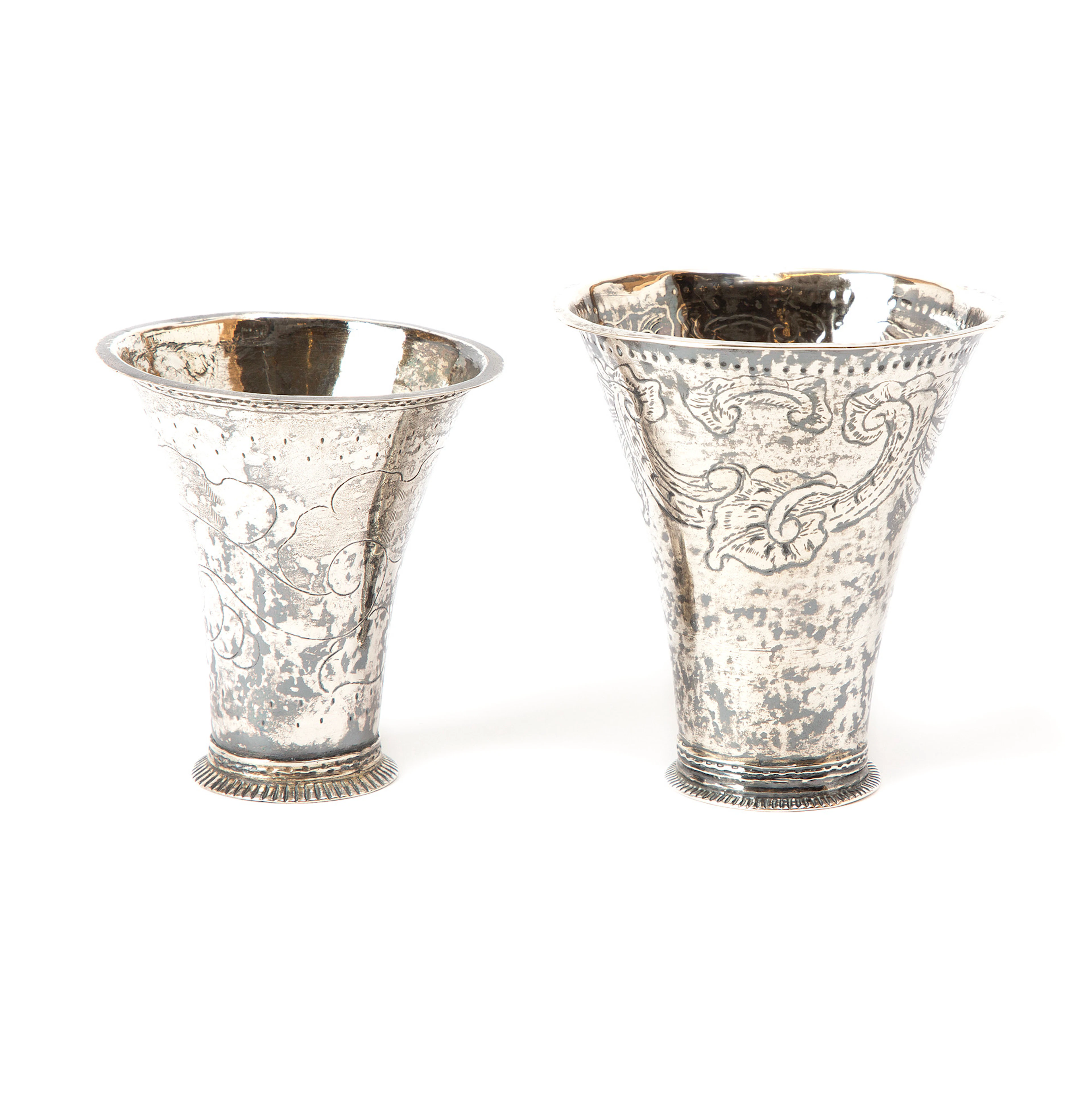
BÄGARE, 2 st, silver, 1700-talets senare del.
10/16/2026
€136.19
Est. : €179.2
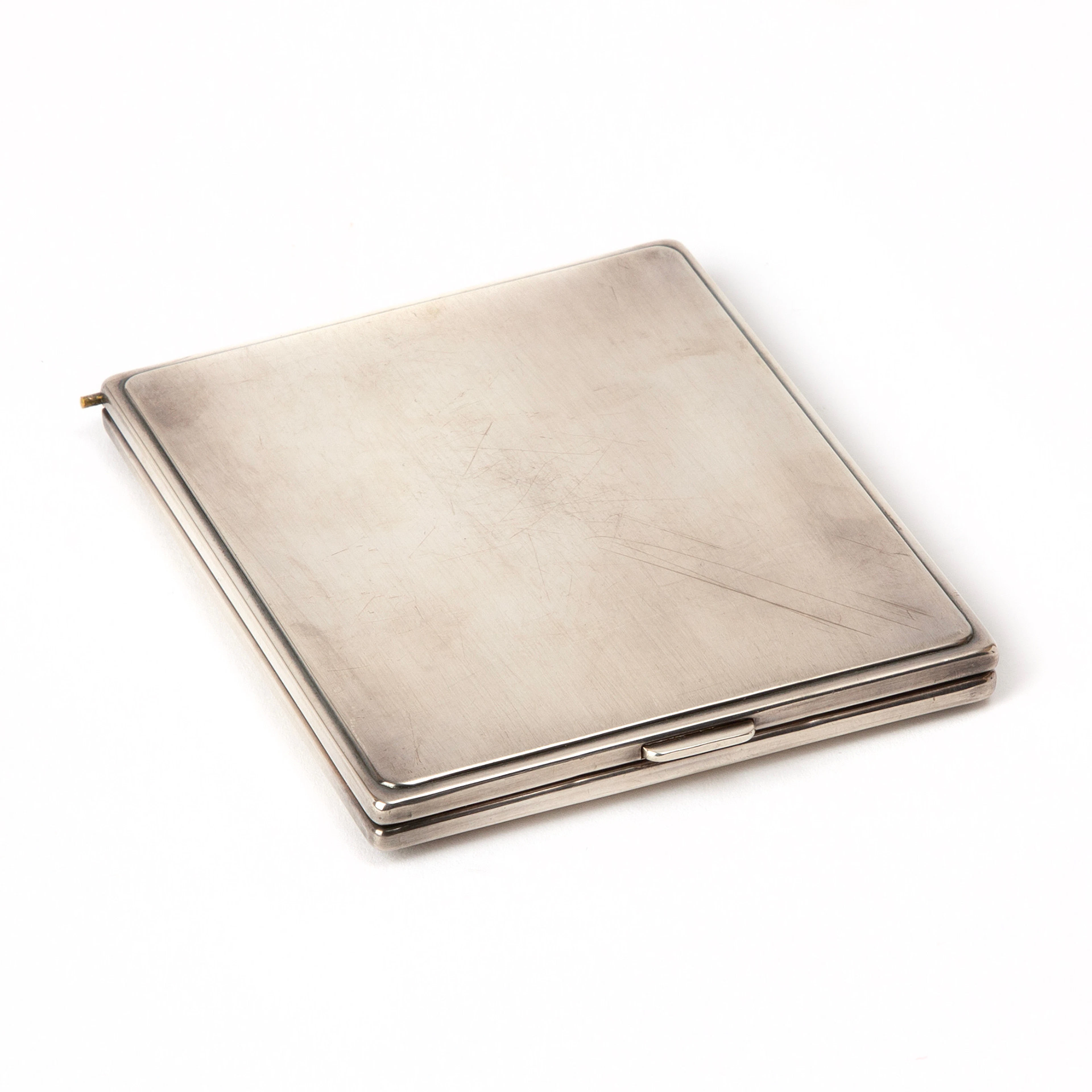
CIGARETTETUI, silver, Tesi, Göteborg, 1953.
10/16/2026
€135.74
Est. : €107.52




OCT 23 | 8:00 AM
Présentez votre vente aux enchères à des collectionneurs du monde entier !
Soyez référencé dès maintenantEn vous abonnant, vous acceptez la politique de confidentialité. Désabonnez-vous à tout moment.
Barnebys HQ
Brahegatan 10
BOX 5038
114 37 Stockholm
