OCT 8 | 3:00 PM

Présentez votre vente aux enchères à des collectionneurs du monde entier !
Soyez référencé dès maintenantEn vous abonnant, vous acceptez la politique de confidentialité. Désabonnez-vous à tout moment.
Barnebys HQ
Brahegatan 10
BOX 5038
114 37 Stockholm
Toutes les enchères / Art Ancien / Ptolemaic–Roman Period Terracotta Figure of Harpocrates - 6 cm

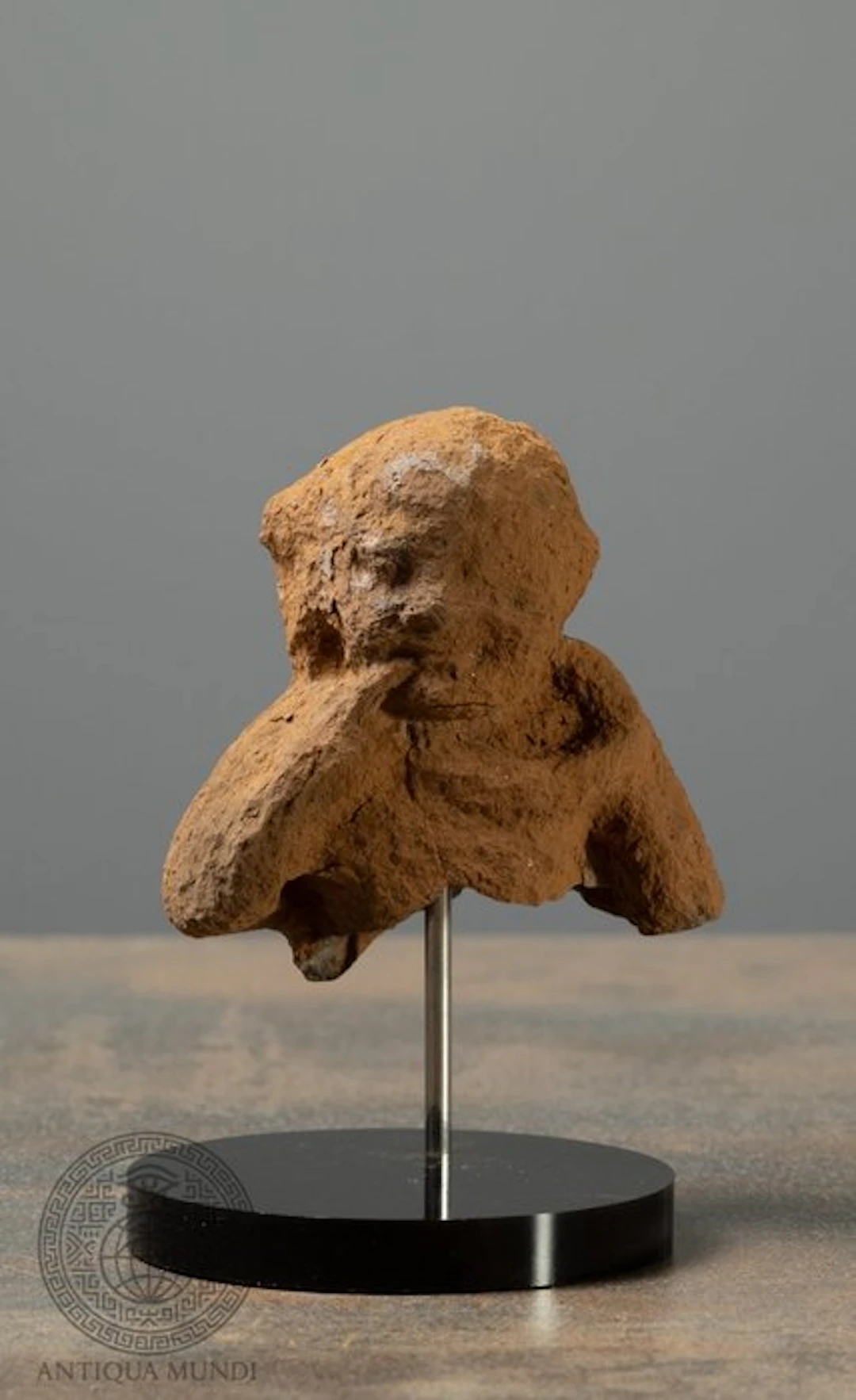
Ancient Egyptian terracotta fragment depicting Harpocrates, the Graeco-Roman manifestation of the Egyptian god Horus as a child. The preserved fragment consists of the upper part of what was originally a larger figurine, including the head, upper torso and parts of the arms. The figure is conceived frontally and has a comparatively large, rounded head. Despite considerable age-related surface wear, essential facial features remain visible, including the eyes, prominently modelled nose and mouth. The most important feature for the iconographic identification is the hand raised towards the mouth, with the finger placed at or near the lips. This gesture is one of the characteristic attributes of Harpocrates and derives from the traditional ancient Egyptian representation of Horus as a child. Comparable Egyptian terracotta figures displaying this characteristic gesture are identified in major museum collections as representations of Harpocrates. The lateral parts of the body and arms survive only fragmentarily. The entire lower section of the original statuette is missing. The reverse is considerably more simply modelled and less detailed than the front, a feature commonly encountered on mould-made terracotta figurines. The figure is made of orange to reddish-brown fired terracotta. The surface displays extensive earthy and mineral deposits as well as the irregular surface texture characteristic of an archaeological terracotta fragment. Harpocrates – Horus the Child Harpocrates developed in the Graeco-Roman world from the ancient Egyptian concept of Horus the Child. His Greek name derives from the Egyptian Har-pa-khered, meaning “Horus the Child”. One of his most distinctive iconographic attributes is the finger raised to the mouth. In ancient Egyptian iconography, this gesture was associated with childhood and was a characteristic feature in representations of the child Horus. In the Hellenistic and Roman periods, Harpocrates became an extremely widespread deity and was frequently represented in terracotta throughout Egypt. Terracotta representations of Harpocrates are known from both the Ptolemaic and Roman periods. Comparable examples preserved in museum collections demonstrate the considerable chronological and stylistic range of this popular type. Dating Due to the fragmentary condition of the object, a precise attribution to a single century cannot be established solely on stylistic grounds. The iconography and general character of the terracotta nevertheless support an attribution to Graeco-Roman Egypt. Comparable terracotta representations of Harpocrates occur throughout both the Ptolemaic period and the Roman Imperial period. For catalogue purposes, a dating to the: Ptolemaic to Roman Period, circa 2nd century BC–2nd century AD is therefore appropriate. Condition Fragmentary condition. The head, upper torso and parts of the arms are preserved. The entire lower section of the original statuette is missing. Considerable age-related surface wear and weathering, with chips, losses, cracks and loss of finer modelling. The facial features are partially worn and softened but remain recognisable. Earthy and mineral deposits are present across the surface. Importantly, the characteristic finger raised towards the mouth remains recognisable, allowing the figure to be iconographically identified as Harpocrates despite its fragmentary state. Please examine all photographs carefully, as they form an integral part of the condition description. Provenance Formerly in the Madeleine & Erich Dammann Collection, Germany. Acquired during the collectors’ extensive travels between 1950 and 1970. The collection is documented in Germany by 1970 through historical photographs of the family residence and subsequently remained in continuous family ownership. The objects were acquired privately during the collectors’ travels. As was customary for private purchases made at local markets during the 1950s and 1960s, purchase receipts or invoices were generally neither issued nor requested. Historical photographs and biographical documentation relating to the Dammann Collection are available and support the long-standing provenance of the collection.
Estimation:€350
Vers la vente aux enchèresVoir tous les objets deCatawikiouArt Ancien
Estimation:
€350
OCT 8 | 3:00 PM


Présentez votre vente aux enchères à des collectionneurs du monde entier !
Soyez référencé dès maintenant
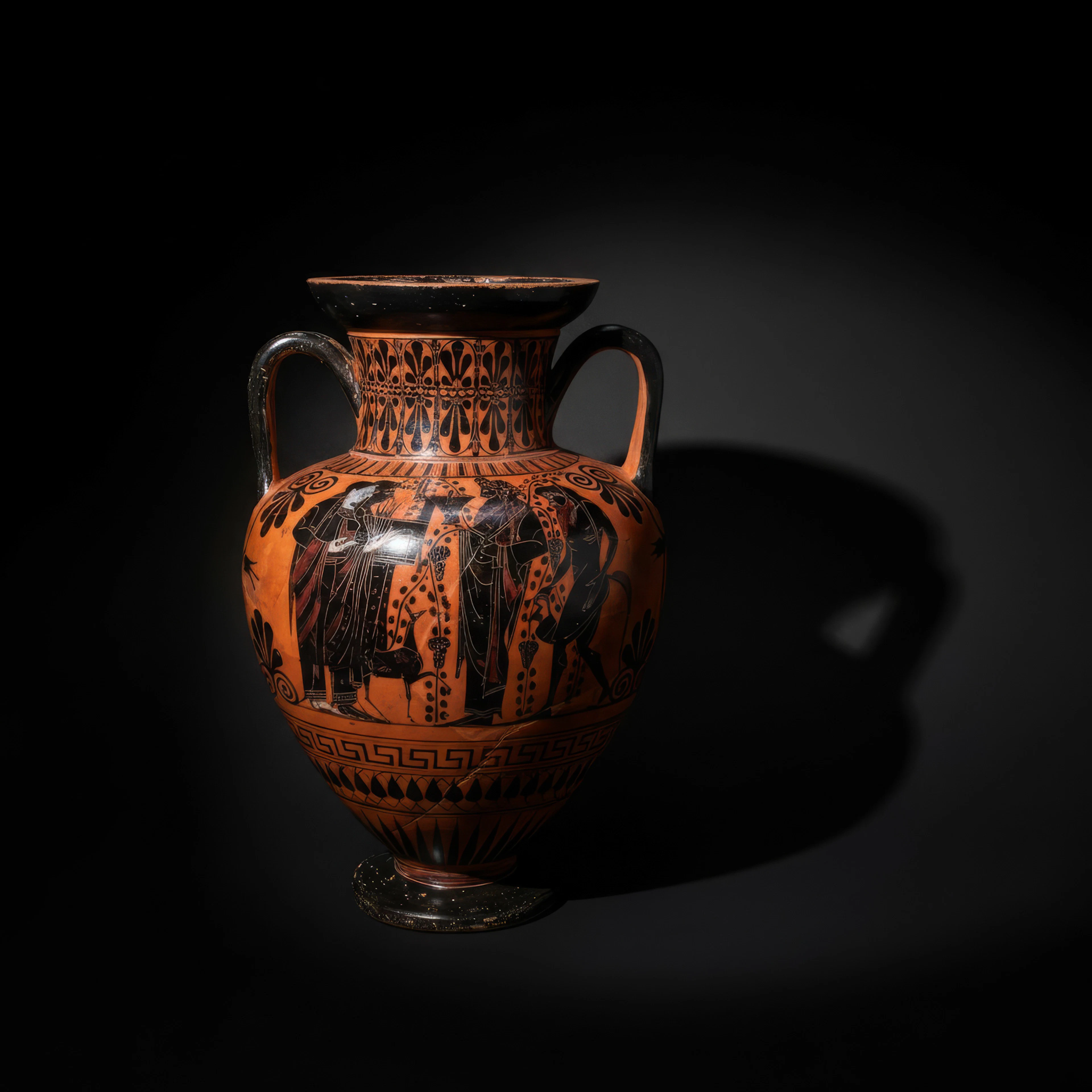
RARE ATTIC BLACK-FIGURE NECK AMPHORA ATTRIBUTED TO THE LYSIPPIDES
06/21/2026

€46,375.28
Est. : €16,156.37
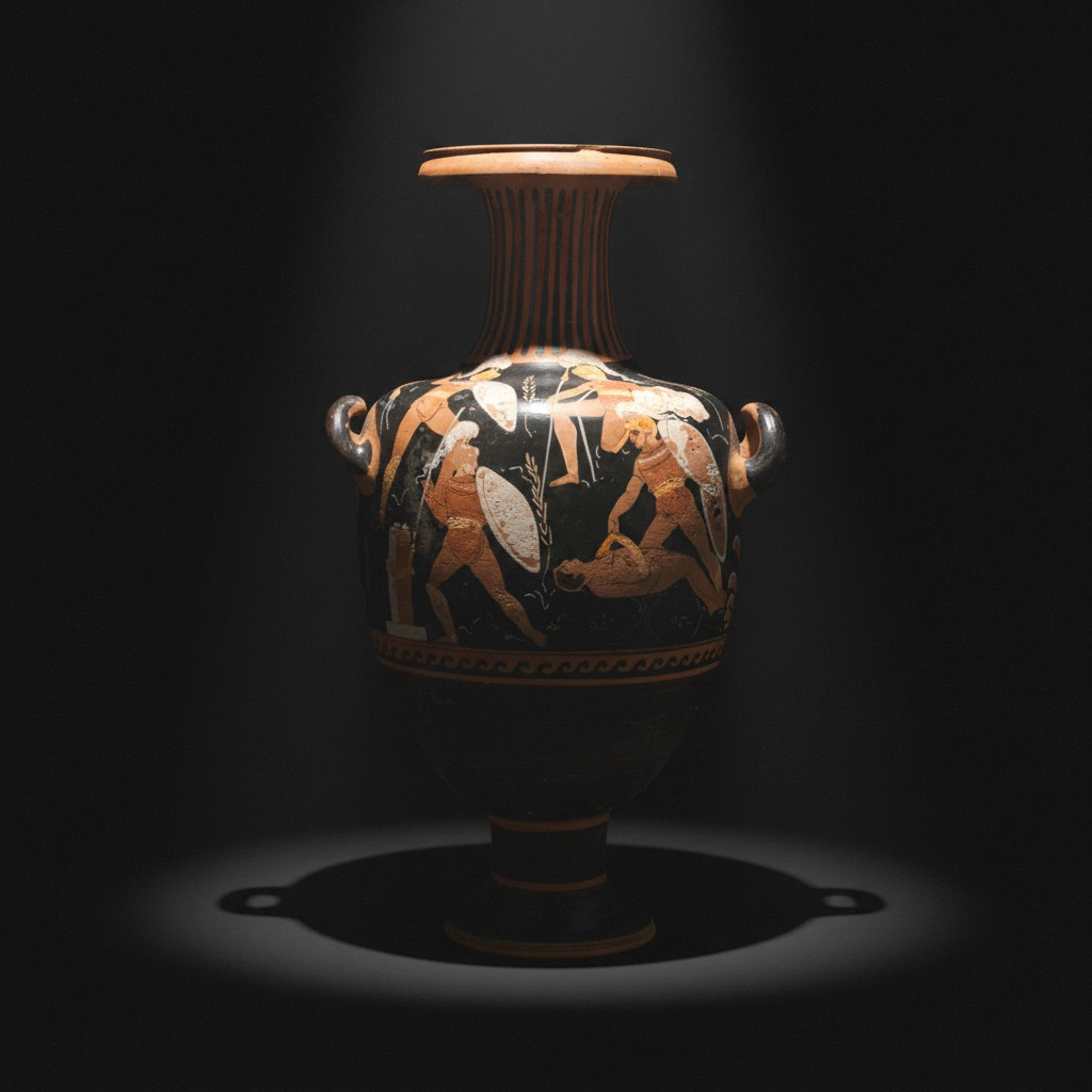
TL TESTED - LARGE GREEK APULIAN RED-FIGURE HYDRIA WITH HOPLITES COMBAT SCENE
06/21/2026
€10,434.43
Est. : €6,924.16