




Présentez votre vente aux enchères à des collectionneurs du monde entier !
Soyez référencé dès maintenantEn vous abonnant, vous acceptez la politique de confidentialité. Désabonnez-vous à tout moment.
Barnebys HQ
Brahegatan 10
BOX 5038
114 37 Stockholm
Toutes les enchères / Livres, Cartographie & Manuscrits / Plutarco (Plutarco Cheroneo) - Opuscoli morali

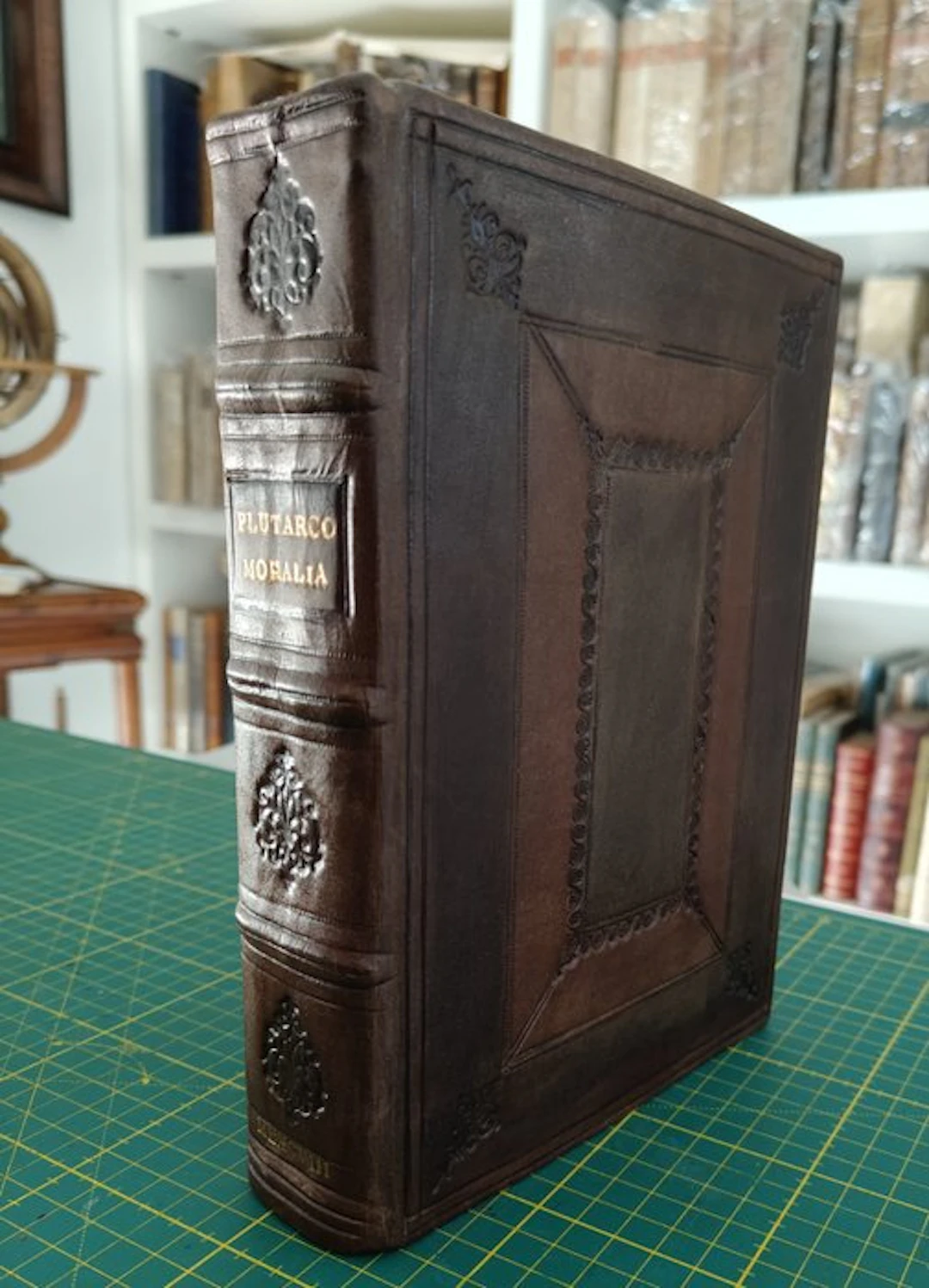
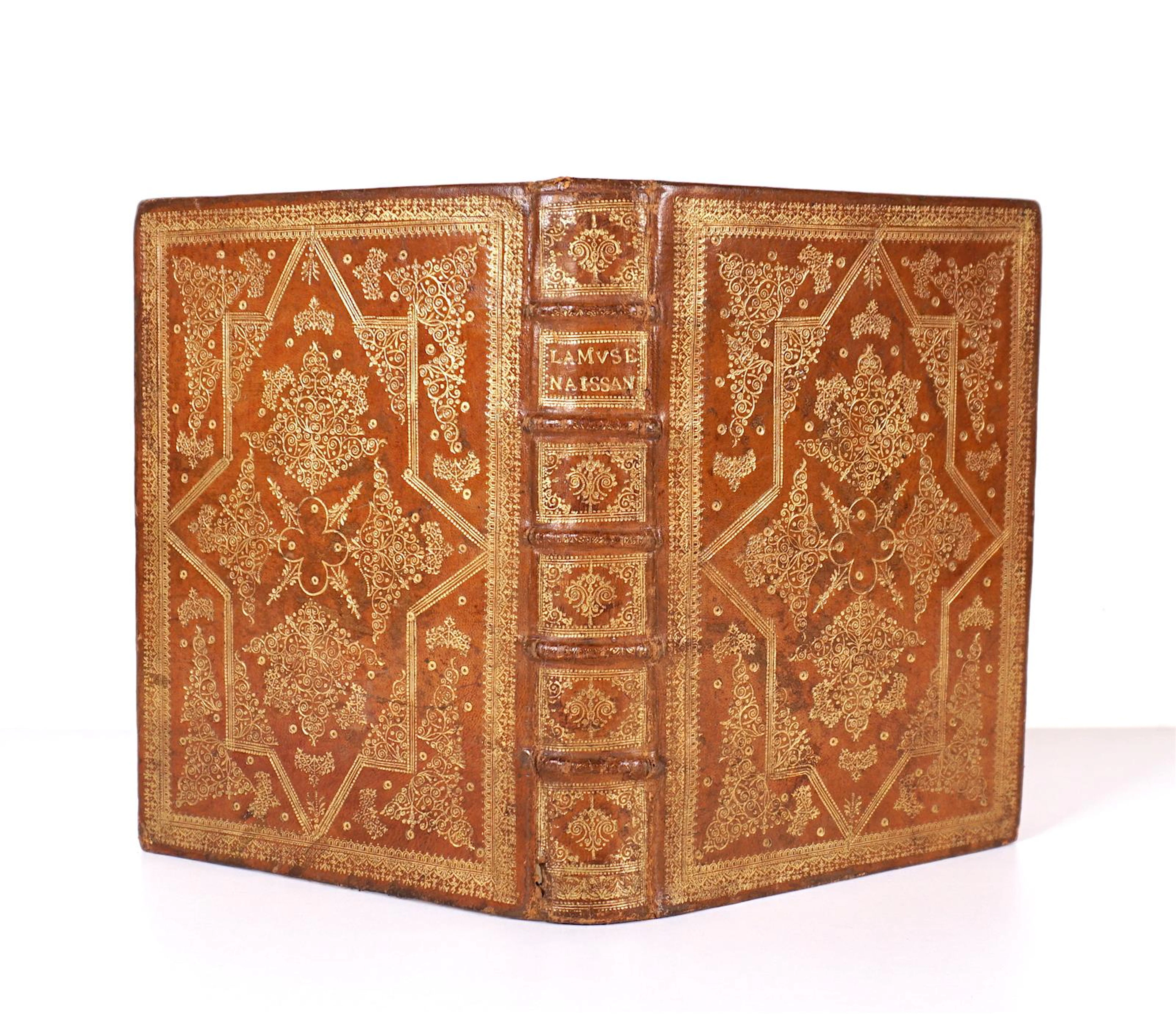
Plutarch - Moral Essays. Part Two complete - 1598 First edition, published in Venice in 1598 by Fioravante Prati, of the famous Italian collection of Plutarch’s Moralia, curated and largely translated by Marc’Antonio Gandino. MAIN DATA Author: Plutarch / Plutarchus Title: Moral Essays, by Plutarch Cheronese, philosopher & very notable historian. Part Two Main translator: Marc’Antonio Gandino Other translators: Gratia Maria Gratii, Giovanni Tarcagnotta and other scholars Publisher: Appresso Fioravante Prati Place of publication: Venice Year: 1598 Edition: first edition of this collection and translation Language: Italian Format: quarto (in-4) Number of volumes: 1 Binding: modern full leather, artisanal Conditions: good Bibliographic reference: SBN/EDIT16 RMGE000234; Part Two TO0E031785 INTEREST IN THE HISTORY OF ASTRONOMY AND PHYSICS Among the texts of greatest interest contained in this Part Two is De facie quae in orbe lunae apparet (On the face that is seen in the circle of the moon), one of the most fascinating astronomical treatises of antiquity. A modern point of emphasis for De facie derives from the interpretation proposed by the science historian Lucio Russo in The Forgotten Revolution. Greek scientific thought and modern science and, more specifically, in his study A Passage from Plutarch (Moralia, 923C–924A) and the history of dynamics. Russo interprets some passages of the dialogue as indirect testimony of a dynamic theory of Hellenistic origin later lost. Particularly significant is the comparison between the Moon’s motion and that of a stone whirled in a sling: the orbital motion would prevent the Moon from falling toward the Earth. Plutarch also considers the behavior of bodies that would hypothetically pass through the Earth’s center and discusses the tendency of bodies to move toward the Earth or toward other stars. According to Russo’s reconstruction, such arguments would preserve traces of concepts related to inertia, gravity and the dynamics of circular motion, perhaps derived from a lost Hellenistic scientific source that the scholar proposes to link to the tradition of Hipparchus of Nicea. This is a modern historiographical interpretation, particularly suggestive for the history of ancient mechanics. The fortune of De facie continued into the European Scientific Revolution. Johannes Kepler studied the treatise and prepared a Latin translation with commentary, published posthumously in 1634 together with his famous Somnium seu opus posthumum de astronomia lunari. Isaac Newton also took a direct interest in the Plutarchean text. In the preparatory materials for the so-called Classical Scholia to the Principia, Newton used three important citations drawn from De facie, within his quest for antecedent ancient conceptions of the cosmos and gravity. The treatise thus constitutes an extraordinary meeting point between Greek philosophy, ancient astronomy and the birth of modern science, and gives this sixteenth-century Italian edition of the Moralia a particular interest for collectors of the history of astronomy and physics. The copy comprises only Part Two of the originally two-volume work. Part Two offered here, however, is complete and presents the following collation: [16], 368 leaves. Signatures: a–d⁴, A–2Z⁸, corresponding to the gatherings a, b, c, d; A–Z and Aa–Zz. In the sixteenth-century printing sequence, the letters J and U are not used separately from I and V. Sheet d4 white. The frontispiece, preliminary leaves, the table of the essays, the wide index of notable things and the last leaf with the inscription “IL FINE.” The frontispiece bears the printer’s mark of Fioravante Prati, depicting three trees topped by doves. The text is adorned with numerous initials, headpieces, ornaments and woodcut tails. The “two plates” mentioned in the frontispiece are the two textual plates, i.e. the index of the essays and that of the notable things, and not plates outside the text. The collection includes many famous Moralia treatises, among which: – On Fraternal Love – On Eating Meat – Platonic Questions – On Music – Lives of ten Orators – Natural Questions – Sociable Questions – Eroticus, or arguments and questions of love – On the Malignity of Herodotus – On Excessive Talking – Consolation to a Wife – On the face that is seen in the circle of the moon – On Fortune or Virtue of Alexander Marc’Antonio Gandino died before completing the translation of the entire corpus. The work was completed with the contribution of other scholars and published by his son Gianfrancesco, who dedicated it to Alvise Molin, bishop of Treviso. This translation is regarded as Gandino’s greatest work and was subsequently reprinted in 1614 and 1625. BOUNDING Elegant modern artisanal full-leather binding in brown, crafted in an antique style. Boards decorated with blind tooling featuring concentric frames, angular ornamental motifs and a central panel. Spine with raised bands and leather inlay bearing the title “PLUTARCO – MORALIA” in gold, blind decorations in the compartments and the date “MDXCVIII” impressed in gold at the foot. Two-tone capitels and flyleaves in multicolored marbled paper. The binding is rear and not contemporary, but is solid, well executed and visually striking. The volume opens correctly and the block is firmly attached. CONDITIONS Complete exemplar of Part Two. Leaves trimmed, margins still reasonably good. Edges uneven and browned, with some dark spots and signs of use. Moderate wave to the leaves, occasional foxing, browning, halos and small marginal tears. Ancient manuscript ownership notes on the frontispiece. Overall the paper is robust; print is clear and text fully legible. Binding in excellent structural condition. The photographs are an integral part of the description. Please examine them carefully to assess the state of the specimen. IMPORTANT NOTE The lot includes exclusively Part Two, complete in itself of [16], 368 leaves. Part One is not present.
Estimation:€150
Vers la vente aux enchèresVoir tous les objets deCatawikiouLivres, Cartographie & Manuscrits
Estimation:
€150
Présentez votre vente aux enchères à des collectionneurs du monde entier !
Soyez référencé dès maintenant
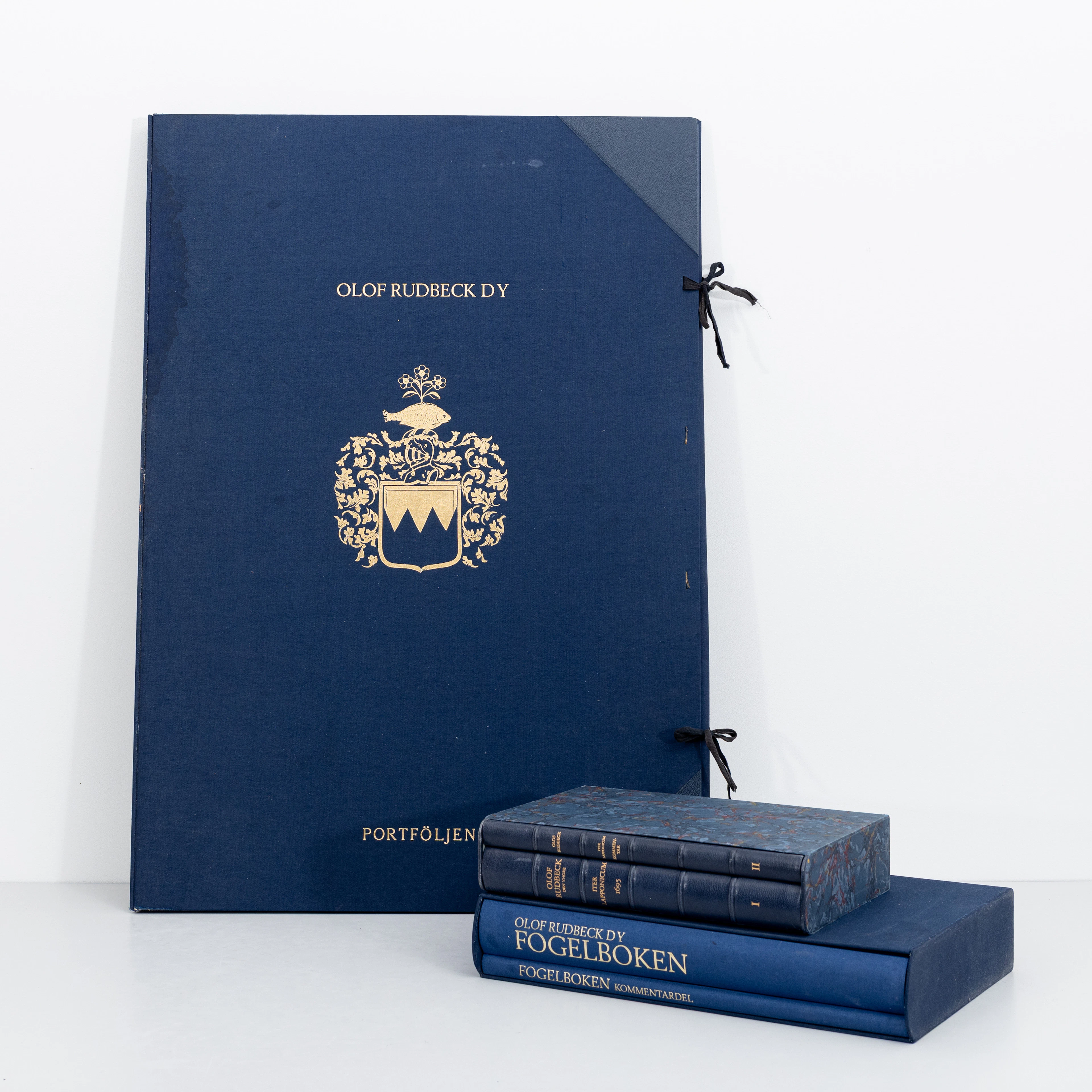
OLOF RUDBECK D.Y. Faksimilutgåvor, portfölj med planscher samt 2 st
09/29/2026
€141.12
Est. : €264.85
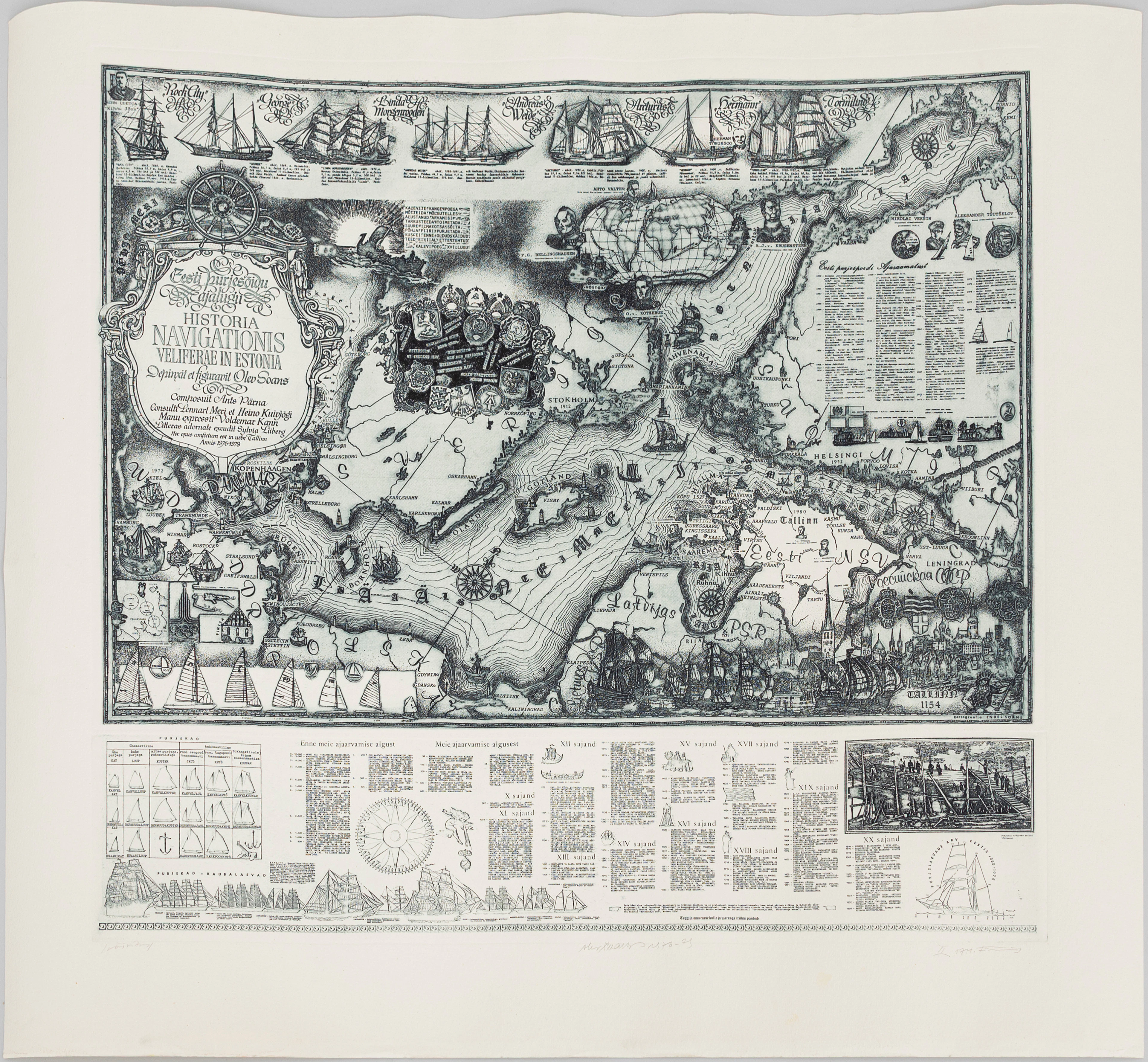
OLEV SOANS (ESTLAND, 1925–1995). "Historia navigationis Velieferae
09/29/2026
€184.07
Est. : €220.71