
Présentez votre vente aux enchères à des collectionneurs du monde entier !
Soyez référencé dès maintenantEn vous abonnant, vous acceptez la politique de confidentialité. Désabonnez-vous à tout moment.
Barnebys HQ
Brahegatan 10
BOX 5038
114 37 Stockholm
Toutes les enchères / Bijouterie & Joaillerie / No reserve price - Pendant An important and monumental pendant

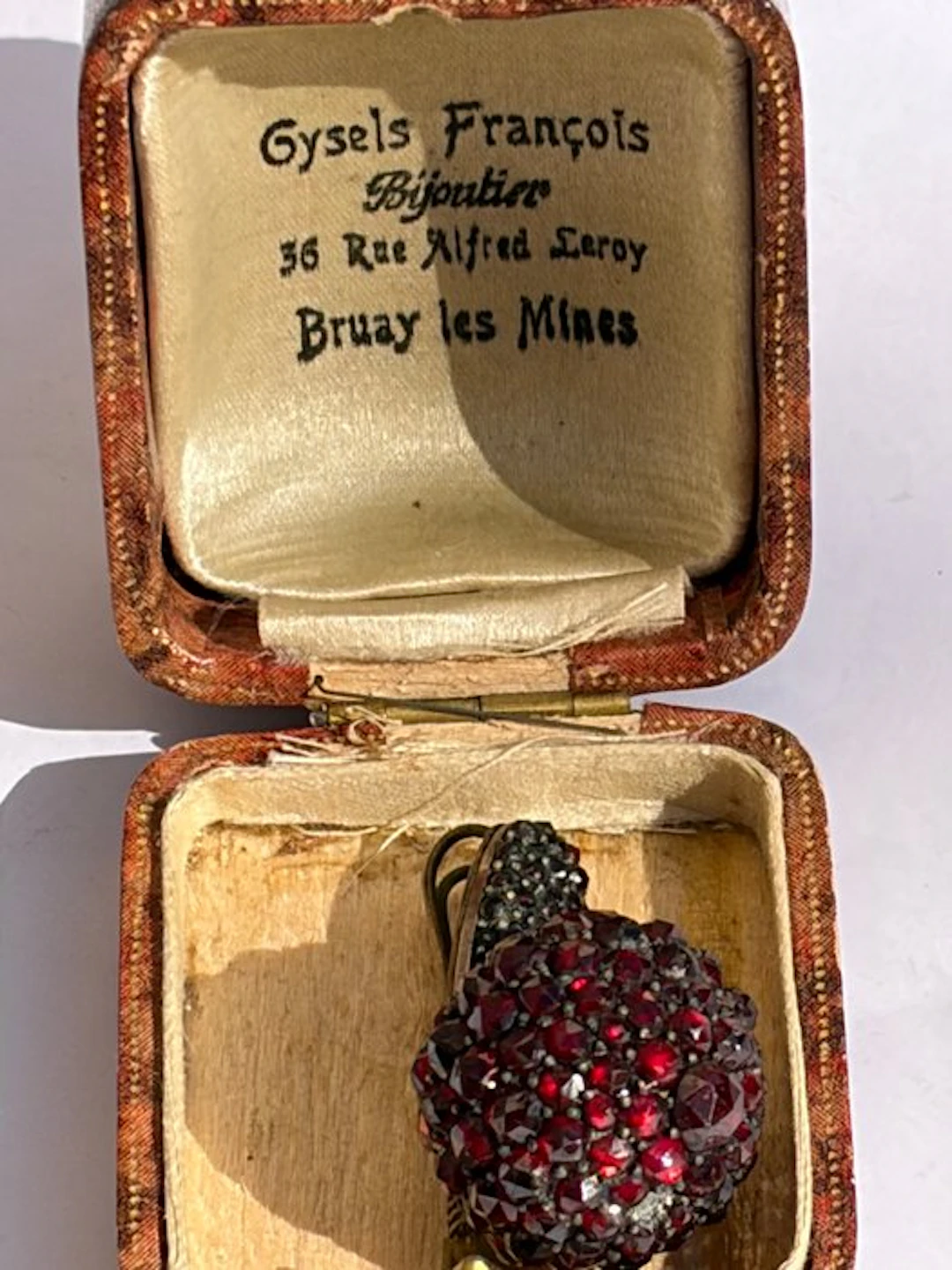
An exceptional Bohemian Bohemian garnet pendant from the late 19th century of imposing dimensions, weighing an extraordinary 14.44 grams and with a total length of 4.0 cm. Designed as a three-dimensional spherical multi-level cluster — historically called a mora or balla — the pendant features a surface covered by a densely set pavé. Each natural ruby red garnet is hand-cut according to the traditional Bohemian rosette (Rose Cut) technique, geometrically studied with flat bases and pyramid facets to optimize internal refraction, imparting the sought-after deep crimson shade known as "pigeon blood". The gems are set in close contact within a historic tombacco structure (or low-karat silver gold-plated), fixed by microscopically raised prongs manually. The pendant is suspended from an articulated and tapered upper hook, also embellished with a fine pavé of highly calibrated garnets. The lot is preserved exclusively within its original late 19th-century case. The case, square and deep, is lined inside with silk and velvet and bears the gold-impressed mark of the French jeweler: “Gysels François - Bijoutier - 36 Rue Alfred Leroy - Bruay les Mines”. The supporting structure is made of authentic period papier-mâché, expertly finished on the surface with a faux leather maroquin texture and adorned with a refined circular ornamental gold-leaf motif around the perimeter, equipped with a functioning brass snap closure. Condition ReportGeneral Condition: The pendant and accompanying case are in excellent antique condition, displaying a beautiful intact historical patina.Gems: The pavé setting is notably solid and stable. Upon careful inspection, one small gem is missing at the base of the sphere. The underlying settings and original prongs are fully intact, allowing for a simple, non-invasive restoration with a contemporary substitute stone if desired.The Case: The box shows consistent, widespread wear on the top of the lid, where timewear has partially revealed the light core of the pressed papier-mâché beneath. This feature constitutes tangible proof of authenticity and lived history. The hinge and closing mechanism remain perfectly functional.Historical Context and Critical InterpretationThe Mastery of Bohemian PavéThis specimen illustrates the apex of Prague’s traditional craftsman techniques, which dominated luxury exports in Central Europe during the final decades of the 19th century. Unlike French or Italian jewelry of the period, which favored large open metal architectures, the Bohemian aesthetic demanded that the underlying metal framework — typically tombacco, a alloy selected for exceptional resistance under constant tension — nearly vanish beneath a continuous carpet of gems. Calibrating, selecting, and housing dozens of microscopic rosette garnets on a perfectly curved, spherical matrix required a level of lapidary precision and micro-aperture work that remains irreproducible to modern mechanical standards.The Romantic Symbolism of the Nineteenth CenturyIn the iconographic lexicon of late Victorian era, precious jewelry functioned as sophisticated vehicles of sentiment and social status. The mora sphere design, drawing inspiration from pomegranate and wild berries, was a powerful allegorical motif representing fertility, abundance, and the indivisible union of lives. Moreover, due to its intense, magnetic red color, ruby garnet was universally regarded as the supreme emblem of eternal love, fidelity, and constancy. It was frequently commissioned as an intimate pledge of devotion, symbolizing a continuous and lasting bond as enduring as the beating heart. Provenance and Rarity FactorsFrom a historic-artistic perspective, the survival of an antique jewel together with its original case signed by the local retailer is an increasingly rare occurrence in today’s market. While these significant garnet elements were produced in regional Bohemian workshops, they were distributed across Europe through elite jewelers of the various provinces. The inclusion of the original Gysels François case provides a valuable archival path, anchoring this particular piece to the thriving bourgeois mining market of the Pas-de-Calais region during the French Third Republic. Given that typical pendants of the era weighed between 3 and 7 grams, the monumental mass of 14.44 grams elevates this piece to a commission of primary luxury importance, making it a true museum-worthy artifact.
Estimation:€11
Vers la vente aux enchèresVoir tous les objets deCatawikiouBijouterie & Joaillerie
Estimation:
€11
Présentez votre vente aux enchères à des collectionneurs du monde entier !
Soyez référencé dès maintenant€264.6
Est. : €353.14
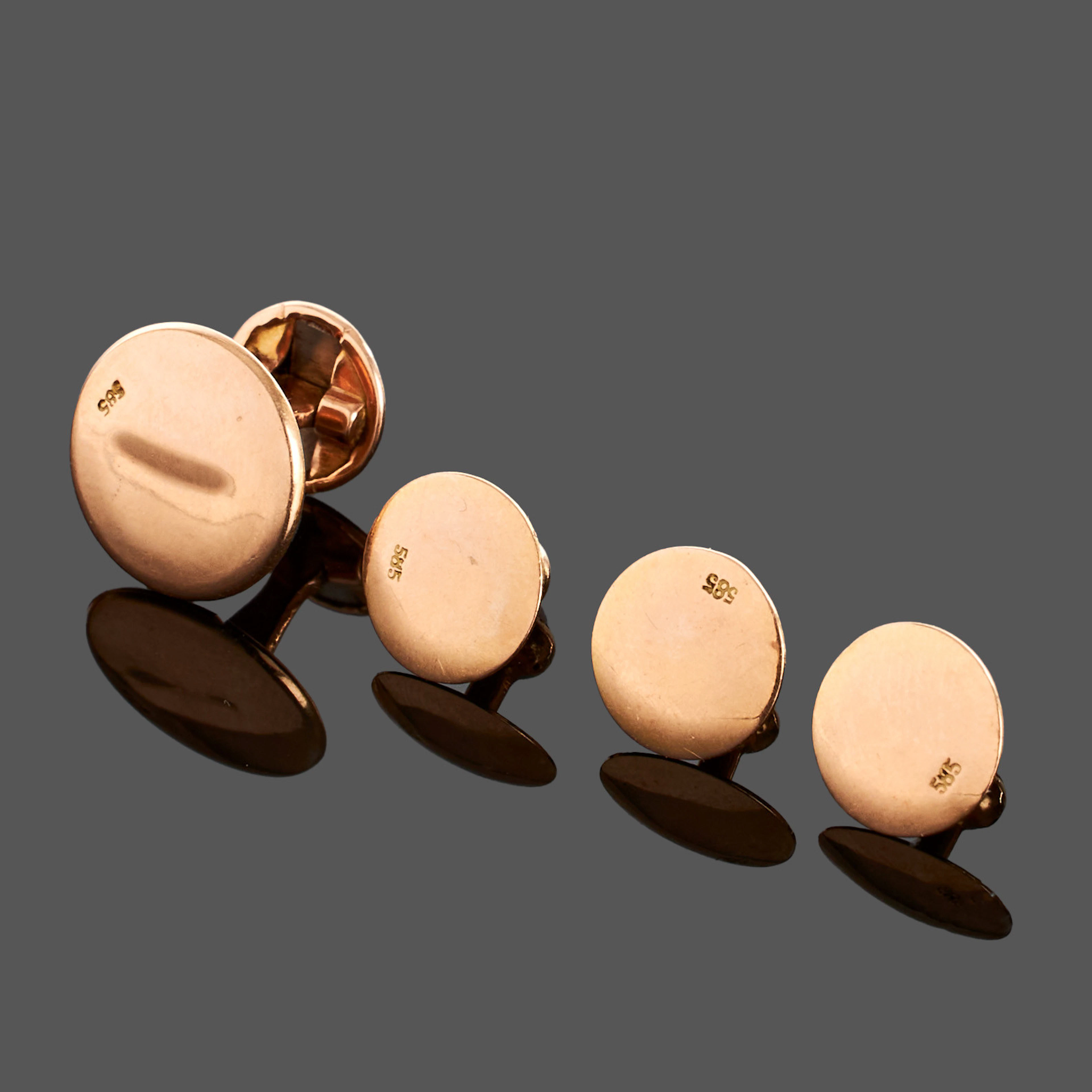
SKJORTKNAPPAR & MANSCHETTKNAPP, 14k guld, 3 st skjortknappar dekoretat
09/29/2026
€194.04
Est. : €194.22