


Toutes les enchères / Art Ancien / Mesopotamian Stone Ancient Mesopotamian Stone Stamp Seal...

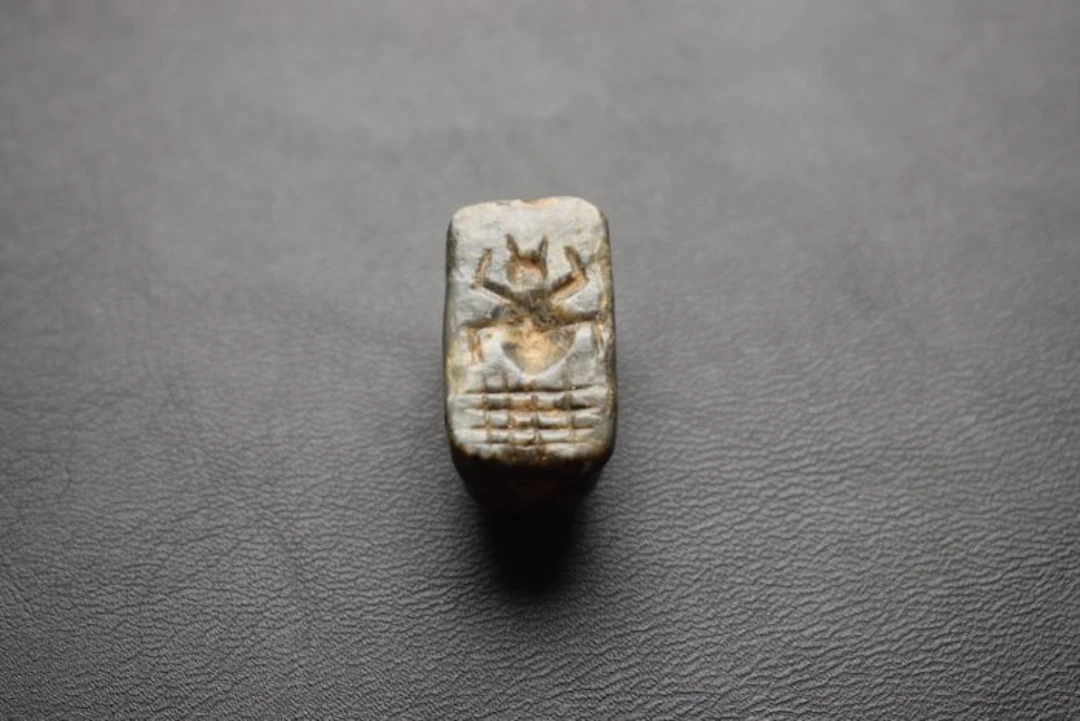
Ancient Mesopotamian Stone Stamp Seal Amulet Depicting a Spider Late Uruk – Jemdet Nasr Period, circa 3300–2900 BC Material: Polished natural stone, probably serpentinite Weight: 9.5 g Dimensions: 23.3 × 14.8 × 13.4 mm From a Private European Collection. An exceptionally fascinating and very rare Ancient Mesopotamian stone stamp seal amulet, dating to the Late Uruk–Jemdet Nasr Period, circa 3300–2900 BC, and therefore approximately 5,000 years old. The principal sealing surface is deeply engraved in intaglio with the remarkable representation of a spider, its rounded body surrounded by radiating legs. Beneath the creature appears a carefully engraved geometric, grid-like element composed of several horizontal and vertical lines. When impressed into soft material, the engraved design produces a clearly recognisable raised image, beautifully demonstrating the original function of the object as a stamp seal. The spider is a particularly intriguing and comparatively rare motif in early Mesopotamian glyptic art. Representations of spiders are documented during the Uruk and especially the Jemdet Nasr cultural horizon. In the symbolic world of ancient Mesopotamia, the spider has been connected with spinning and weaving, and scholarly interpretations have also related this imagery to the sphere of Uttu, the Mesopotamian goddess associated with weaving. The precise significance of the motif on an individual seal, however, remains open to interpretation. Particularly remarkable is that the object was conceived not merely as a functional seal but also as a personal wearable object. A substantial longitudinal perforation passes through the body, allowing the seal to be suspended from a cord and worn around the neck or otherwise carried on the person. This combination of seal and amulet gave such objects a highly personal character: they could serve as a means of identification and authentication while simultaneously remaining in the owner's possession as a portable symbolic object. The different surfaces of the seal have been carefully worked. In addition to the spider intaglio, the object displays geometric and drilled decoration, including groups of small circular depressions arranged in deliberate patterns and an additional incised linear motif. Such drilled and geometric ornamentation is well documented among early Mesopotamian stone seals and adds considerably to the visual and archaeological interest of this example. Stamp seals played an important role in the increasingly complex societies of early Mesopotamia. Their impressions could be used to identify ownership, authenticate transactions and secure containers, doors, storage vessels or packages. Clay placed over a closure could be impressed with the owner's seal; breaking the sealing would reveal that the secured object had been opened. Unlike the later cylinder seals that became one of the most famous forms of Mesopotamian glyptic art, stamp seals produced their image by being pressed directly into wet clay. The accompanying impression of the present specimen reveals the ancient engraving particularly effectively and makes the spider composition immediately understandable. The stone itself has an attractive polished appearance with dark grey, olive and lighter naturally mottled areas, beautifully emphasizing the hand-cut decoration. The compact form, preserved perforation and clearly readable engraved surfaces provide an unusually tangible impression of an object that was once handled and carried by an individual approximately five millennia ago. Of particular interest is the combination of early date, spider iconography, multiple decorated surfaces and wearable seal-amulet construction. While Mesopotamian stamp seals are represented in museum and archaeological collections, examples displaying spider imagery are considerably less commonly encountered than seals decorated with simple geometric designs. A very rare and highly evocative example of early Mesopotamian glyptic art, combining personal adornment, symbolism and the practical function of sealing within a single object – and preserving the image of a spider carved into stone approximately 5,000 years ago. I prove that the lot was obtained legally , provenance statement seen by Catawiki Important information. I guarantee that I am entitled to ship this lot. I will take care that any necessary permits will be arranged. I will inform the buyer about this if this takes more than a few days.
Estimation:€500
Vers la vente aux enchèresVoir tous les objets deCatawikiouArt Ancien
Estimation:
€500
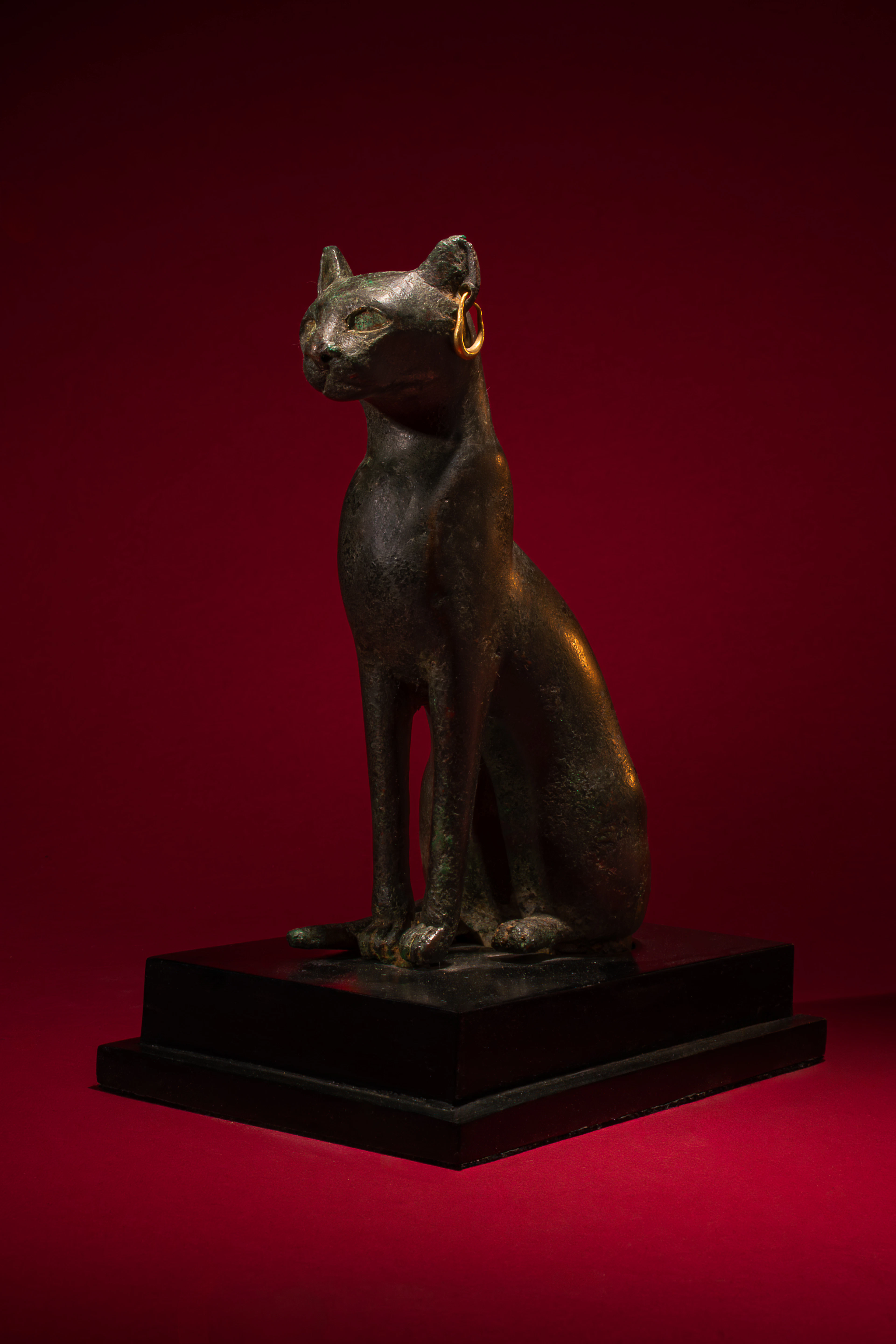
RARE EGYPTIAN BRONZE CAT STATUETTE WITH GOLD EARRINGS - LARGE SIZE
06/21/2026

€25,506.4
Est. : €23,095.64
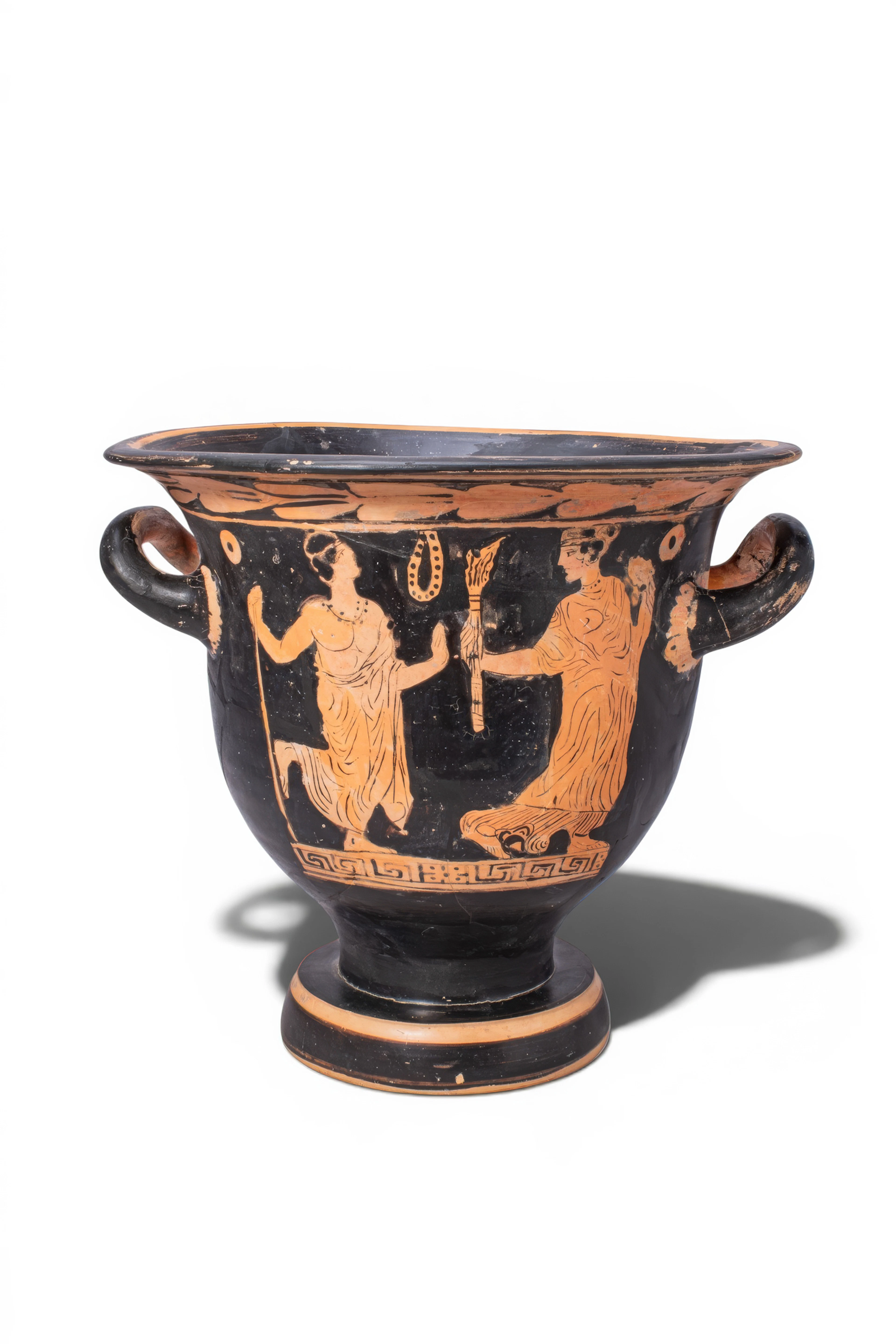
APULIAN RED-FIGURE BELL KRATER WITH KOMASTOS AND MAENAD - TL TESTED
06/21/2026
€3,014.39
Est. : €2,304.2
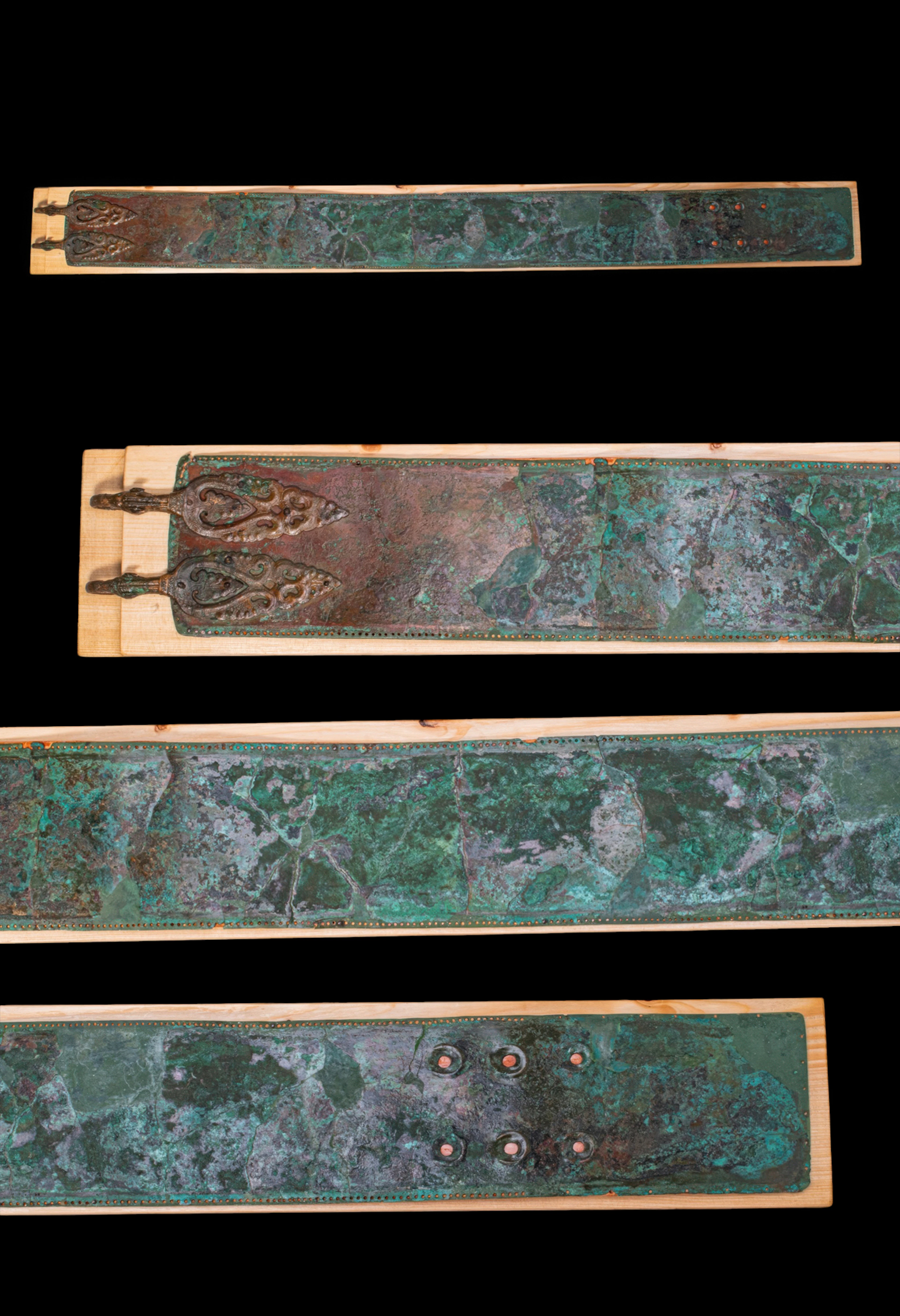




OCT 27 | 4:00 PM
Présentez votre vente aux enchères à des collectionneurs du monde entier !
Soyez référencé dès maintenantEn vous abonnant, vous acceptez la politique de confidentialité. Désabonnez-vous à tout moment.
Barnebys HQ
Brahegatan 10
BOX 5038
114 37 Stockholm
