




Image d'arrière-plan

Toutes les enchères / Mobilier, Design & Miroirs / Max Beckmann (after) - Ocean and Clouds

1d 9hDECatawiki

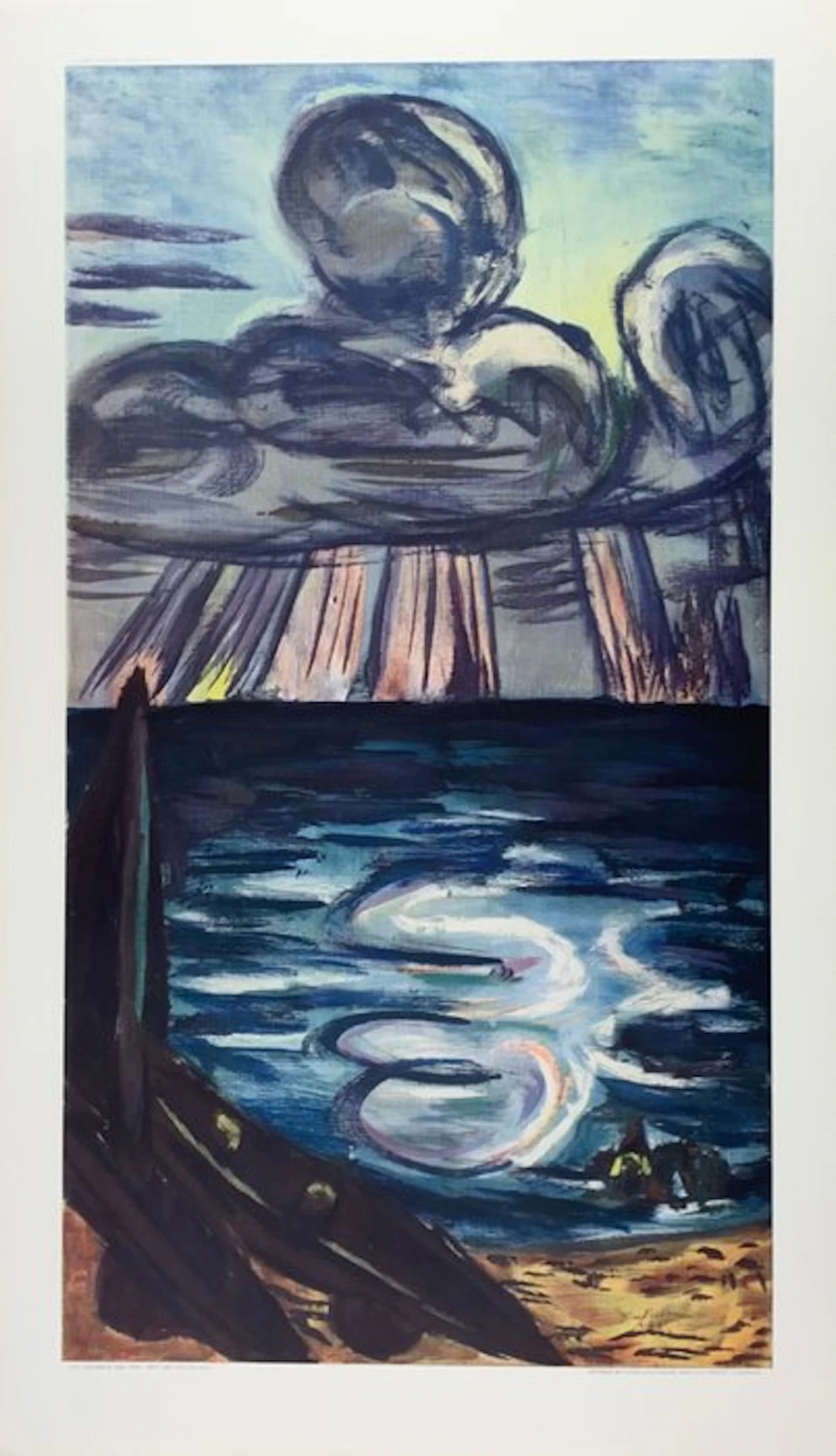
Max Beckmann (after) - Ocean and Clouds
Max Beckmann (after) - Ocean and Clouds

Max Beckmann Meer und Wolken, 1943 Collotype antiquarian print Printed between 1970-1990 Printed by Franz Hanfstaengl, München Paper Size: 86,5 x 50 cm / 34 in x 19.68 in print in perfect condition, print never been framed Origin: Gallery Partner Collotype: Collotype, also known as photogravure, is a high-precision printing process that is primarily used in the art and photography industry. It is based on the principle of photochemistry. First, a transparent negative or positive of the desired image is produced. This is placed on a coated printing plate and exposed to UV light. Where the light hits the coating, it hardens and forms a resistant layer. After exposure, the plate is developed, whereby the unexposed areas are washed away while the hardened layer is retained. The plate is then coloured and printed on special paper. Collotype printing enables a high level of detail and tonal reproduction, which makes it particularly suitable for reproducing works of art and photographs. Despite its complex production process, collotype printing offers exceptional image quality and durability. Max Beckmann: Max Beckmann, a significant German painter of the 20th century, is renowned for his powerful expressionist works. His art is thematically related to artists like George Grosz and Otto Dix, who also shaped Expressionism and New Objectivity. Similar expressive approaches are found in the works of Oskar Kokoschka and Egon Schiele. Beckmann's work also connects with Ernst Ludwig Kirchner and Emil Nolde of "Die Brücke," as well as Edvard Munch and James Ensor, known for their emotional and psychological themes. The innovative styles of Pablo Picasso and Georges Braque, alongside the symbolic abstraction of Marc Chagall and Wassily Kandinsky, are also influential. Further connections include Käthe Kollwitz and Gabriele Münter's social critiques, Paul Klee and Lyonel Feininger's blend of abstraction and figuration, and the experiments with color and form by Henri Matisse and Fernand Léger. The narrative works of Diego Rivera and Frida Kahlo, as well as the surrealism of Giorgio de Chirico, René Magritte, and Salvador Dalí, also resonate with Beckmann's themes. Shipping information: We roll up art prints on hardboard rolls, wrap them with corrugated cardboard and send them in special, very strong boxes. Shipping is insured and with a tracking number. About us: We have been working in the art business for over 20 years and have extensive experience in the professional handling and shipping of works of art.

Estimation:€150

Vers la vente aux enchères

Voir tous les objets deCatawikiouMobilier, Design & Miroirs

Objets similaires

Résultats des ventes pour des objets similaires

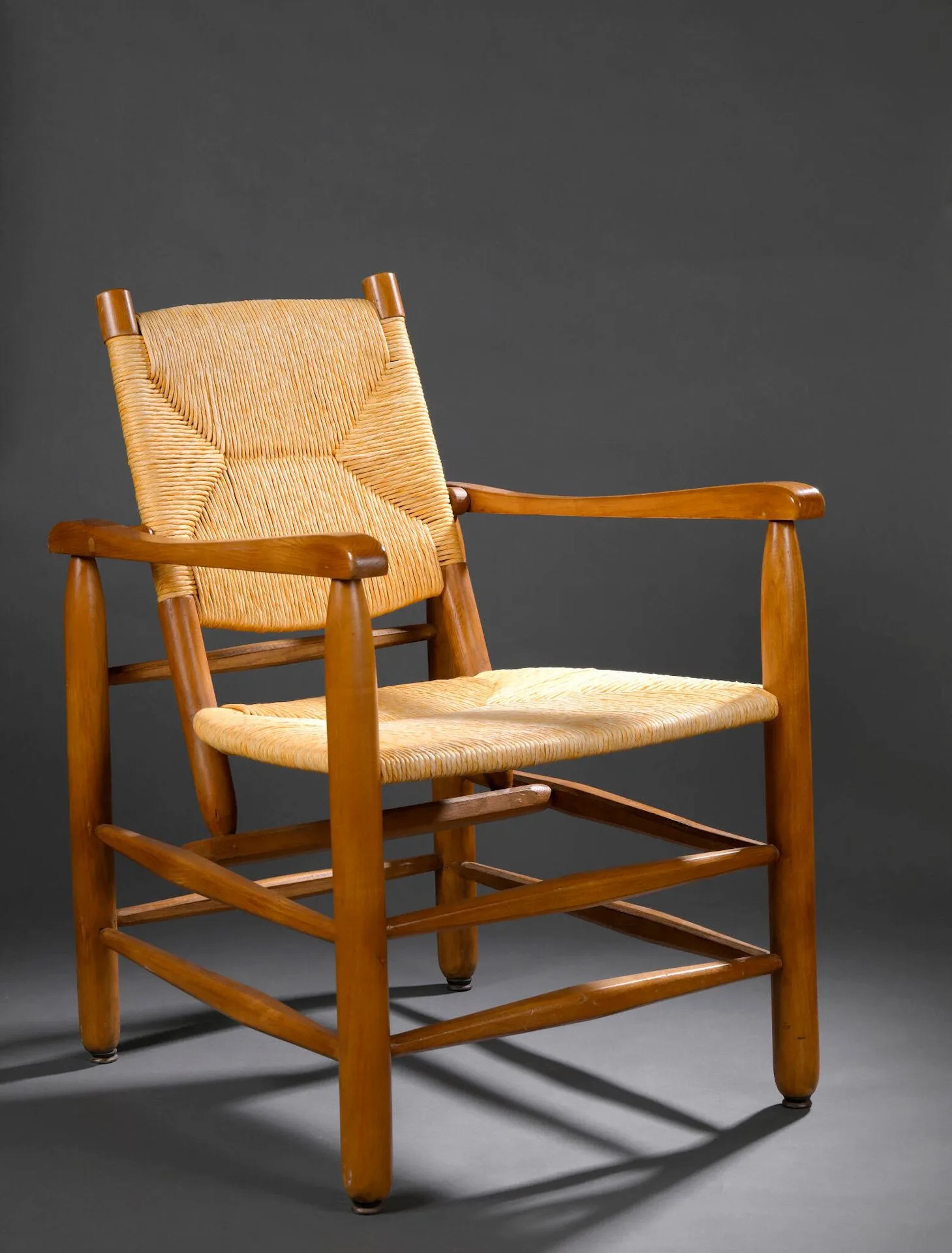
Charlotte PERRIAND (1903-1999) Fauteuil modèle n°21, circa 1960, en frêne à dossier incliné et assise paillée, disposés sur quatre pieds de type obus, joints par des doubles barreaux d’attaches profilés et accotoirs détachés à tête de manchette légèrement galbée. H. : 78.5 cm. - L. : 54.5 cm. - P. : 64.5 cm. (Usures, décolorations, frottements, rayures) Bibliographie : - Jacques Barsac, Charlotte Perriand, un art d’habiter, Edition Norma, 2005, modèle similaire reproduit p. 275. - Marie Laure Jousset, Catalogue d’exposition Charlotte Perriand, Edition Centre Georges Pompidou, 2005, modèle similaire reproduit p. 109. - Jacques Barsac, Charlotte Perriand l’œuvre complète volume 2 1940-1945, Edition Norma, 2015, modèle similaire reproduit p. 171. - Jacques Barsac, Charlotte Perriand et le Japon, Edition Norma 2008, modèle similaire reproduit p. 189. « Architecte, urbaniste, designer, photographe, directrice artistique, scénographe, propagandiste de l’art pour tous… Je ne me définis pas, ce serait une limitation », déclarait Charlotte Perriand. La simplicité des formes et l’honnêteté des matériaux ont toujours guidé son travail. Le fauteuil n°21 que nous présentons dans cette vacation en est une parfaite illustration. Réalisé selon un savoir-faire artisanal, ce modèle associe avec justesse le bois et la paille. Conçu en 1935 par Charlotte Perriand, il fut ensuite édité par plusieurs maisons, dont l’Équipement de la Maison, BCB, Steph Simon et Sentou. Notre exemplaire, datant des années 1960-1965, provient de l’aménagement d’un hôtel en Savoie. Réalisé en frêne, il présente une assise et un dossier garnis de paille. Ses pieds en forme d’obus sont reliés par des doubles barreaux profilés qui renforcent l’équilibre de la structure. Les accotoirs, délicatement arrondis, invitent naturellement au toucher et traduisent l’attention portée par la créatrice à la relation sensorielle avec le matériau. Charlotte Perriand rappelait d’ailleurs avec poésie : « Ça se caresse, le bois ; c’est doux comme les cuisses d’une femme. » Cette sensibilité à la matière, associée à une recherche constante de simplicité et de confort, confère à ce fauteuil toute son intemporalité.
Vendu

Charlotte PERRIAND (1903-1999) Fauteuil modèle n°21, circa 1960, en frêne à dossier incliné et assise paillée, disposés sur quatre pieds de type obus, joints par des doubles barreaux d’attaches profilés et accotoirs détachés à tête de manchette légèrement galbée. H. : 78.5 cm. - L. : 54.5 cm. - P. : 64.5 cm. (Usures, décolorations, frottements, rayures) Bibliographie : - Jacques Barsac, Charlotte Perriand, un art d’habiter, Edition Norma, 2005, modèle similaire reproduit p. 275. - Marie Laure Jousset, Catalogue d’exposition Charlotte Perriand, Edition Centre Georges Pompidou, 2005, modèle similaire reproduit p. 109. - Jacques Barsac, Charlotte Perriand l’œuvre complète volume 2 1940-1945, Edition Norma, 2015, modèle similaire reproduit p. 171. - Jacques Barsac, Charlotte Perriand et le Japon, Edition Norma 2008, modèle similaire reproduit p. 189. « Architecte, urbaniste, designer, photographe, directrice artistique, scénographe, propagandiste de l’art pour tous… Je ne me définis pas, ce serait une limitation », déclarait Charlotte Perriand. La simplicité des formes et l’honnêteté des matériaux ont toujours guidé son travail. Le fauteuil n°21 que nous présentons dans cette vacation en est une parfaite illustration. Réalisé selon un savoir-faire artisanal, ce modèle associe avec justesse le bois et la paille. Conçu en 1935 par Charlotte Perriand, il fut ensuite édité par plusieurs maisons, dont l’Équipement de la Maison, BCB, Steph Simon et Sentou. Notre exemplaire, datant des années 1960-1965, provient de l’aménagement d’un hôtel en Savoie. Réalisé en frêne, il présente une assise et un dossier garnis de paille. Ses pieds en forme d’obus sont reliés par des doubles barreaux profilés qui renforcent l’équilibre de la structure. Les accotoirs, délicatement arrondis, invitent naturellement au toucher et traduisent l’attention portée par la créatrice à la relation sensorielle avec le matériau. Charlotte Perriand rappelait d’ailleurs avec poésie : « Ça se caresse, le bois ; c’est doux comme les cuisses d’une femme. » Cette sensibilité à la matière, associée à une recherche constante de simplicité et de confort, confère à ce fauteuil toute son intemporalité.

07/01/2026

Rossini
FR

€6,000

Est. : €6,000

Détails
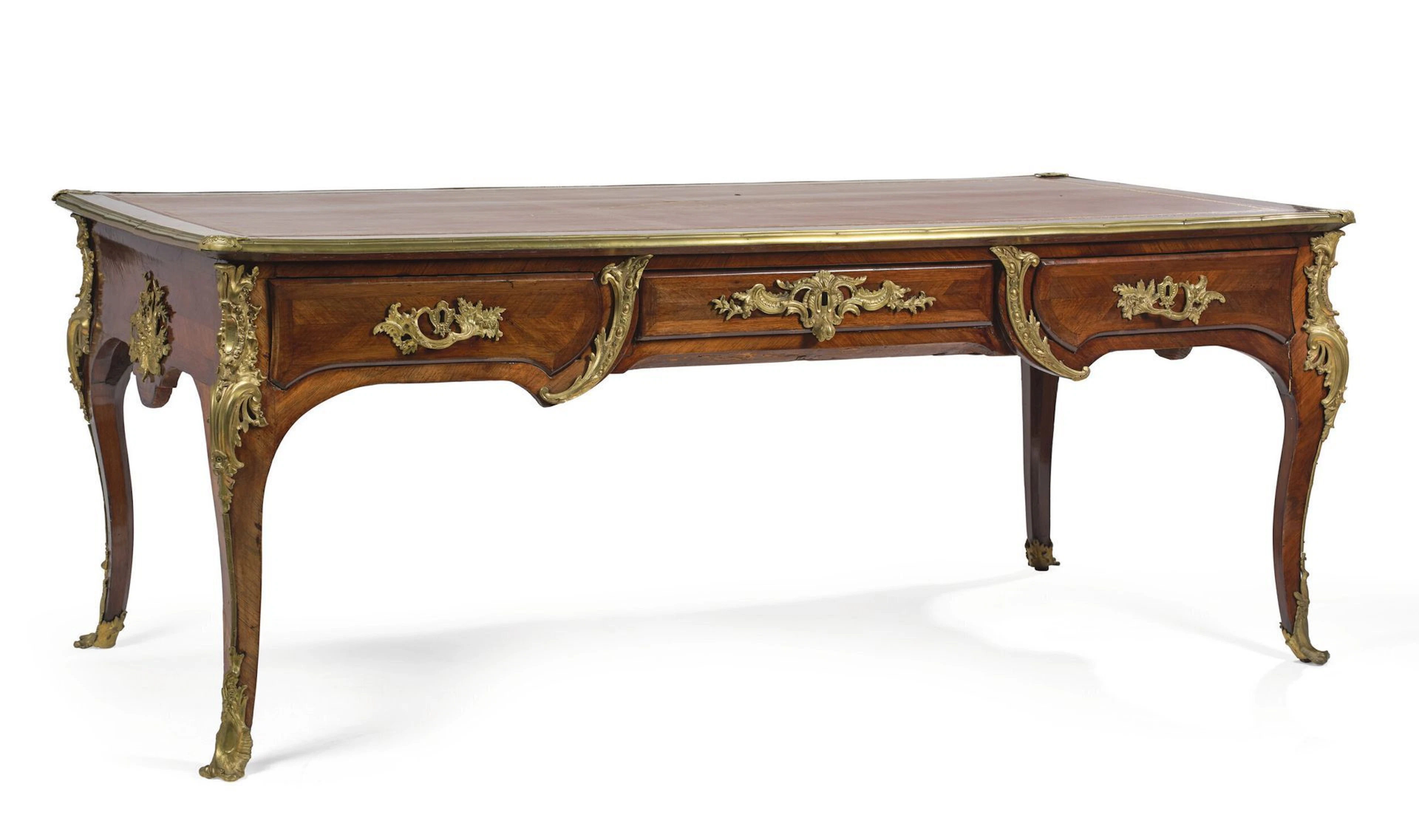
GRAND BUREAU PLAT - Lot 65
Vendu

GRAND BUREAU PLAT - Lot 65

11/05/2025

Aguttes
FR

€14,300

Est. : €15,000

Détails

Upcoming auctions

American, European and Ukrainian Fine Art
American, European and Ukrainian Fine Art auction house logo

OCT 23 | 8:00 AM

American, European and Ukrainian Fine Art

Jewellery and Watches
Jewellery and Watches auction house logo

OCT 27 | 4:00 PM

Jewellery and Watches

Global Treasures | Ancient & Ethnographic Art
Global Treasures | Ancient & Ethnographic Art auction house logo

Global Treasures | Ancient & Ethnographic Art

Présentez votre vente aux enchères à des collectionneurs du monde entier !

Soyez référencé dès maintenant