


Toutes les enchères / Art Ancien / Late Roman/Early Byzantine Terracotta Holy Land Oil Lamp

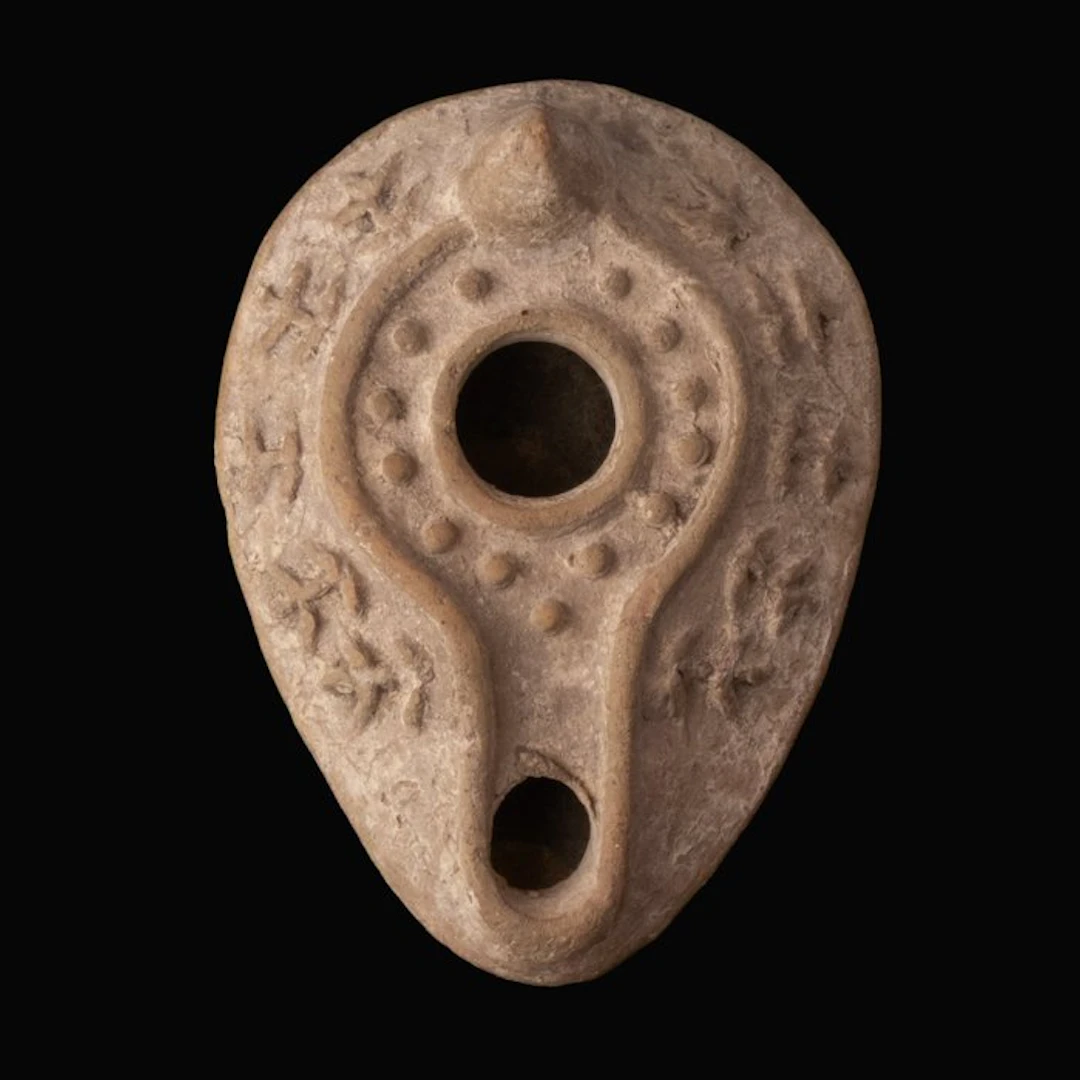
Attention: due to customs regulations we can only ship inside the European Union. Please ensure you have a valid EU shipping address before placing a bid. Late Roman to early Byzantine mould-made terracotta oil lamp from the Holy Land. The broad, pear-shaped body has a large central filling hole surrounded by raised concentric mouldings and a ring of pellets. A narrow channel enclosed by raised borders leads towards the wick hole. The shoulder is decorated in low relief with worn grapevine and foliate motifs. At the rear is a tall, solid spike handle. The underside has a circular base ring and bears an old collection number in ink. -> Grapevines and bunches of grapes were popular decorative motifs on Byzantine lamps. Although they could carry Christian associations with the Eucharist and Christ as the True Vine, the decoration alone does not prove that the lamp had a specifically liturgical function. Size: ± 88.8 × 64.5 mm Weight: ± 60.16 g Condition: Very good condition, complete and intact. Age-related surface wear, minor abrasions and deposits are present. No visible repairs. Certificate of Authenticity (PDF) is available upon request for all lots with a hammer price of €100 or higher. -> Clay lamps were first developed in the Bronze Age, initially designed as open bowl-like vessels. Over time, they evolved into more enclosed forms to prevent oil spills and were crafted using various methods: hand moulding, wheel throwing, and mould production. The use of moulds for lamp-making became prominent during the Hellenistic period (323–31 BCE). Lamps were typically created with two-piece moulds, forming the lamp's upper and lower sections. The top mould often included intricate relief designs that were imprinted onto the clay. This method sped up production and also allowed to add more decoration to the surface of the clay. Oil lamps were particularly popular in the Mediterranean region, where olive oil was abundant and served as an efficient fuel source. Other plant-based oils and animal fats may also have been used. To light the lamps, wicks made from materials like plant fibers, papyrus, or linen were inserted. Beyond domestic use, oil lamps illuminated various settings. They were essential at Roman festivals, in the vast interiors of temples and religious sanctuaries, and in dark spaces like catacombs. In ancient Rome, lamps were sometimes offered as votive gifts to deities. Additionally, they served as grave goods in tombs, symbolizing light for the afterlife.
Estimation:€225
Vers la vente aux enchèresVoir tous les objets deCatawikiouArt Ancien
Estimation:
€225
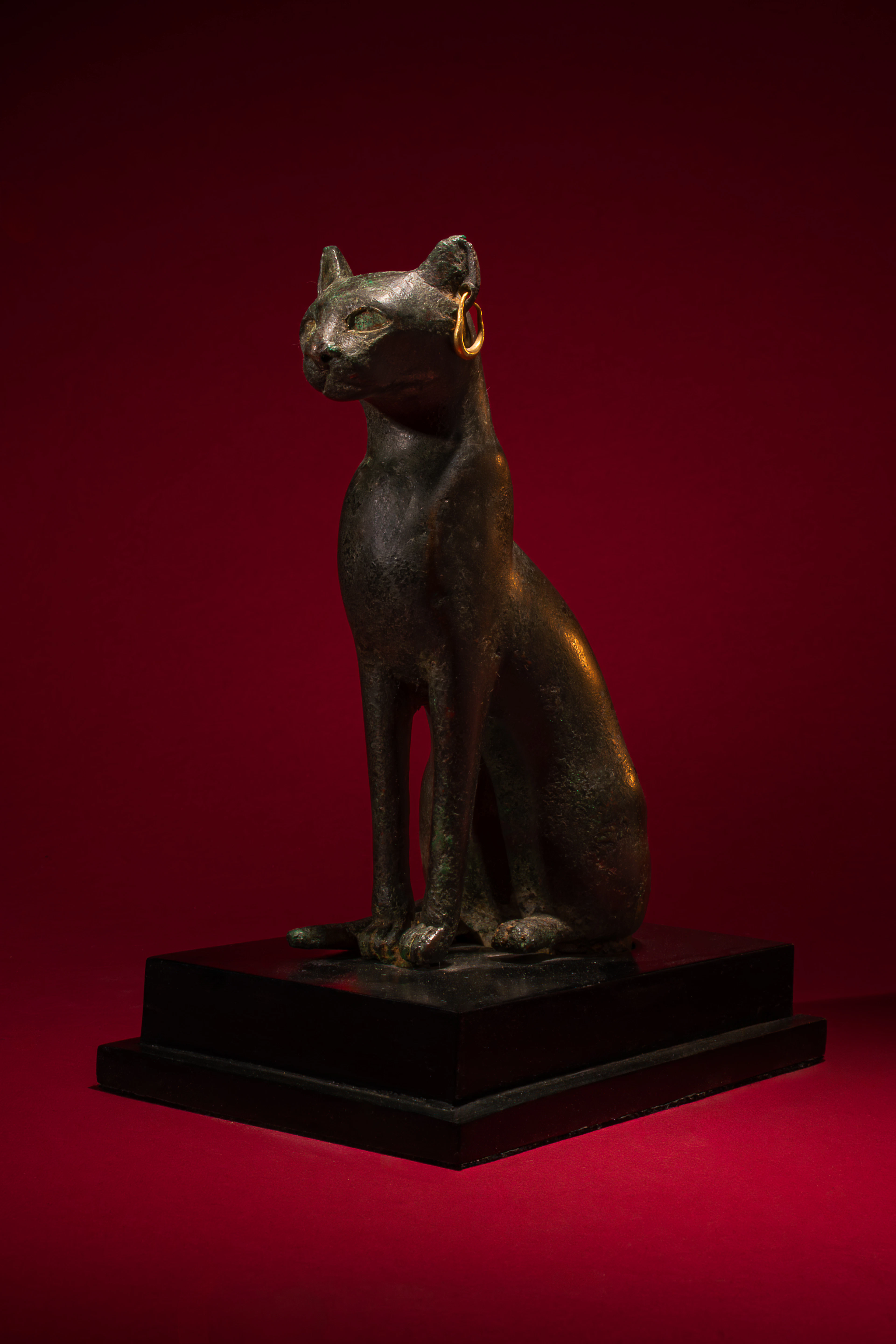
RARE EGYPTIAN BRONZE CAT STATUETTE WITH GOLD EARRINGS - LARGE SIZE
06/21/2026

€25,506.4
Est. : €23,095.64
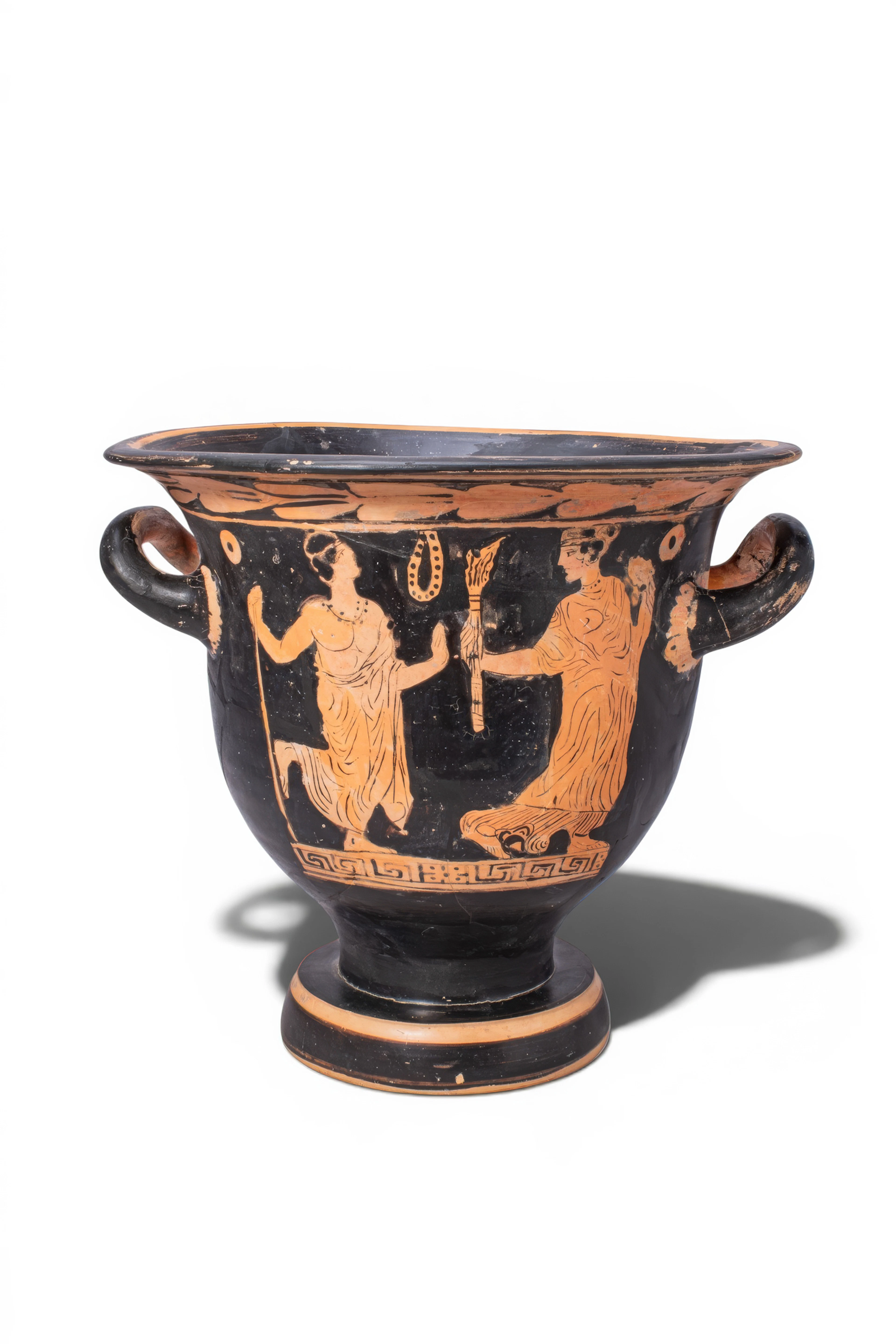
APULIAN RED-FIGURE BELL KRATER WITH KOMASTOS AND MAENAD - TL TESTED
06/21/2026
€3,014.39
Est. : €2,304.2



OCT 23 | 8:00 AM
Présentez votre vente aux enchères à des collectionneurs du monde entier !
Soyez référencé dès maintenantEn vous abonnant, vous acceptez la politique de confidentialité. Désabonnez-vous à tout moment.
Barnebys HQ
Brahegatan 10
BOX 5038
114 37 Stockholm
