


Toutes les enchères / Art Ancien / KIYOCHIKA • Famous Views of Tokyo •Store at Ōdenma-chō•...

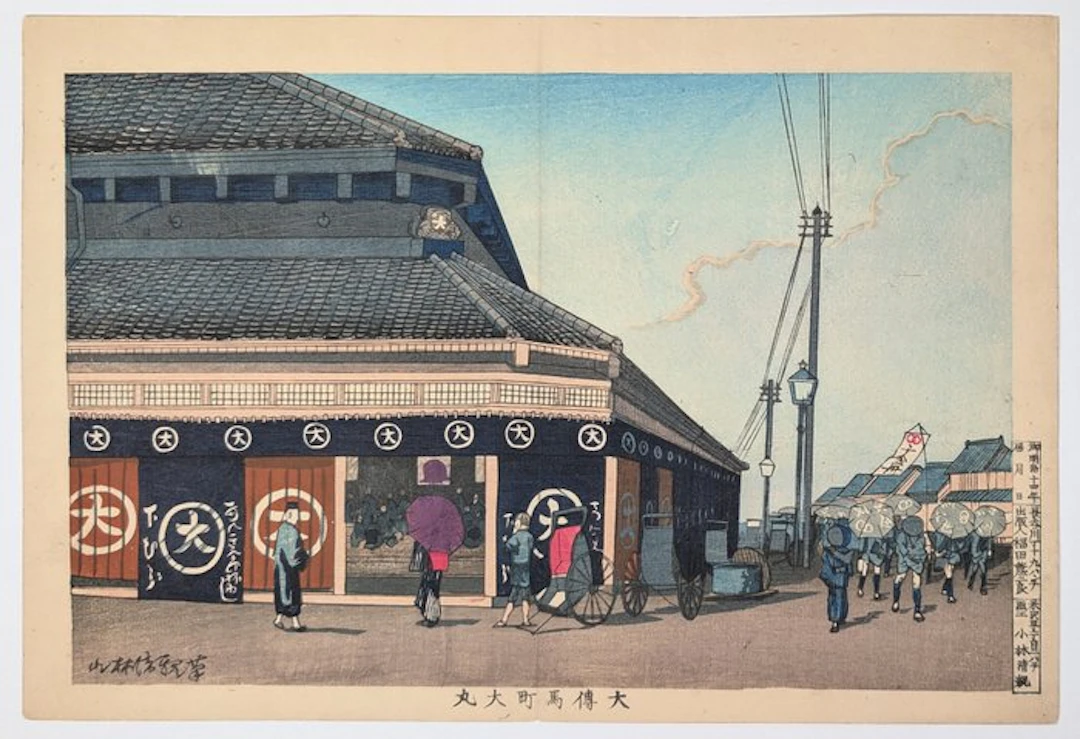
** This is one of the established designs of the series and it is well documented. An impression from the Robert O. Muller Collection is held by the Smithsonian's National Museum of Asian Art, Washington (S2003.8.1115), and a further impression is in the British Museum, London. The design is catalogued in Tokichi Sakai, Kiyochika (Japan Association for the Preservation of Ukiyo-e, 1969), no. 82; in the Exhibition of Kobayashi Kiyochika, Shizuoka Prefectural Museum of Art, 1998, p. 50, no. 61; in Hideki Kikkawa, Kobayashi Kiyochika: Studies in Light and Shadow of the Westernization of Japan (Seigensha, 2015), p. 35, no. 44; and in Kobayashi Kiyochika: A Retrospective, Machida City Museum of Graphic Arts, 2016, p. 72, no. 103. ** Artist: Kobayashi Kiyochika (小林清親, 1847–1915) Title: Ōdenma-chō Daimaru (大傳馬町大丸) — The Daimaru Store at Ōdenma-chō Series: Tōkyō Meisho Zu (東京名所図) — Famous Views of Tokyo, popularly called kōsen-ga (光線画) Subject: The Edo store (edo-dana) of the drapers Daimaru at Ōdenma-chō 3-chōme, Nihonbashi — opened 1743, closed 1910 Date: Meiji 14 (1881), per the dated registration cartouche — the final year of the series Publisher: Fukuda Kumajirō (福田熊次良), Hasegawa-chō 19-banchi, Tokyo Technique: Woodblock print (mokuhanga), polychrome nishiki-e with a full-width bokashi sky and deliberate woodgrain printing (mokume-zuri) in the roadway Format: Ōban yoko-e (horizontal) — image approx. 23 × 34 cm (9 × 13⅜ in.) Signature: Kobayashi Kiyochika hitsu (小林清親筆) in cursive at lower left; title in the bottom margin Marginal cartouche: Registration block at right: 御届 明治十四年 — publisher Fukuda Kumajirō of Hasegawa-chō, with the artist's own address given as Yonezawa-chō 2-chōme 1-banchi CONDITION Excellent — and this is the reason to look hard at this particular sheet. The keyblock is sharp throughout — the roof tiles, the wires, the individual spokes of the rickshaw wheels, the crowd of figures visible through the glass shopfront. The woodgrain of the block reads clearly across the roadway, evidence of careful hand-printing rather than heavy inking. An impression of this quality is not the norm for the series. Paper Unbacked, firm, with margins on all four sides. The centrefold is characteristic of the series rather than damage: these horizontal ōban sheets were routinely folded and bound into albums soon after publication — the British Museum's impression of this design is likewise recorded as coming from an album. No tears, holes, losses or repairs. Very good overall! The Scene — The Master of the Night, at Noon Kiyochika's reputation rests on darkness: rain, moonlight, gas flame, fire. This sheet is the opposite case, and it is the more difficult problem. He sets up a hard one-point perspective on a street corner, throws the great tiled mass of the Daimaru store across the left two-thirds of the sheet, and lets the road run away to a vanishing point on the right. Then he does the thing no Edo landscape designer had ever really done: he puts the sun somewhere above the upper right corner and draws every cast shadow it makes. Look at the ground. The man in the dark kimono, the woman under the violet parasol, the barefoot rickshaw puller with his empty vehicle, the water cistern, the crowd in the middle distance — each lays a distinct grey shadow on the roadway, all falling in the same direction at the same angle. Nothing in the classical repertoire prepares a viewer for this. Cast shadows are the single clearest marker of Western observational drawing entering the Japanese print, and here they are not a decorative flourish but the structural logic of the whole picture: they are what makes the empty road read as a lit, occupied, three-dimensional space rather than a flat brown field. The rest is Meiji Tokyo listed item by item, without comment. Telegraph poles and their strung wires cut across the sky. A gas lamp on a tall iron standard. Two rickshaws parked at the corner and a third being pulled away. A glazed shopfront window — plate glass, still a novelty — through which a whole roomful of clerks and customers can be seen seated on the matting inside. And a squat glazed water cistern under a woven cover, standing at the kerb: the district's fire precaution, which in the Tokyo of 1881 was not a picturesque detail. The Shop — Hiroshige's Shopfront, Twenty-Three Years Later The crest repeated across that indigo curtain — the character 大 inside a circle, marudai — belongs to Daimaru, and the reason it is the most famous shop-mark in Japanese printmaking is that Daimaru understood advertising before almost anyone else. Shimomura Hikoemon founded the house in Kyoto in 1717 and opened the Edo branch at Ōdenma-chō 3-chōme in 1743; the crest went out ahead of it on thousands of green furoshiki, so that the shop was recognised in Edo before it had opened its doors. It traded on fixed cash prices, took the motto sengi kōri ("righteousness first, profit after"), and by the 1840s stood second only to Mitsui's Echigoya among the drapers of the city. Hiroshige drew this shopfront twice. Once in an Edo meisho sheet of the late 1840s, and again — far more famously — as no. 74 of One Hundred Famous Views of Edo, Ōdenma-chō kofuku-ten, published in the seventh month of 1858, the censor seal dated barely two months before Hiroshige died of cholera. That print is generally read as paid placement: Daimaru had watched a rival street of cotton wholesalers get its own sheet in the series a few months earlier and evidently was not prepared to let the matter rest. So when Kiyochika sets up his easel at the same corner in 1881, he is answering one of the last things Hiroshige ever drew. The building is the same fireproof dozō construction, the crest is the same, the noren hangs where it hung. What has arrived in the intervening twenty-three years is everything above street level: the wires, the gas standard, the plate glass, the rickshaws. The picture is a like-for-like measurement of how much a city can change while a shopfront stays still. Daimaru held that corner for another twenty-nine years and closed the Tokyo store in 1910, after 167 years — the district's through-traffic had moved north and the site had lost its advantage. Nothing of it stands now. The Series — Where Ukiyo-e Meets the Age of Photography In 1876 Kiyochika began, with the publisher Matsuki Heikichi, an initially untitled project recording the rapidly modernising capital in Western-derived perspective and naturalistic light. He produced seventeen designs for Matsuki and a further seventy-six for Fukuda Kumajirō, who took over primary production from 1878 — ninety-three sheets in all, the body of work now known as Tōkyō Meisho Zu. Collectors and scholars call it kōsen-ga, "light-ray pictures," after its central innovation: the flat colour fields and hard black outlines of Edo landscape printmaking replaced by graded atmospheric effect, informed by Kiyochika's study of Western painting and by the new medium of photography then reshaping how Japanese artists looked at their own city. This sheet comes from the end of it. January 1881 brought the Ryōgoku conflagration, which burned out Kiyochika's own house at Yonezawa-chō — the address printed in the margin of this very print — while he stood in the street sketching the fire. A second great fire followed on 11 February. Within the year the kōsen-ga project had stopped for good, at somewhere over ninety designs, and Kiyochika had moved on to satirical work for the magazine Marumaru Chinbun. He never returned to the manner. Everything in this listing therefore describes a print made in the last months of the most important body of work in Meiji landscape printmaking.
Estimation:€1,500
Vers la vente aux enchèresVoir tous les objets deCatawikiouArt Ancien
Estimation:
€1,500
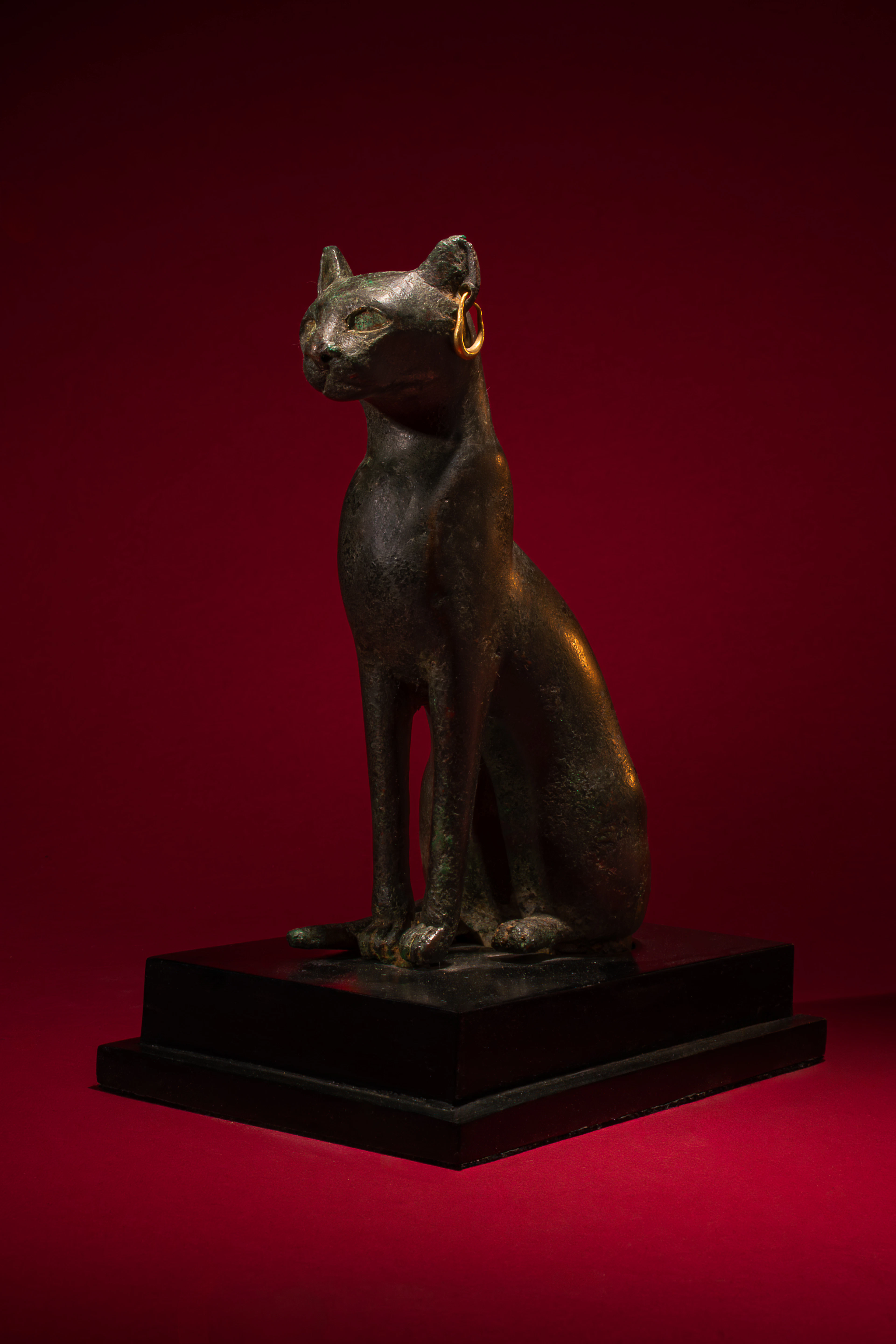
RARE EGYPTIAN BRONZE CAT STATUETTE WITH GOLD EARRINGS - LARGE SIZE
06/21/2026

€25,506.4
Est. : €23,095.64
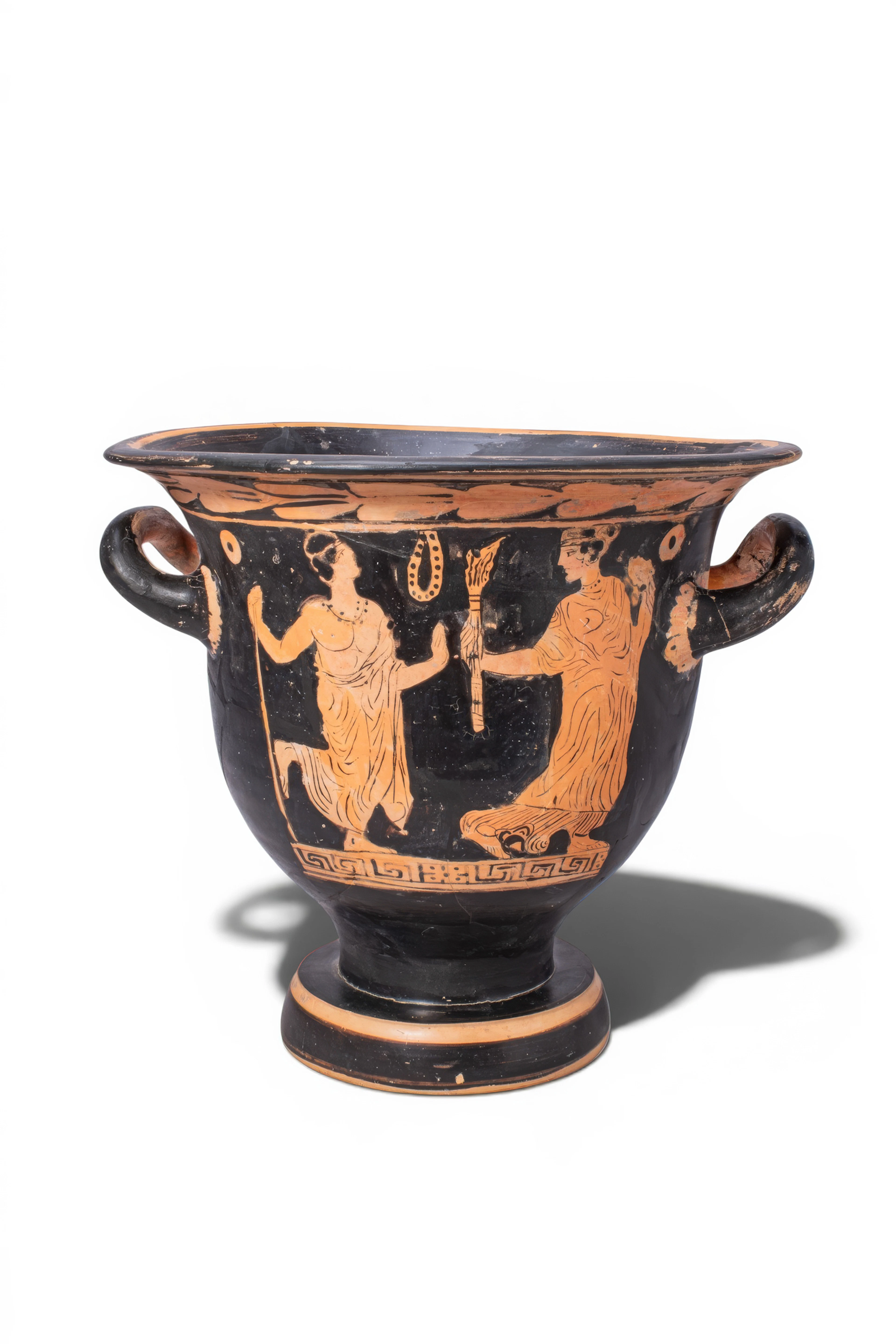
APULIAN RED-FIGURE BELL KRATER WITH KOMASTOS AND MAENAD - TL TESTED
06/21/2026
€3,014.39
Est. : €2,304.2
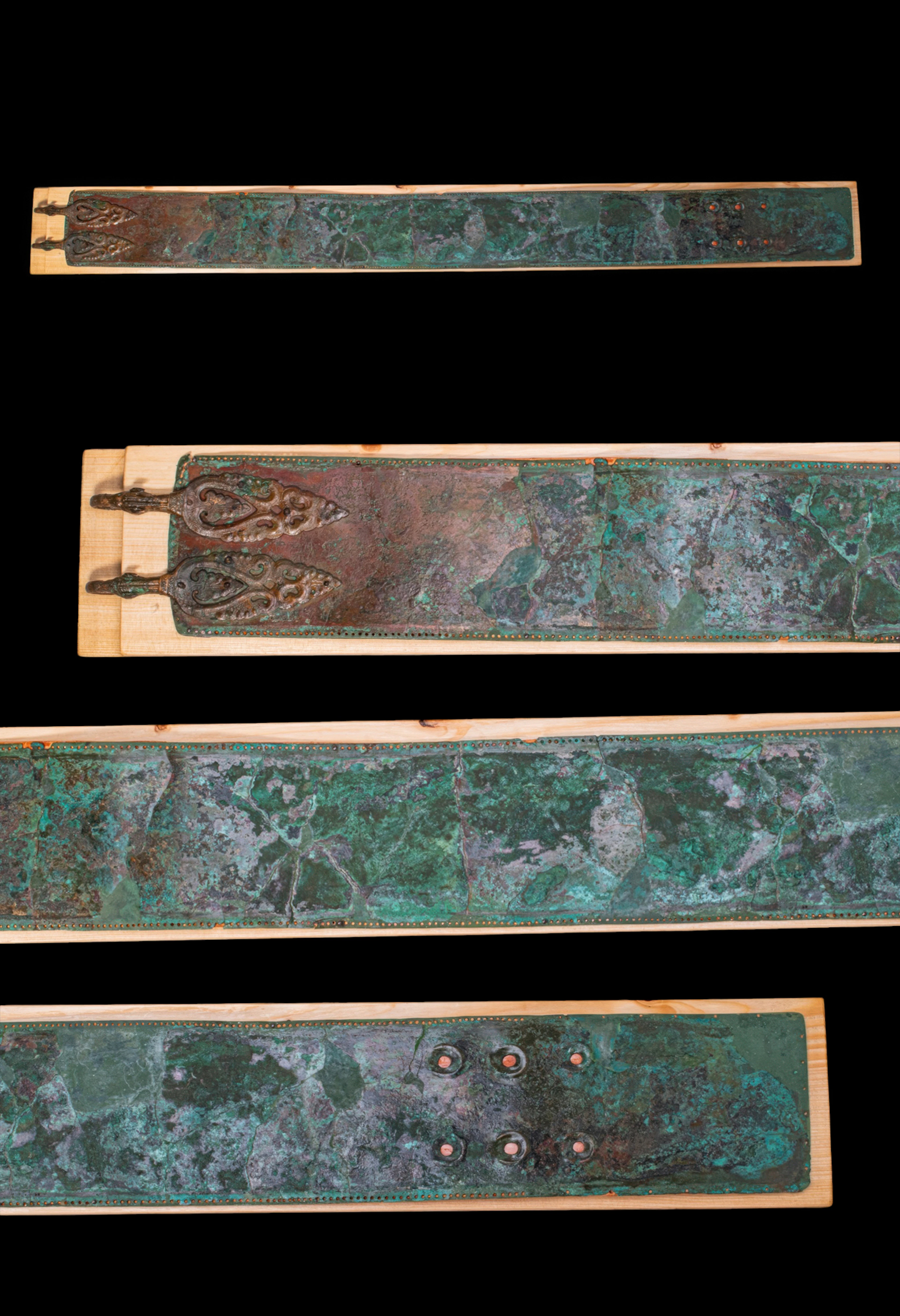




OCT 27 | 4:00 PM
Présentez votre vente aux enchères à des collectionneurs du monde entier !
Soyez référencé dès maintenantEn vous abonnant, vous acceptez la politique de confidentialité. Désabonnez-vous à tout moment.
Barnebys HQ
Brahegatan 10
BOX 5038
114 37 Stockholm
