




Toutes les enchères / Art Ancien / Kajita Hanko — Kuchi-e — Beauty and Plum Blossoms

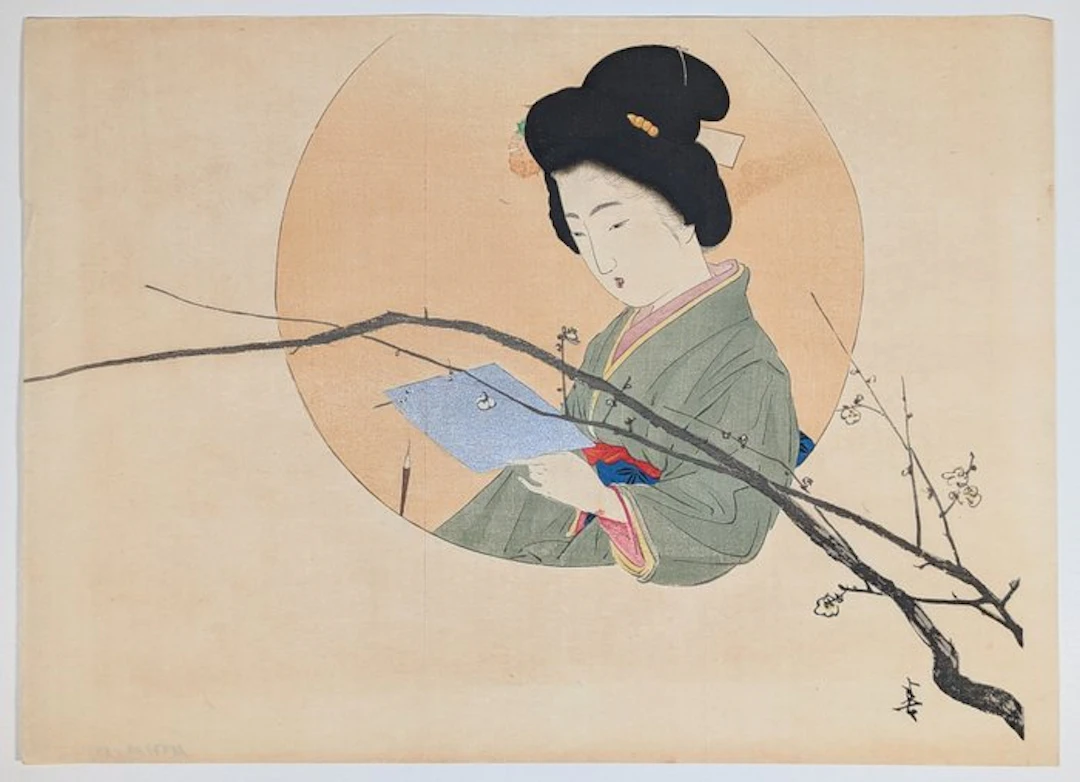
梶田半古 — KAJITA HANKŌ (1870–1917) Beauty and Plum Blossoms, kuchi-e frontispiece Technique: Woodblock print (mokuhanga), polychrome, with silver mica and burnishing Date: 1903 (Meiji 36) Period: Meiji era Format: Kuchi-e, yoko-e (landscape orientation), approx. 22 × 30 cm Signature: Signed Hankō (半古), lower right Condition: Excellent colors and impression. The paper is clean and subtle! Description: The design shows a young woman in a circular inset, holding a slip of paper and a writing brush as if reading a poem or a note she has just written. Branches of white plum blossom extend across the foreground. Silver mica is used on the paper she holds, and the hair is burnished. Plum is the first tree to blossom in the Japanese year, flowering in late winter. In Japanese poetry and painting it has long been linked with the new year, renewal and the writing of verse. THE ARTIST Kajita Hankō was born in Tokyo in 1870 as Kajita Jōjirō, the son of a respected metalwork artist. He trained in Shijō-school painting and later under the Nanga painter Ishii Kenkō, and from 1886 he worked under the name Hankō. After a short period as vice-principal of the Toyama Prefectural School of Arts and Crafts, he returned to Tokyo to illustrate for the Yomiuri Shinbun. His illustrations for Ozaki Kōyō's novel Konjiki Yasha (The Golden Demon), serialised from 1900 to 1901, made him one of the most popular illustrators of the time. From 1902 he led a private painting school, where his pupils included Kobayashi Kokei, Maeda Seison and Okumura Togyū, who went on to become leading Nihonga painters of the 20th century. THE KUCHI-E TRADITION Kuchi-e are woodblock-printed frontispieces that were bound into Japanese novels and literary magazines between about 1890 and 1915. They were the last major field of traditional Japanese woodblock printing before the shin-hanga movement. They were designed by trained painters and printed with great care, often with mica, metallic pigments and embossing, and most show idealised beauties in a modern Meiji style. Hankō was one of the leading kuchi-e designers, along with Mizuno Toshikata, Takeuchi Keishū and Kaburagi Kiyokata
Estimation:€150
Vers la vente aux enchèresVoir tous les objets deCatawikiouArt Ancien
Estimation:
€150
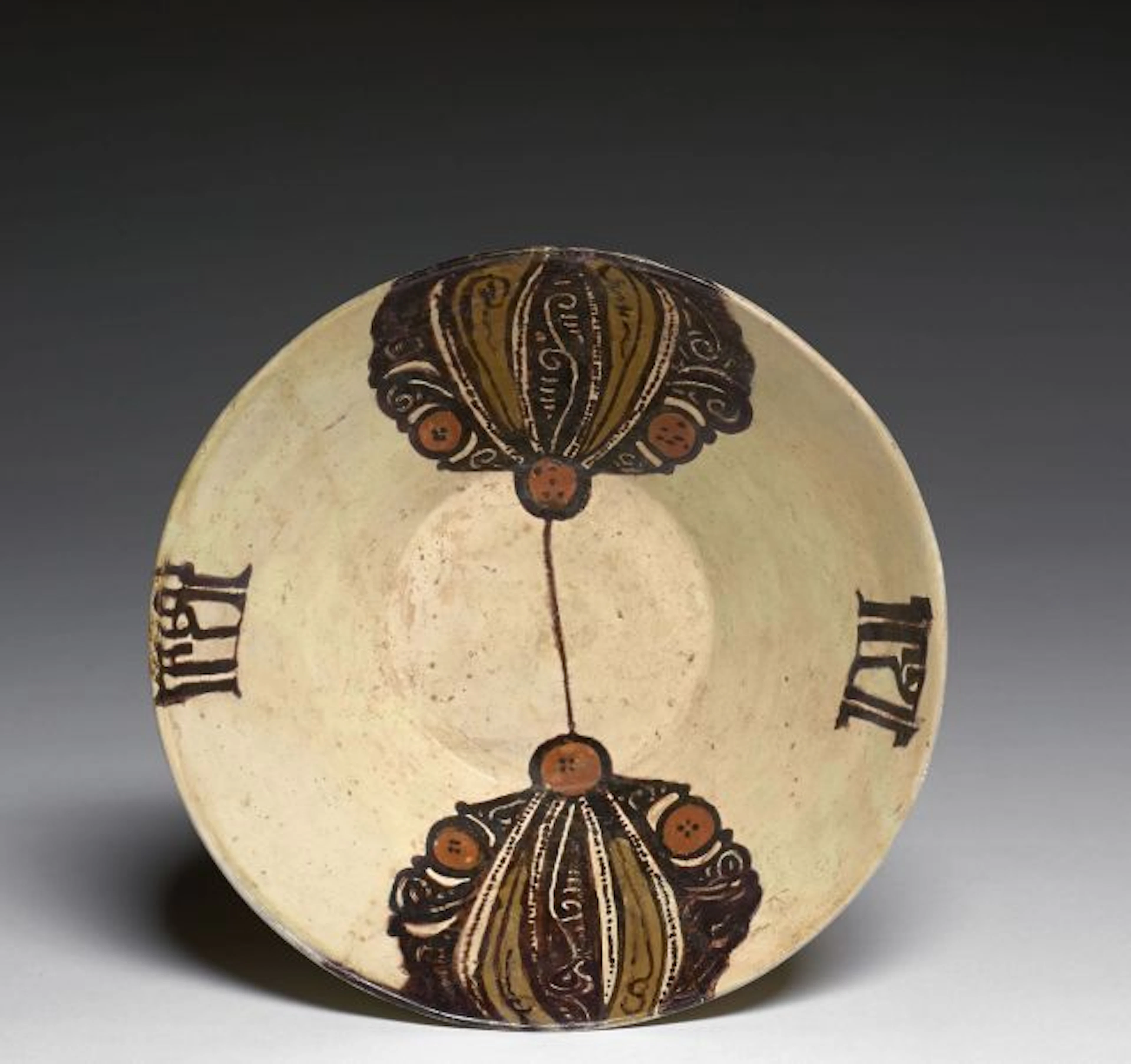
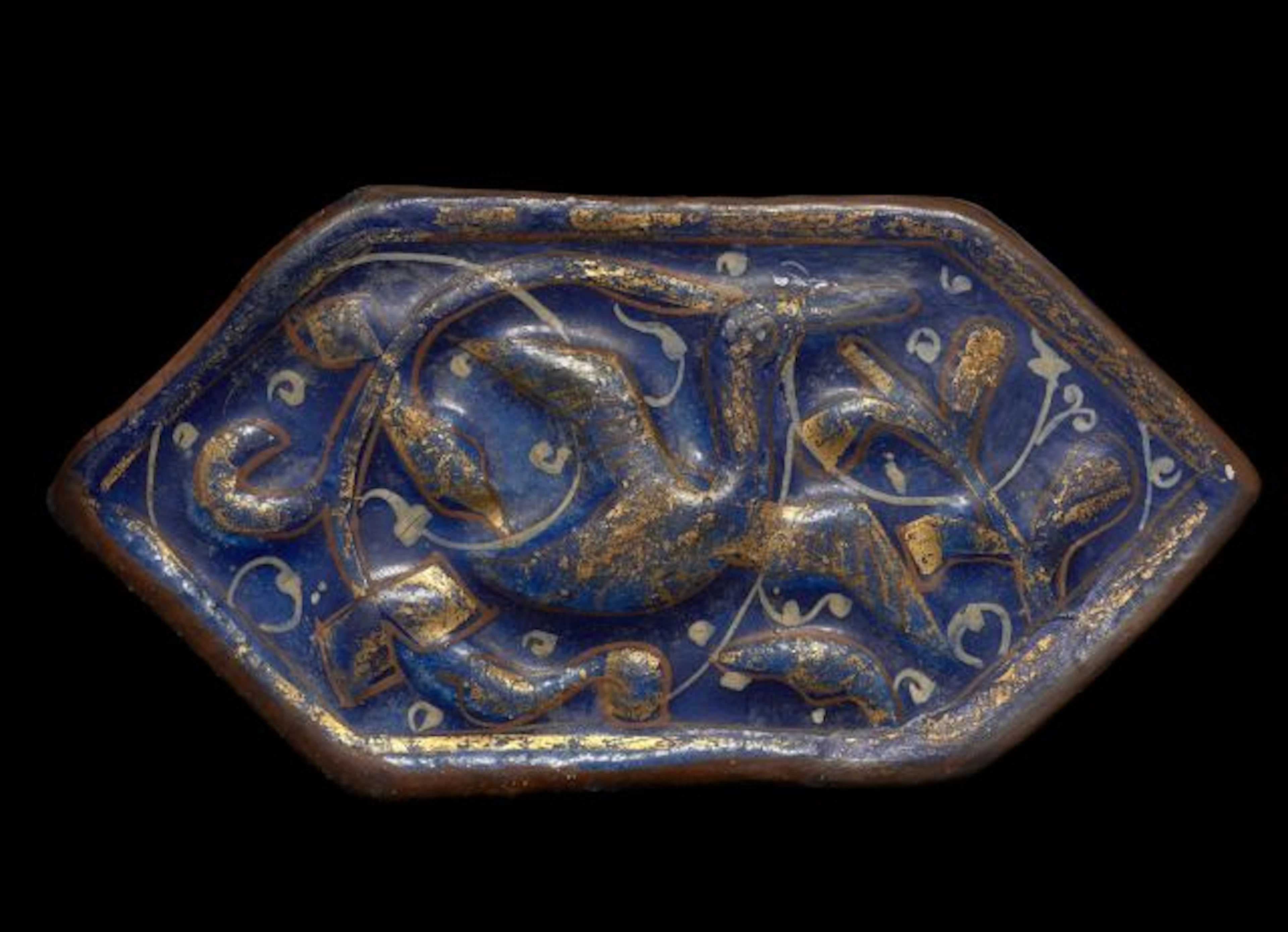
CARREAU LADJVARDINA AU CANARD, KASHAN, ART IL-KHANIDE, DEUXIÈME MOITIÉ
03/25/2014

€1,560
Est. : €1,000
Présentez votre vente aux enchères à des collectionneurs du monde entier !
Soyez référencé dès maintenantEn vous abonnant, vous acceptez la politique de confidentialité. Désabonnez-vous à tout moment.
Barnebys HQ
Brahegatan 10
BOX 5038
114 37 Stockholm
