



Toutes les enchères / Arts Graphiques / Francesco Albani (Bologna

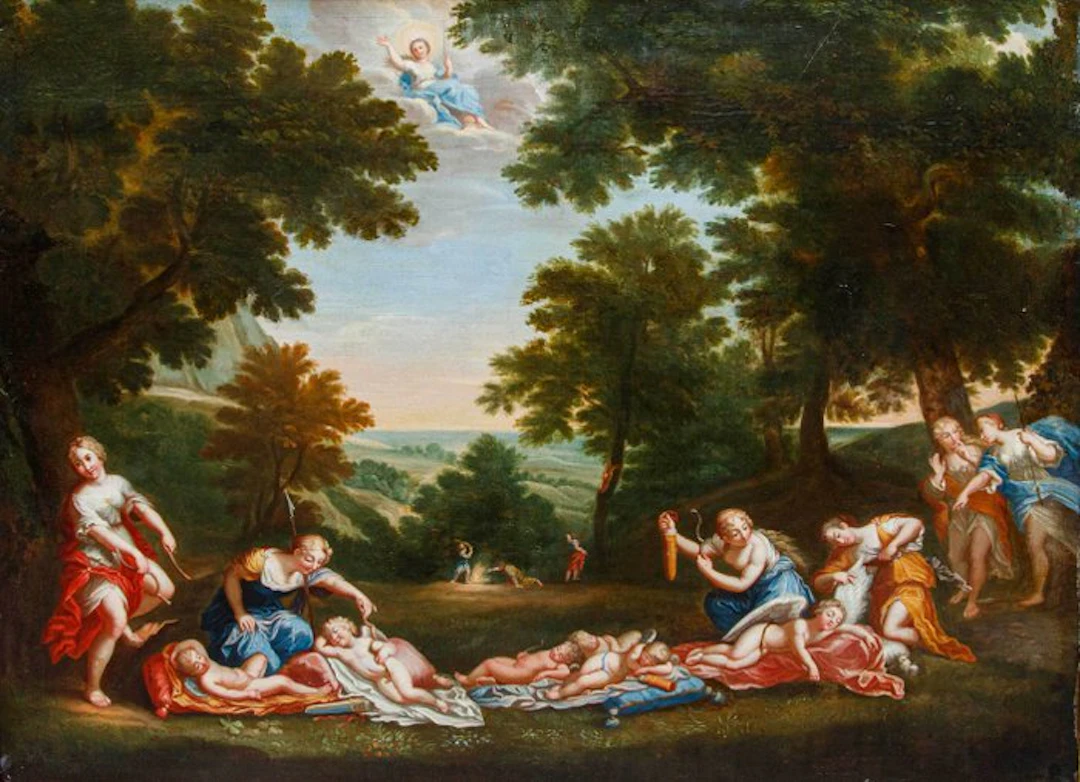
Sleeping Cupids Disarmed by the Nymphs Oil on canvas, 72 x 93.5 cm - With frame, 96 x 117.5 cm The work under examination constitutes an elegant and refined testimony to the visual fortune and enormous collecting success of the models conceived by Francesco Albani (Bologna, 1578 – 1660), among the leading and most acclaimed interpreters of the Emilian classicism of the seventeenth century. The composition depicts the allegorical episode of The Armies of Cupid Disarmed by Diana’s Nymphs (also known as The Triumph of Chastity or The Winter), a subject whose inspiration draws from Filostrato of Lemnos’ Eikones — a text extraordinarily popular between the 15th and 17th centuries describing the games and allegories of the cupids bound to the four seasons — and from the classical theme of the contrast between Love and Chastity. The scene is set in an idyllic and expansive wooded landscape that opens onto a bright horizon at sunset. In the foreground, among soft draperies and a careful chiaroscuro treatment, a group of sleeping cupids lies; taking advantage of their vulnerability, Diana’s nymphs — followers of the hunt goddess and guardians of purity — secretly steal their bows and quivers full of arrows. In the background, other nymphs burn the weapons of love on a purifying bonfire, while in the upper band of the canvas, seated on a radiant cloud and accompanied by the rising crescent, the goddess Diana herself appears benevolently presiding over the definitive triumph of Chastity over the snares and the futile beauty incarnated by Venus and Cupid. From a compositional standpoint, the invention goes back to the famous cycles devoted to Venus and Diana’s Stories conceived by Albani in the second and third decades of the seventeenth century. The prototype of this canvas finds its first essential precedent in the famous tondo The Triumph of Diana (or Winter) executed for Cardinal Scipione Borghese (Rome, Borghese Gallery), an work that completed the celebrated Borghese cycle by introducing the moral epilogue of Chastity’s victory. Subsequently, in 1621, Albani reworked the series for Duke Ferdinando Gonzaga of Mantua, giving rise to the four rectangular canvases now housed at the Musée du Louvre in Paris, among which stands out Le Amours désarmés. Compared to the Louvre version, this present canvas shows an articulation of the scene strictly as a mirror image (reversed from right to left). This iconographic inversion represents the key element for the correct contextualization of the work: it indeed confirms the use of a translation engraving as a workshop model. The period engravings, imprinting the matrix in a mirrored way compared to the original painting, produced on the printed sheet a reversed image, which was readily adopted by pupils, followers, and copyists of the era — a field in which entire workshops distinguished themselves between the seventeenth and eighteenth centuries. The widespread diffusion of such engravings answered the enormous market demand of the time. As witnesses to this, both autograph replicas issued by Albani (including variants kept in Bordeaux, Kassel, and Potsdam) and high-quality contemporary copies commissioned by the same collectors (such as those made for the Borghese and today at the Colegio de Santamarca in Madrid) show the “anacreontic” painting of the Bolognese master — capable of transforming myth into a serene and harmonious fusion of figure and nature — ensuring these images a very long and fortunate resonance, of which this canvas represents a refined period elaboration. The frame is provided as a gift, therefore it cannot be a ground for return or complaint. For paintings purchased abroad: after payment the procedure to obtain the export license (ALC) will be initiated. All antiquities sent abroad from Italy require this document, issued by the Ministry of Cultural Heritage. The procedure may take 3 to 5 weeks from the request, so as soon as we have the document the painting will be shipped.
Estimation:€4,500
Vers la vente aux enchèresVoir tous les objets deCatawikiouArts Graphiques
Estimation:
€4,500
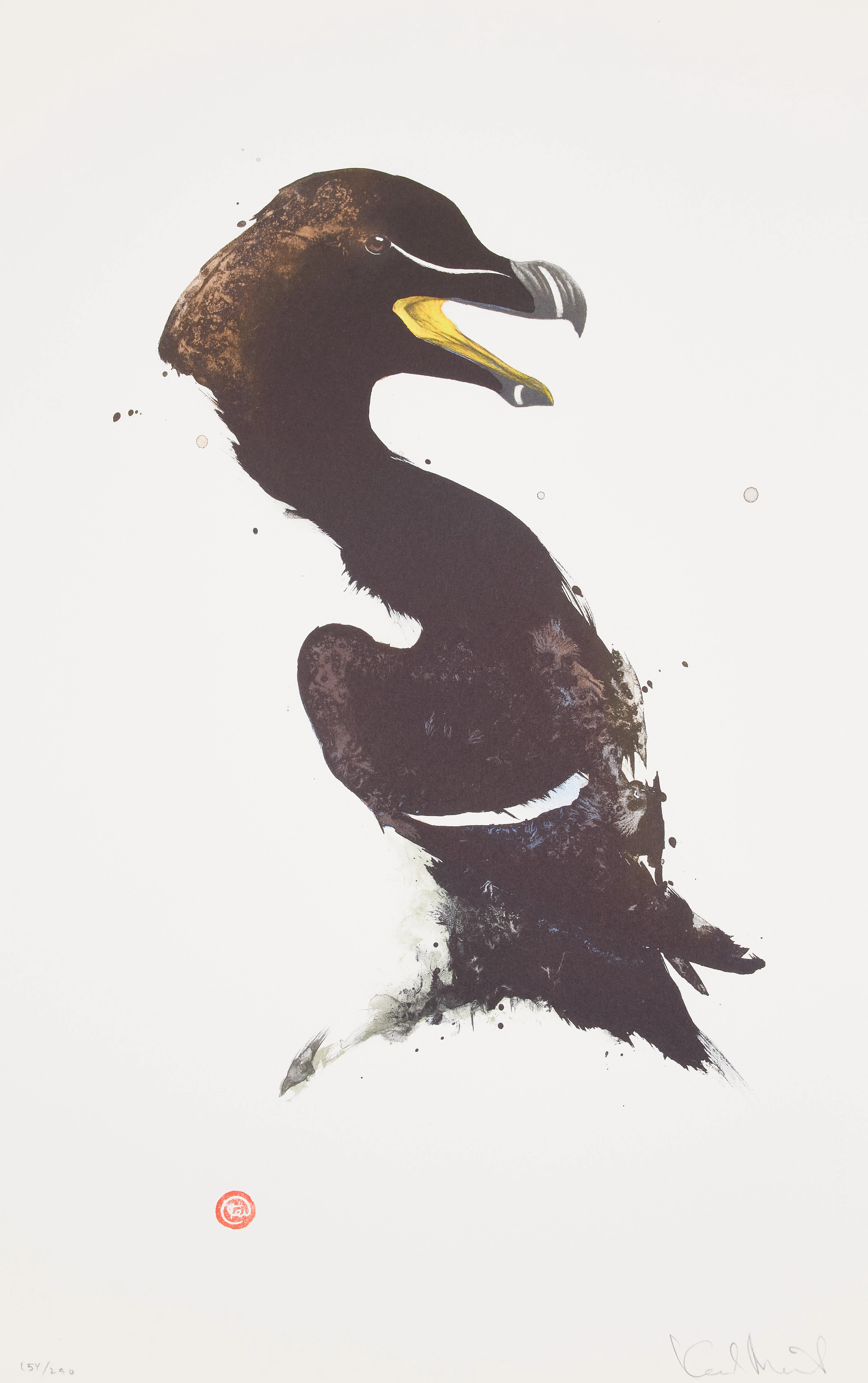
KARL MÅRTENS, "Tordmule", färglitografi, signerad och numrerad 154/290.
10/16/2026
€62.84
Est. : €179.2
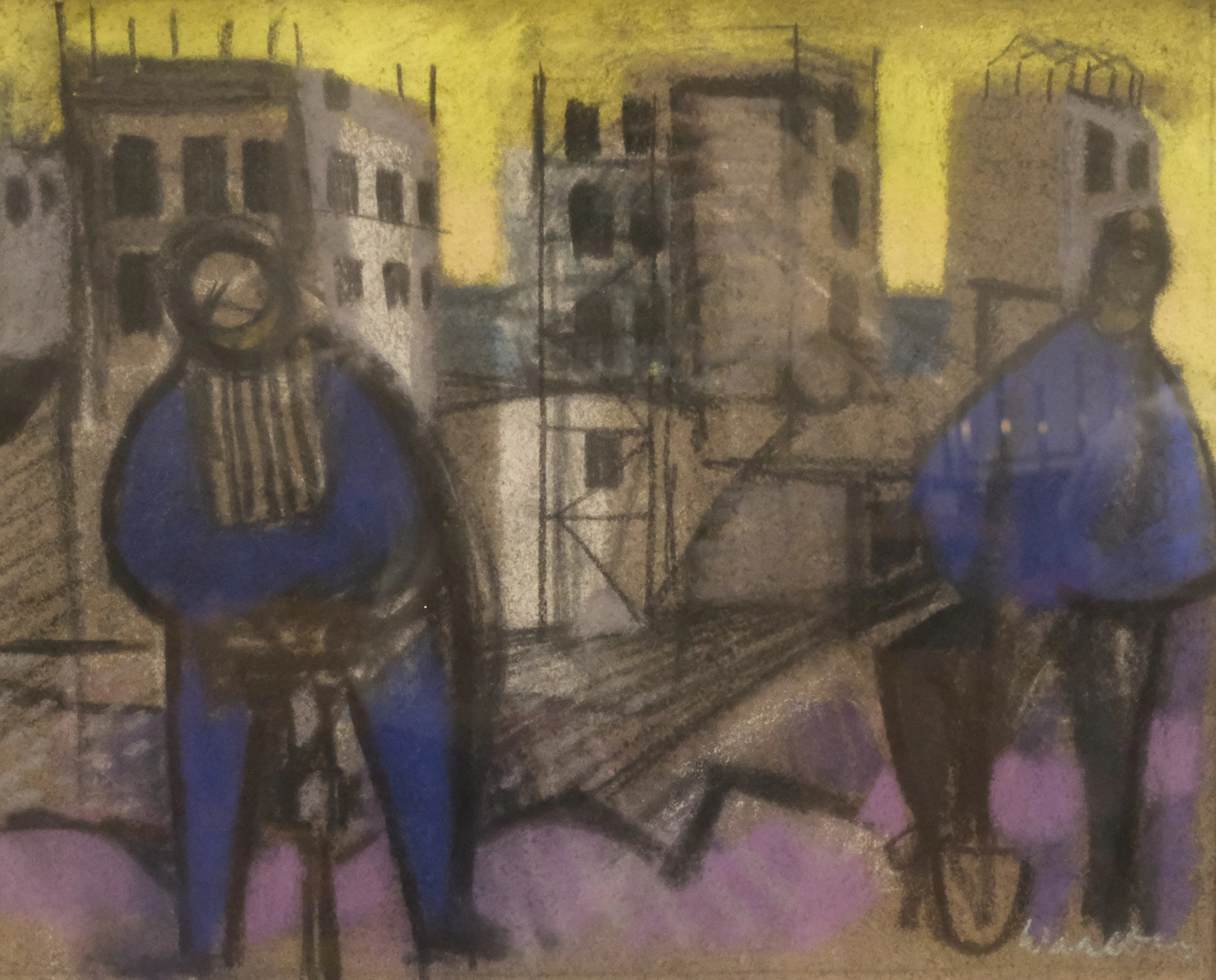
BERTIL WAHLBERG. PASTELL. ABSTRAKT KOMPOSITION, STADSMILJÖ MED ARBETANDE
10/16/2026

€26.93
Est. : €44.8
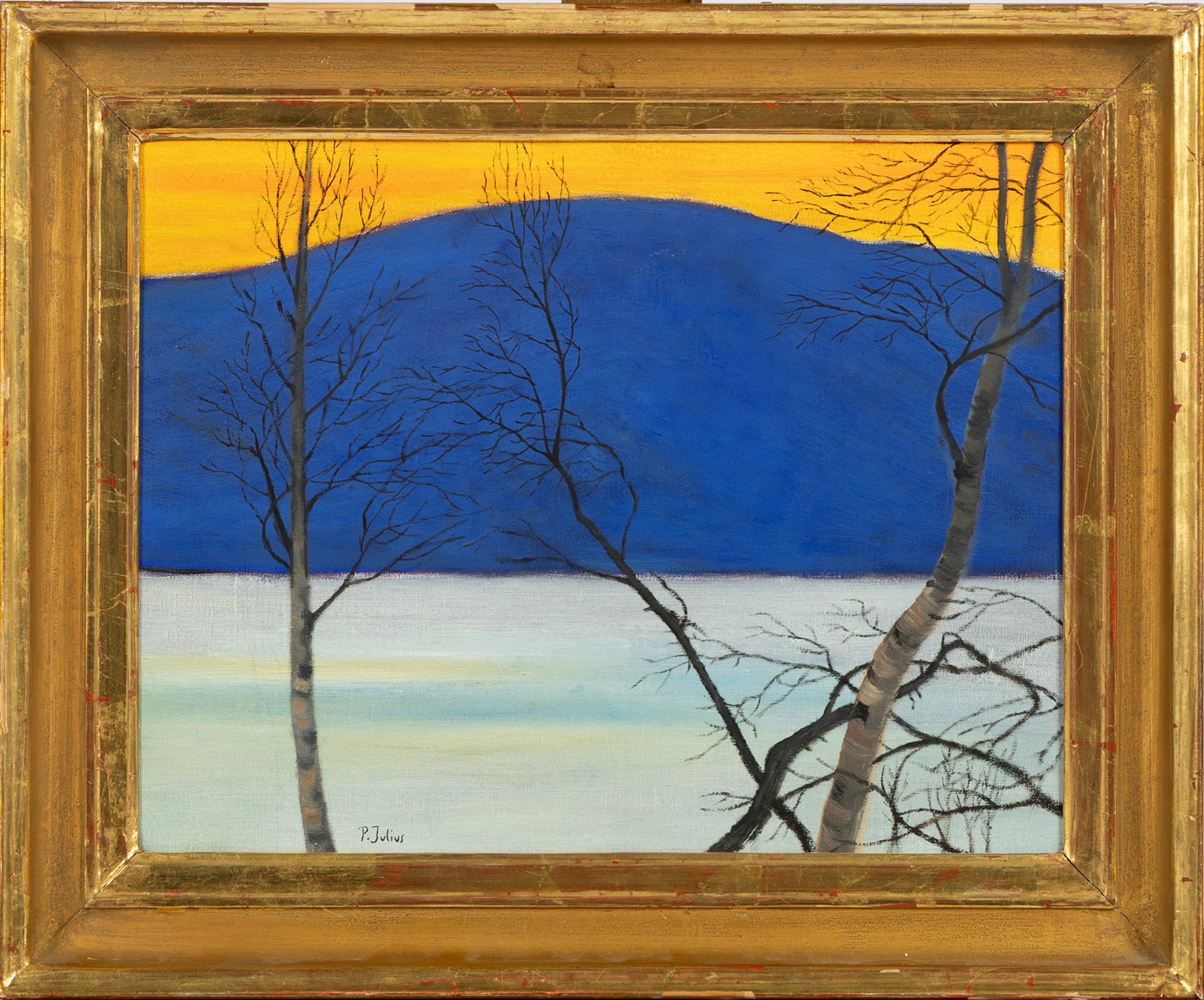
PER JULIUS. Oljemålning på duk. "Tängvattnet, Hemavan, Lappland".
10/16/2026
€628.52
Est. : €268.8
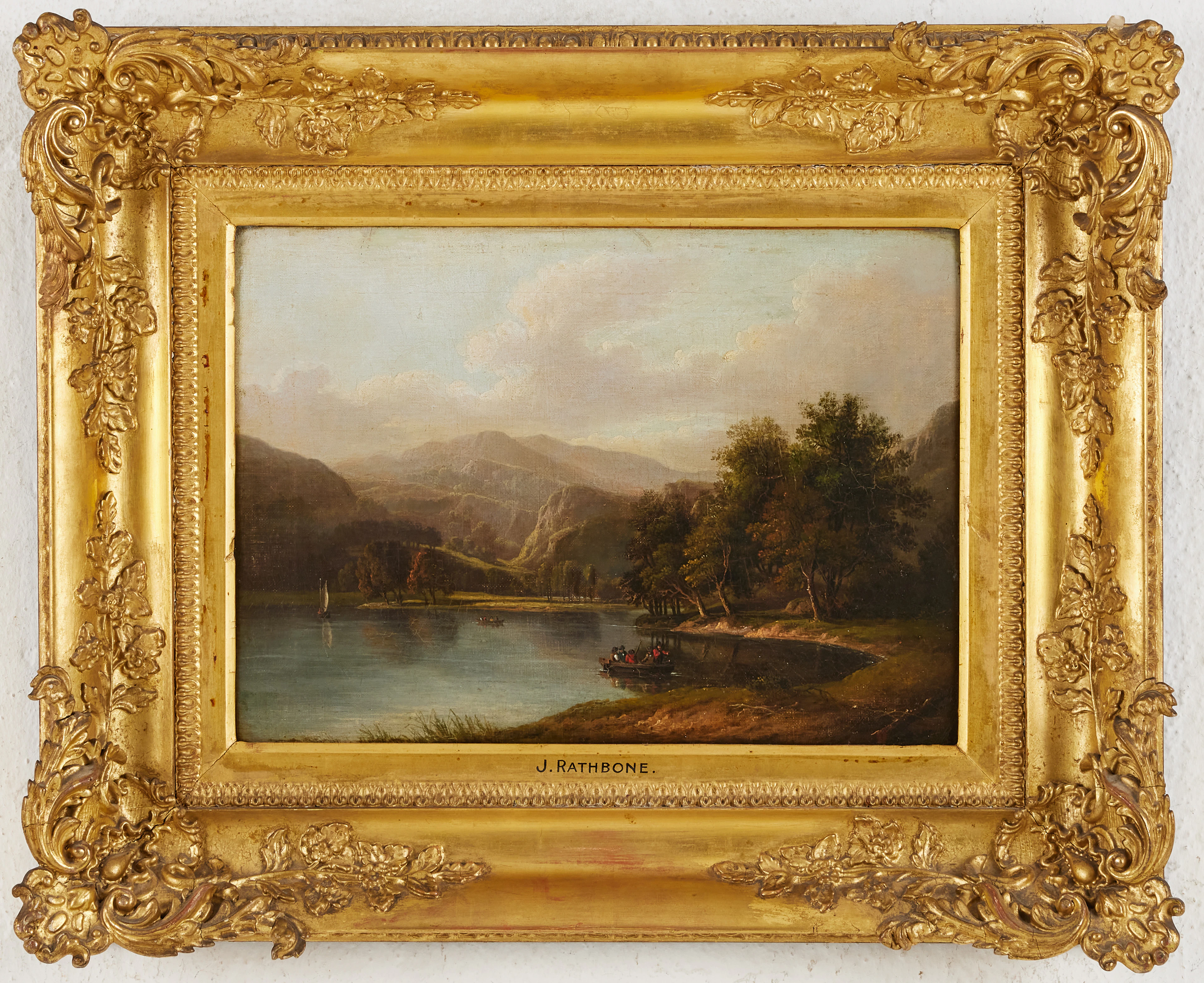
JOHN RATHBONE. (England, 1750-1807). Engelskt landskap, olja på duk.
10/16/2026
€538.66
Est. : €716.82




OCT 23 | 8:00 AM
Présentez votre vente aux enchères à des collectionneurs du monde entier !
Soyez référencé dès maintenantEn vous abonnant, vous acceptez la politique de confidentialité. Désabonnez-vous à tout moment.
Barnebys HQ
Brahegatan 10
BOX 5038
114 37 Stockholm
