


OCT 8 | 3:00 PM

Présentez votre vente aux enchères à des collectionneurs du monde entier !
Soyez référencé dès maintenantEn vous abonnant, vous acceptez la politique de confidentialité. Désabonnez-vous à tout moment.
Barnebys HQ
Brahegatan 10
BOX 5038
114 37 Stockholm
Toutes les enchères / Arts Graphiques / EDWARD VILLIERS RIPPINGILLE (BRITISH 1798-1859), THE ORDEAL BY TOUCH
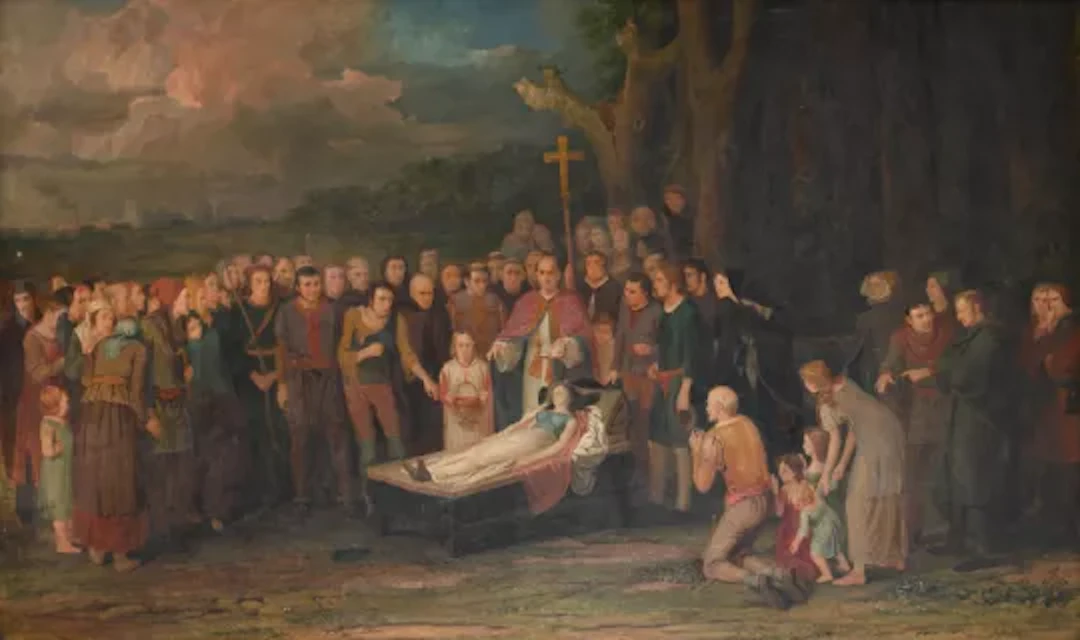
EDWARD VILLIERS RIPPINGILLE (BRITISH 1798-1859) THE ORDEAL BY TOUCH Oil on panel Signed and dated '1825' (lower left) 81 x 137cm (31¾ x 53¾in.) Provenance: The collection of John Gibbons, 16 Hanover Terrace, Regent's Park Thence by descent to L. P. Gibbons, Uckington, Cheltenham His sale, Christie's, London, 29 November 1912, lot 120, where purchased by C. T. Gibbons David Cross Gallery, Bristol, where purchased by the present owner circa 1997 Exhibited: London, The Royal Academy, 1825 Literature: H. Colburn, 'Fine Arts/Royal Academy' in The Literary Gazette, London, 1825, vol. 9, p. 444 'Exhibition - Royal Academy' in New Times, London, 26 May 1825 Ed. A. A. Watts, 'Notice of the Works of E. V. Rippingille' in The Literary Souvenir, and Cabinet of Modern Art, London, Whittaker and Co., 1835, pp. 171-173 The ritual depicted derives from a widespread and deeply held belief (cruentario, from cruentare, to make bloody) in medieval and early modern Europe that a corpse would bleed in the presence of its murderer. The man standing at the centre of the scene, left hand extended towards the corpse, is the supposed murderer brought to a trial at which the corpse might bleed and so testify against the one who had wronged her. Exhibited at the Royal Academy in 1825, the painting was reviewed anonymously in The Literary Gazette: 'In the school of Painting, Mr Rippingille's Ordeal by Touch, 197, should either have been rejected, or at least placed so as to be seen. The subject is of a character to excite great interest and the talents hitherto displayed by this artist have been such as to favour a supposition of its being as well managed as works of his which have gone before. But the general appearance of the picture certainly does not warrant this; though as far as regards expression, the countenance of the accused bears the strongest traits of terror and guilt, and displays the powers of the artist equally with any thing we have seen from his extraordinary pencil.' (“Fine Arts/Royal Academy” review, p. 444). In an anonymous piece about Rippingille in The Literary Souvenir, 1835, it is said that although he had 'long enjoyed a high reputation among his brother artists', he was 'but slenderly appreciated by the public at large' who knew him chiefly by four pictures, one of which was, 'The Ordeal by Touch' (vol. 9, “Notice of the Works of E. V. Rippingille”, p. 171). Condition Report Disclaimer, EDWARD VILLIERS RIPPINGILLE (BRITISH 1798-1859), THE ORDEAL BY TOUCH, EDWARD VILLIERS RIPPINGILLE (BRITISH 1798-1859) THE ORDEAL BY TOUCH Oil on panel Signed and dated '1825' (lower left) 81 x 137cm (31¾ x 53¾in.) Provenance: The collection of John Gibbons, 16 Hanover Terrace, Regent's Park Thence by descent to L. P. Gibbons, Uckington, Cheltenham His sale, Christie's, London, 29 November 1912, lot 120, where purchased by C. T. Gibbons David Cross Gallery, Bristol, where purchased by the present owner circa 1997 Exhibited: London, The Royal Academy, 1825 Literature: H. Colburn, 'Fine Arts/Royal Academy' in The Literary Gazette, London, 1825, vol. 9, p. 444 'Exhibition - Royal Academy' in New Times, London, 26 May 1825 Ed. A. A. Watts, 'Notice of the Works of E. V. Rippingille' in The Literary Souvenir, and Cabinet of Modern Art, London, Whittaker and Co., 1835, pp. 171-173 The ritual depicted derives from a widespread and deeply held belief (cruentario, from cruentare, to make bloody) in medieval and early modern Europe that a corpse would bleed in the presence of its murderer. The man standing at the centre of the scene, left hand extended towards the corpse, is the supposed murderer brought to a trial at which the corpse might bleed and so testify against the one who had wronged her. Exhibited at the Royal Academy in 1825, the painting was reviewed anonymously in The Literary Gazette: 'In the school of Painting, Mr Rippingille's Ordeal by Touch, 197, should either have been rejected, or at least placed so as to be seen. The subject is of a character to excite great interest and the talents hitherto displayed by this artist have been such as to favour a supposition of its being as well managed as works of his which have gone before. But the general appearance of the picture certainly does not warrant this; though as far as regards expression, the countenance of the accused bears the strongest traits of terror and guilt, and displays the powers of the artist equally with any thing we have seen from his extraordinary pencil.' (“Fine Arts/Royal Academy” review, p. 444). In an anonymous piece about Rippingille in The Literary Souvenir, 1835, it is said that although he had 'long enjoyed a high reputation among his brother artists', he was 'but slenderly appreciated by the public at large' who knew him chiefly by four pictures, one of which was, 'The Ordeal by Touch' (vol. 9, “Notice of the Works of E. V. Rippingille”, p. 171). Provenance:, Exhibited:, Literature:, The Literary Gazette, New Times, The Literary Souvenir, and Cabinet of Modern Art, cruentario, cruentare, The Literary Gazette, The Literary Souvenir, Condition Report Disclaimer
Estimation:€2,357.86
Vers la vente aux enchèresVoir tous les objets deDreweattsouArts Graphiques
Estimation:
€2,357.86
OCT 8 | 3:00 PM


Présentez votre vente aux enchères à des collectionneurs du monde entier !
Soyez référencé dès maintenant
€90
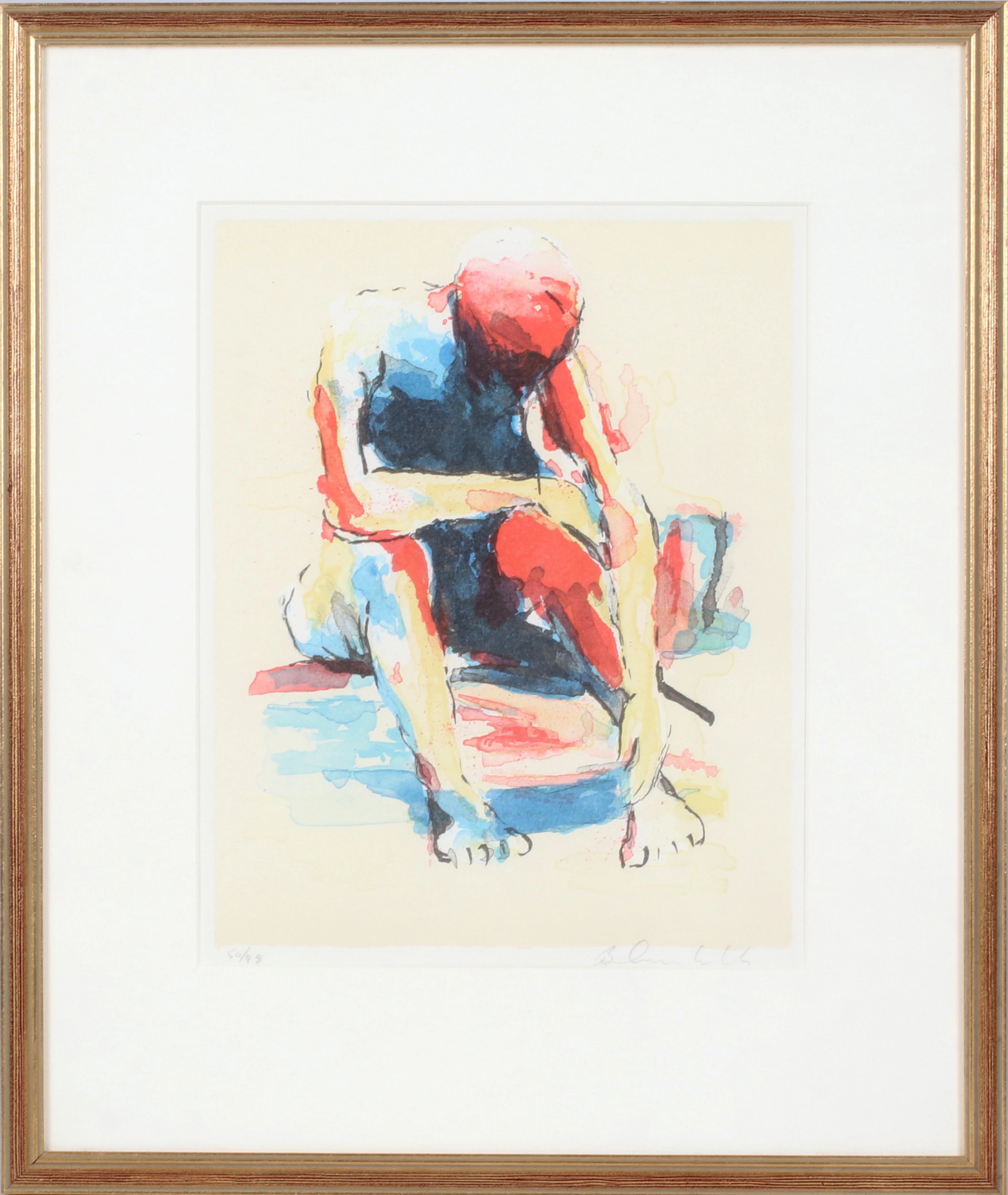
BJÖRN AUREBEKK. Sittande kvinna, litografi, signerad och numrerad 50/99.
10/06/2026
€26.78
Est. : €44.4