

OCT 23 | 8:00 AM

Toutes les enchères / Art Ancien / Cherry-blossom Viewing at Asuka Hill · 48 FAMOUS VIEWS OF...

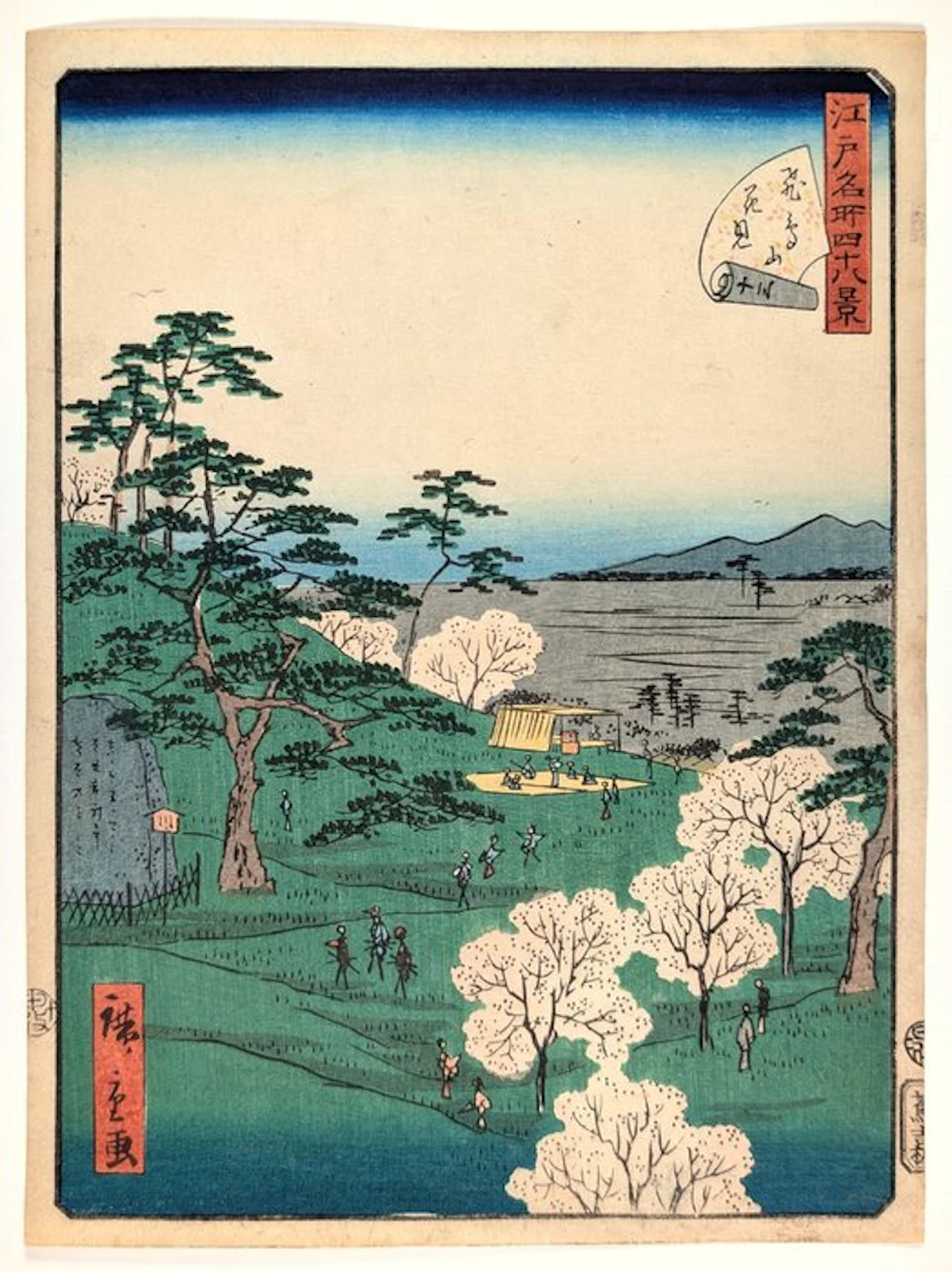
Artist: Utagawa Hiroshige II 二代歌川広重 (1826–1869) Title: Asukayama hanami 飛鳥山花見, Cherry Blossom Viewing at Asukayama (No. 13) Series: Edo meisho shijūhakkei 江戸名所四十八景 — Forty-eight Famous Views of Edo Publisher: Tsutaya Kichizō 蔦屋吉蔵 (Tsutakichi seal, right margin) Date: 1861 (Bunkyū 1 / Man'en 2) Format: Chūban tate-e, 25 × 17 cm Technique: Woodblock print (nishiki-e), ink and colour on paper Signature: Hiroshige ga 廣重画, in a blue tanzaku cartouche at lower right CONDITION Excellent impression and condition, minor trimming on the margins. The paper is firm and subtle. Please check the images! ABOUT THE PRINT Asukayama, a low hill north of Edo near Ōji, was the city's great cherry-blossom destination. In the early 1720s the eighth shōgun, Tokugawa Yoshimune, had more than a thousand cherry trees planted there and opened the hill to the public. Unlike many other blossom sites around Edo, Asukayama allowed townspeople to eat, drink and celebrate under the trees, and in spring it filled with picnic parties, entertainers and teahouse stalls. A favourite amusement was kawarake-nage, throwing small unglazed clay discs from the hilltop for luck. In 1737 a large stone monument was set up on the hill, recording its history in classical Chinese composed by the Confucian scholar Narushima Dōchiku. The text was famously difficult to read, and the stone became a running joke among Edo visitors. The site kept its role after the end of the shogunate: in 1873 Asukayama was named one of Tokyo's first public parks, and it remains a popular hanami spot today. ABOUT THE SERIES Edo Meisho Shijūhakkei is a complete set of forty-eight chūban sheets, each pairing one of Edo's famous places with the seasonal feature it was known for; the publisher's seal and the censor's seal alternate from sheet to sheet, and two printing dates are documented — the twelfth month of Man'en 1 (1860) and the first month of Bunkyū 1 (1861). The publisher was Kōeidō, Tsutaya Kichizō. Hiroshige II — born Suzuki Chinpei, pupil and adopted son-in-law of the first Hiroshige — inherited the name in 1858 and, with it, the obligation to keep the studio's famous-places line running. This set belongs to the very last years of Edo: within seven years of its publication the city had a new name and a new government, and the pleasure districts it records were about to change beyond recognition. The chūban format made them affordable souvenirs at the time, which is precisely why they now read as an unusually candid record of where townspeople actually went.
Estimation:€150
Vers la vente aux enchèresVoir tous les objets deCatawikiouArt Ancien
Estimation:
€150
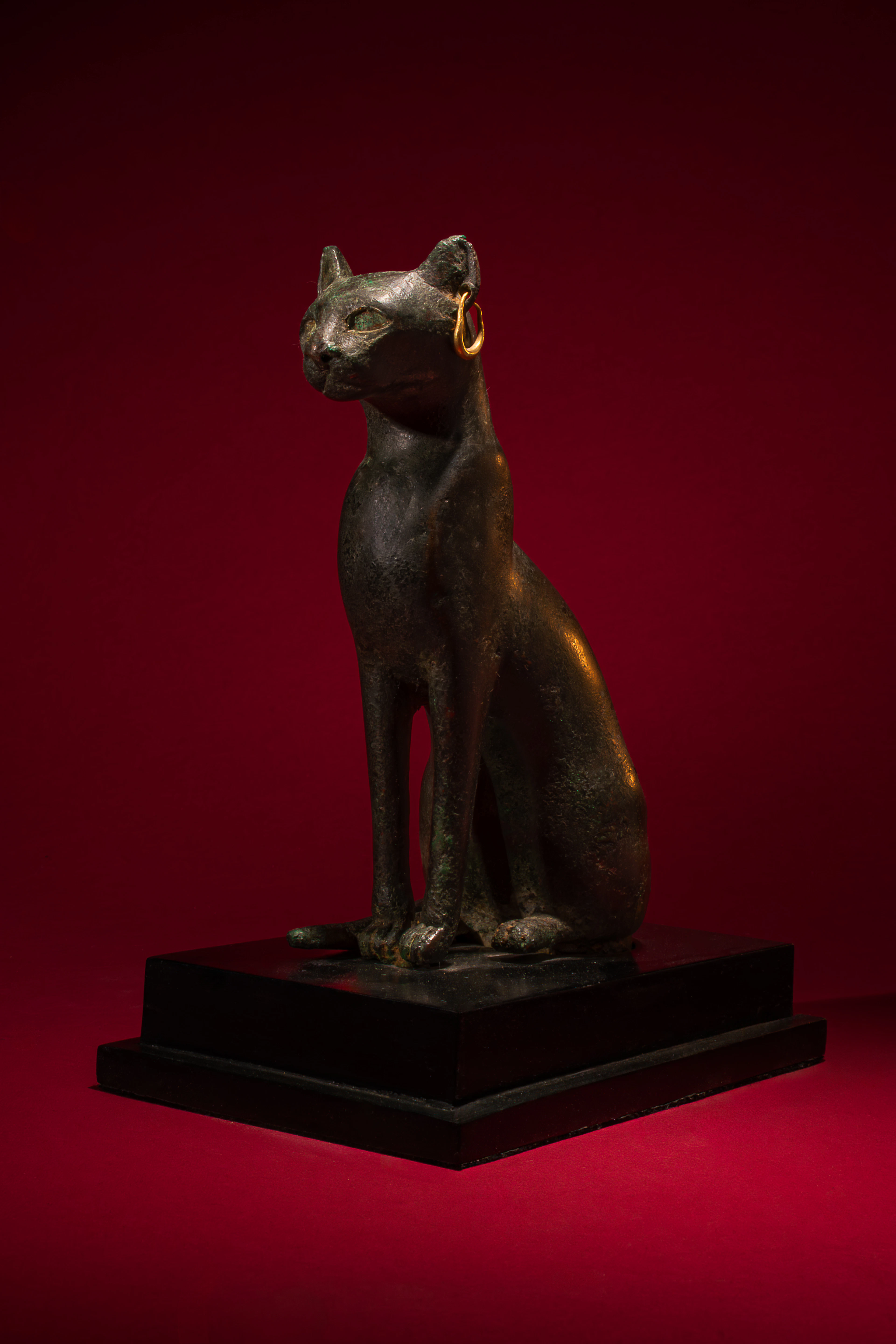
RARE EGYPTIAN BRONZE CAT STATUETTE WITH GOLD EARRINGS - LARGE SIZE
06/21/2026

€25,506.4
Est. : €23,095.64
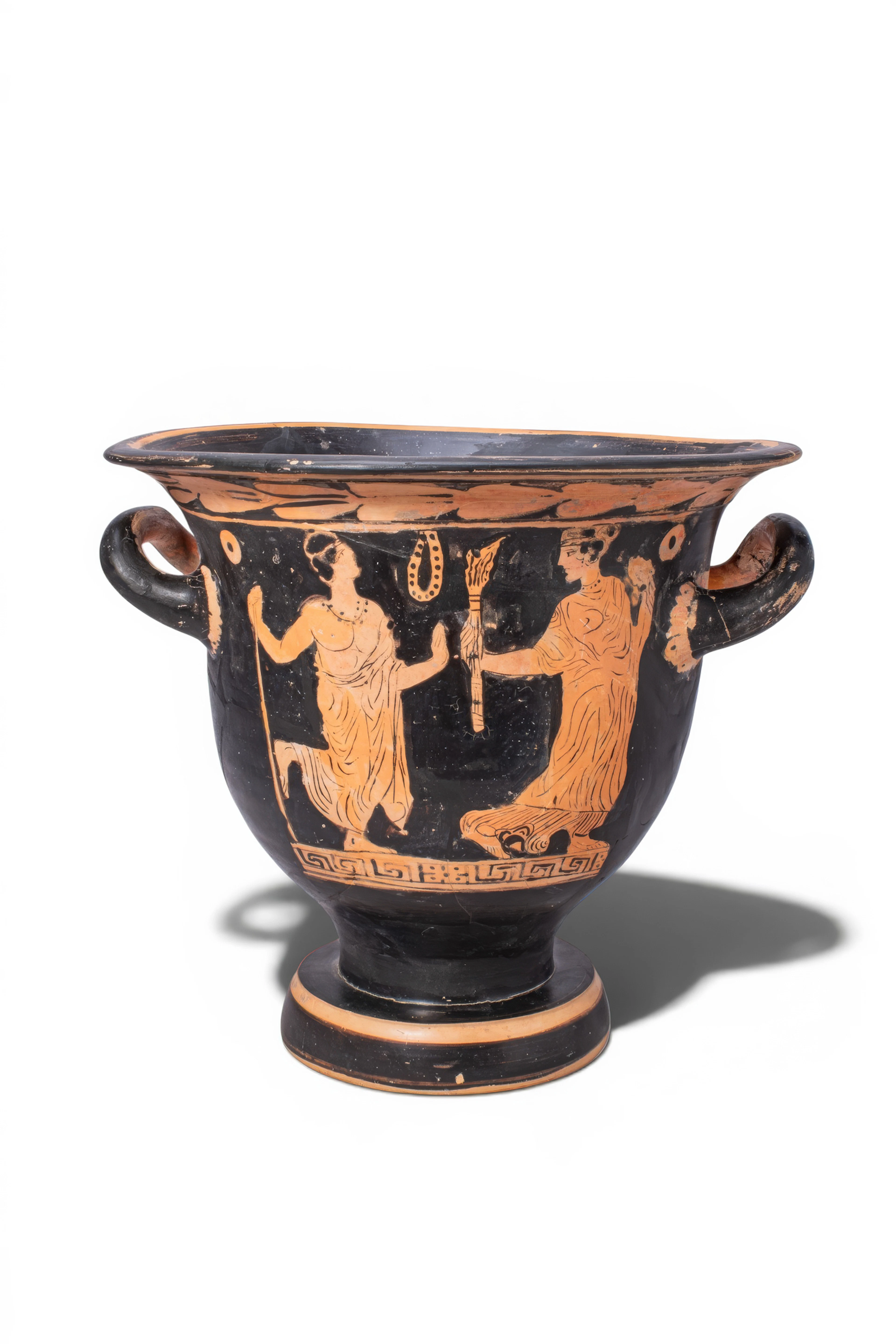
APULIAN RED-FIGURE BELL KRATER WITH KOMASTOS AND MAENAD - TL TESTED
06/21/2026
€3,014.39
Est. : €2,304.2
OCT 23 | 8:00 AM


OCT 27 | 4:00 PM


Présentez votre vente aux enchères à des collectionneurs du monde entier !
Soyez référencé dès maintenantEn vous abonnant, vous acceptez la politique de confidentialité. Désabonnez-vous à tout moment.
Barnebys HQ
Brahegatan 10
BOX 5038
114 37 Stockholm
