



Toutes les enchères / Arts asiatiques / Capacha Blackware Bule - Double-Chambered Cinctured Vessel

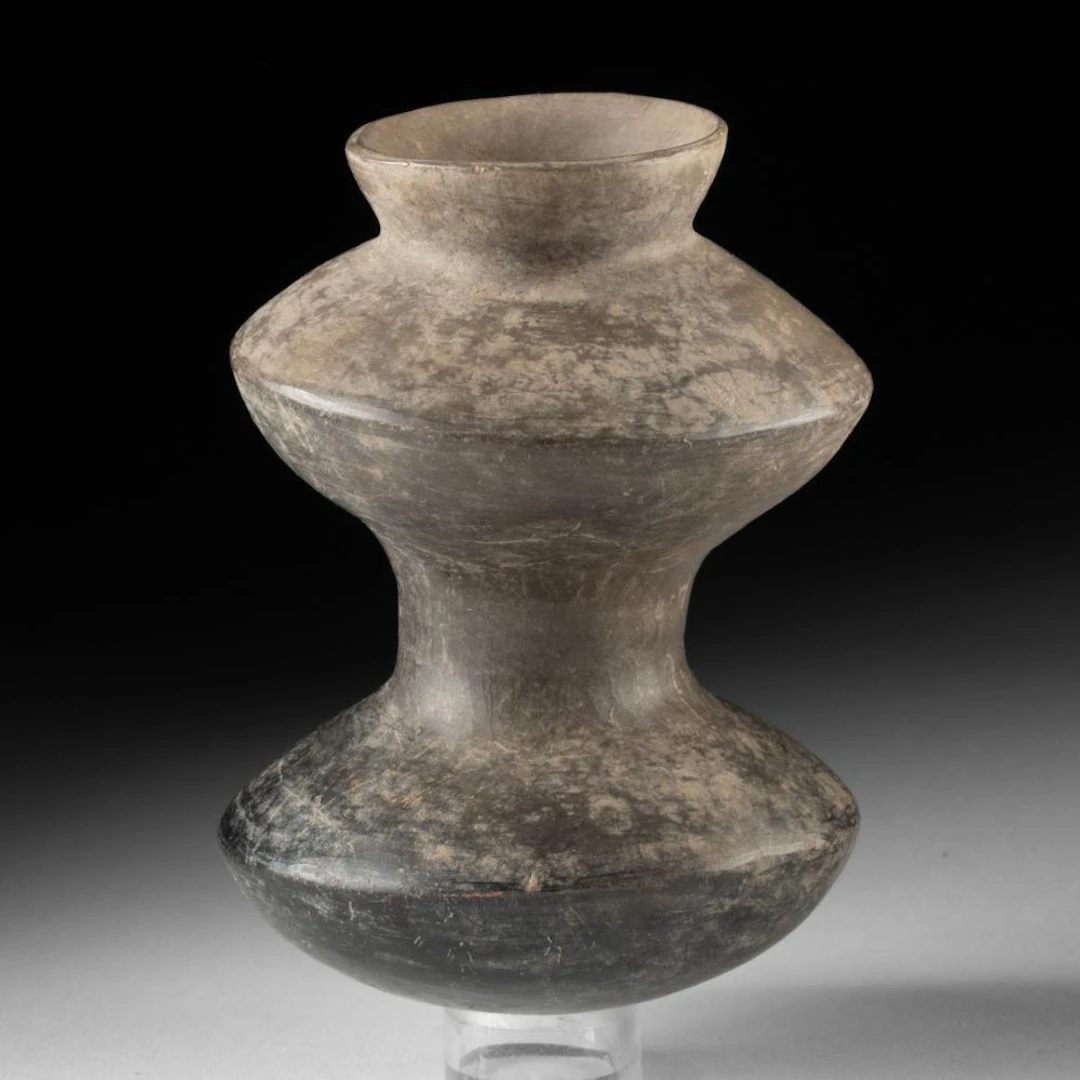
Pre-Columbian, Western Mexico, Capacha. A burnished blackware bule, the double-chambered "stacked" vessel that defines the Capacha ceramic repertoire. Two broad, sharply carinated disks are pinched together at a tight central waist, the cinctured profile that recalls a bottle gourd tied around its middle. The upper chamber rises to a short neck and a flaring, everted rim. The lower chamber mirrors it and settles onto a flat base. The burnished slip ranges from glossy jet to soft pewter gray where it thins over the shoulders, so the stacked silhouette catches the light along each carination. The function of such vessels is still debated. They likely held liquids, and some researchers have proposed that double-chambered forms like this one may have served as simple stills for distilling agave and other products, a hypothesis not yet confirmed. The Capacha tradition takes its name from a site near the modern city of Colima. There, the archaeologist Isabel Kelly, a pioneer of Western Mexican archaeology, identified it as the earliest pottery in the region. Capacha-style ceramics have since been found far beyond Colima, along the Pacific coast in Sinaloa, Nayarit, Jalisco, Colima, Michoacan, and Guerrero. It is the oldest ceramic horizon in Western Mexico. Together with the contemporary El Openo culture and the later shaft-tomb societies, it forms one of the region's main cultural lineages, known especially for its ceramics and its funerary customs. The waisted bule is the most characteristic Capacha form, and most examples have two chambers and a wide mouth. Its name comes from the bottle gourd, Lagenaria siceraria, a naturally waisted fruit that is dried and used as a container across Mesoamerica and is also known as guaje, jicaro, or calabash. Some scholars argue that the form copies two bowls stacked one on top of the other rather than a plant. Capacha potters also made stirrup-spout vessels and "trifid" vessels, whose upper and lower bodies are joined by three hollow tubes. Where Capacha pottery came from is still uncertain. Kelly noted close similarities in form with the Machalilla ceramics of coastal Ecuador, where some vessels even more clearly copy two stacked bowls. She suggested the style may have reached Mexico through long-distance sea contact. Capacha wares also share features of form and decoration with Tlatilco pottery from the central Mexican highlands, which points to ties between the two cultures. Since the 2000s, some archaeologists have proposed that certain Capacha vessels may have worked as early stills. If that is confirmed, distillation in Mesoamerica would be much older than generally accepted, but the idea remains under discussion. Item # 205751
Estimation:€444.95
Vers la vente aux enchèresVoir tous les objets deArtemis Fine ArtsouArts asiatiques
Estimation:
€444.95
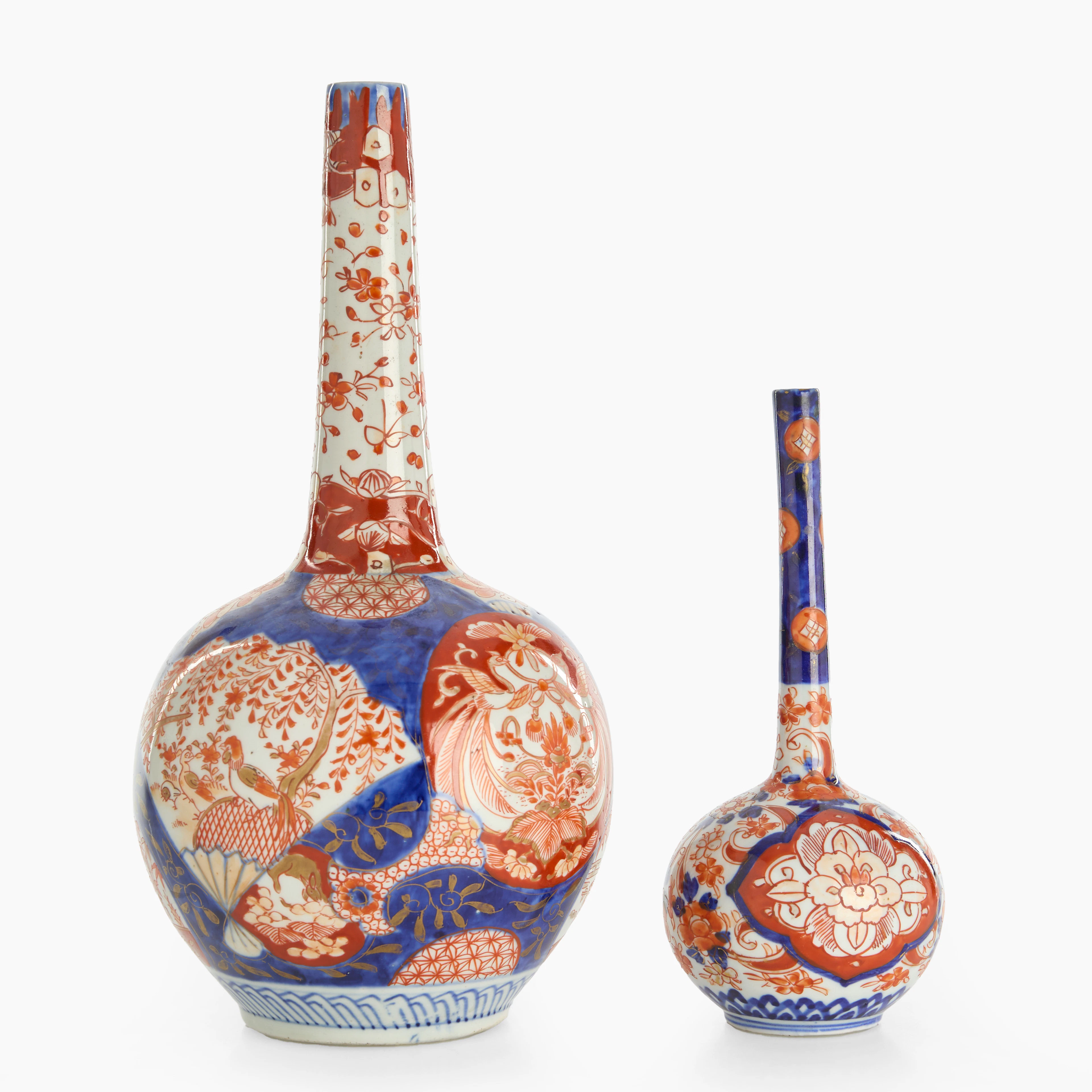
VASER (2), porslin, Imari, Japan, dekor i underglasyrblått och järnoxidrött
10/15/2026
€31.42
Est. : €89.46
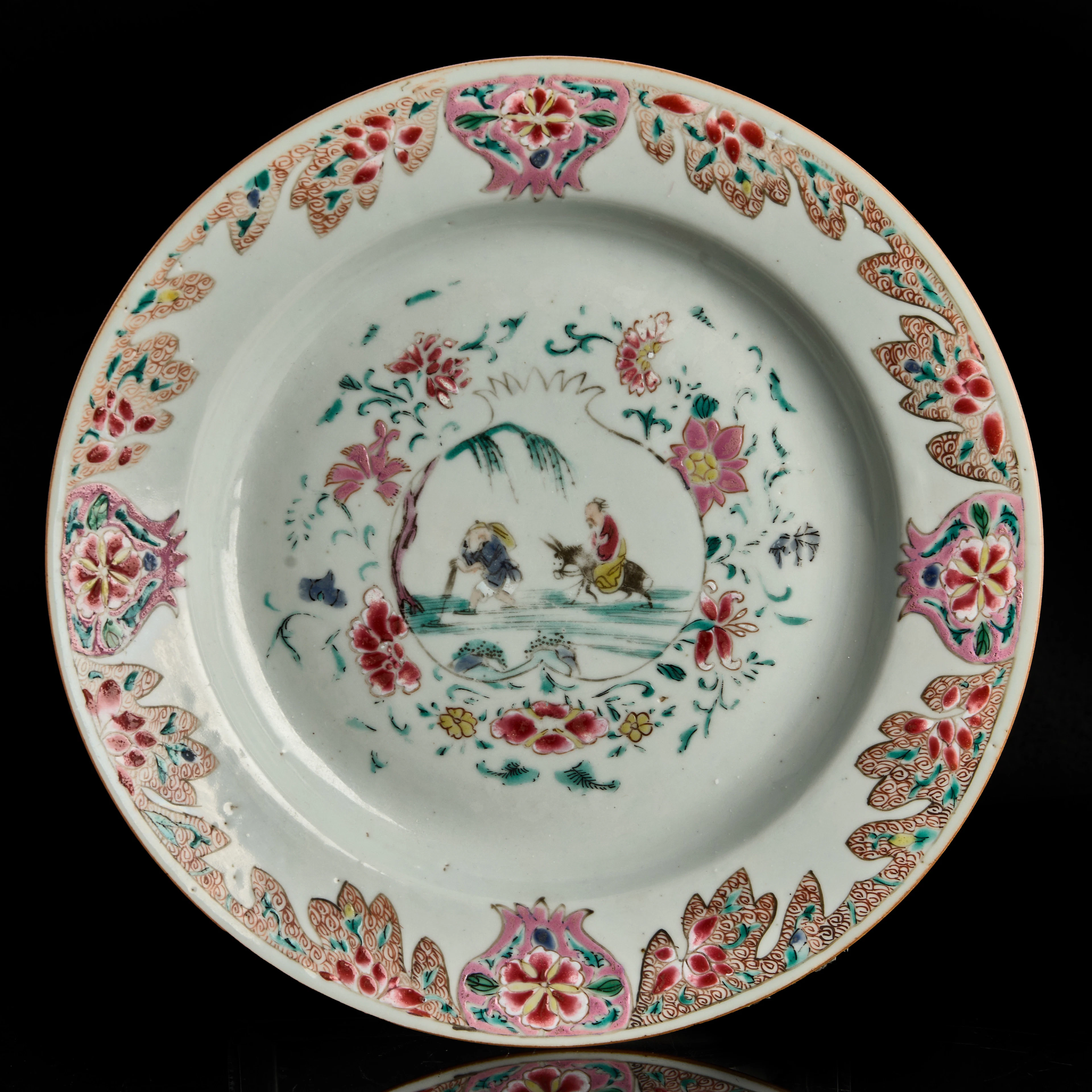
TALLRIK, porslin, Kina, exportporslin, dekor i famille rose, 1700-talets
10/15/2026
€112.22
Est. : €71.57
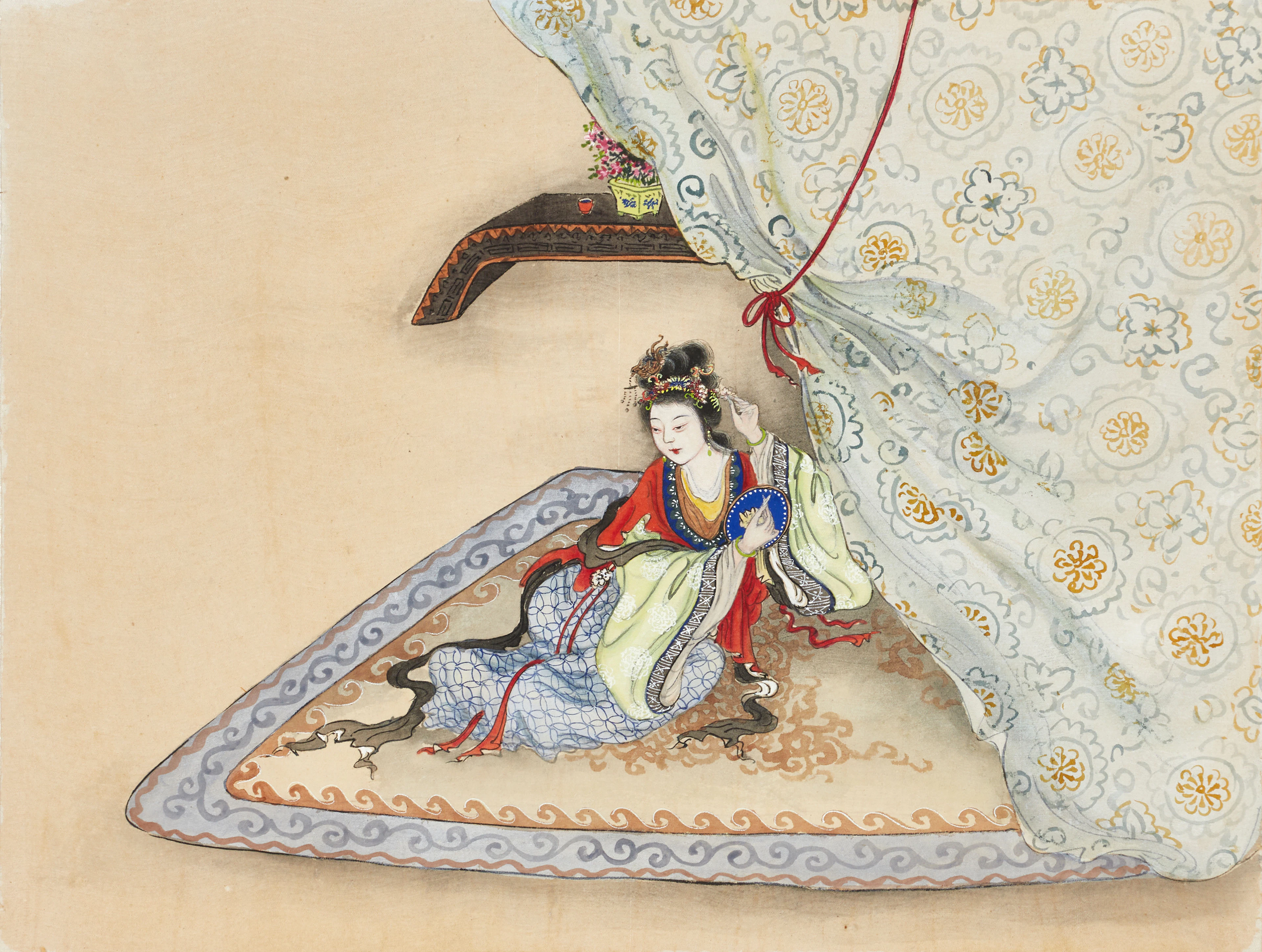
ALBUMBLAD, okänd konstnär, Kina, Kvinna som pryder sitt hår med blommor
10/15/2026
€26.93
Est. : €88.46
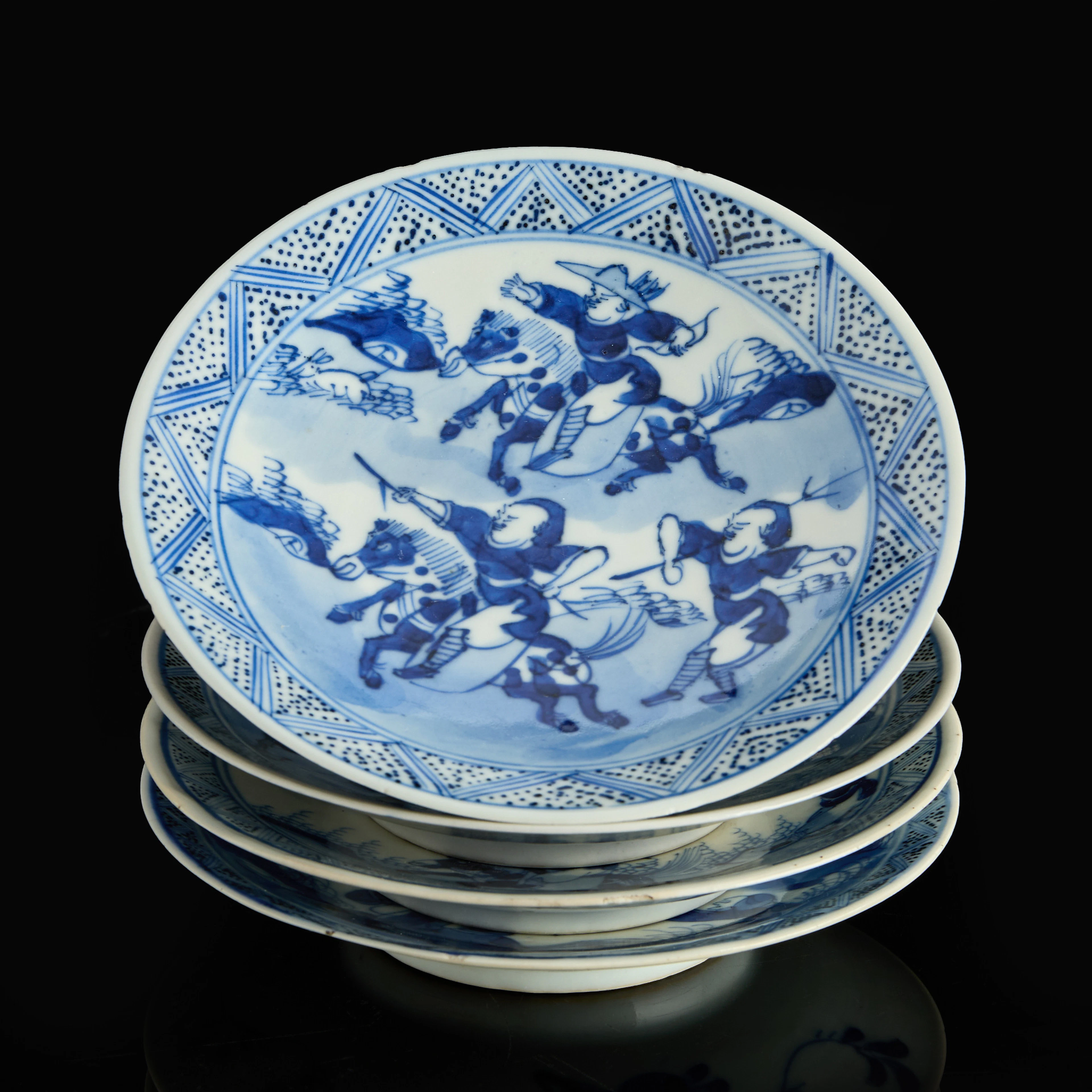
FAT (4), porslin, Kina, dekor i underglasyrblått av jaktscen, omkring 1900.
10/15/2026
€153.15
Est. : €89.46




OCT 23 | 8:00 AM
Présentez votre vente aux enchères à des collectionneurs du monde entier !
Soyez référencé dès maintenantEn vous abonnant, vous acceptez la politique de confidentialité. Désabonnez-vous à tout moment.
Barnebys HQ
Brahegatan 10
BOX 5038
114 37 Stockholm
