




Image d'arrière-plan

Toutes les enchères / Arts Graphiques / Antoine Monnier (XIX) - La Mort de la Sorcière 1877 - Limited edition

2d 5hESCatawiki

Antoine Monnier (XIX) - La Mort de la Sorcière 1877 - Limited edition

Antoine Monnier (XIX) - La Mort de la Sorcière 1877 - Limited edition

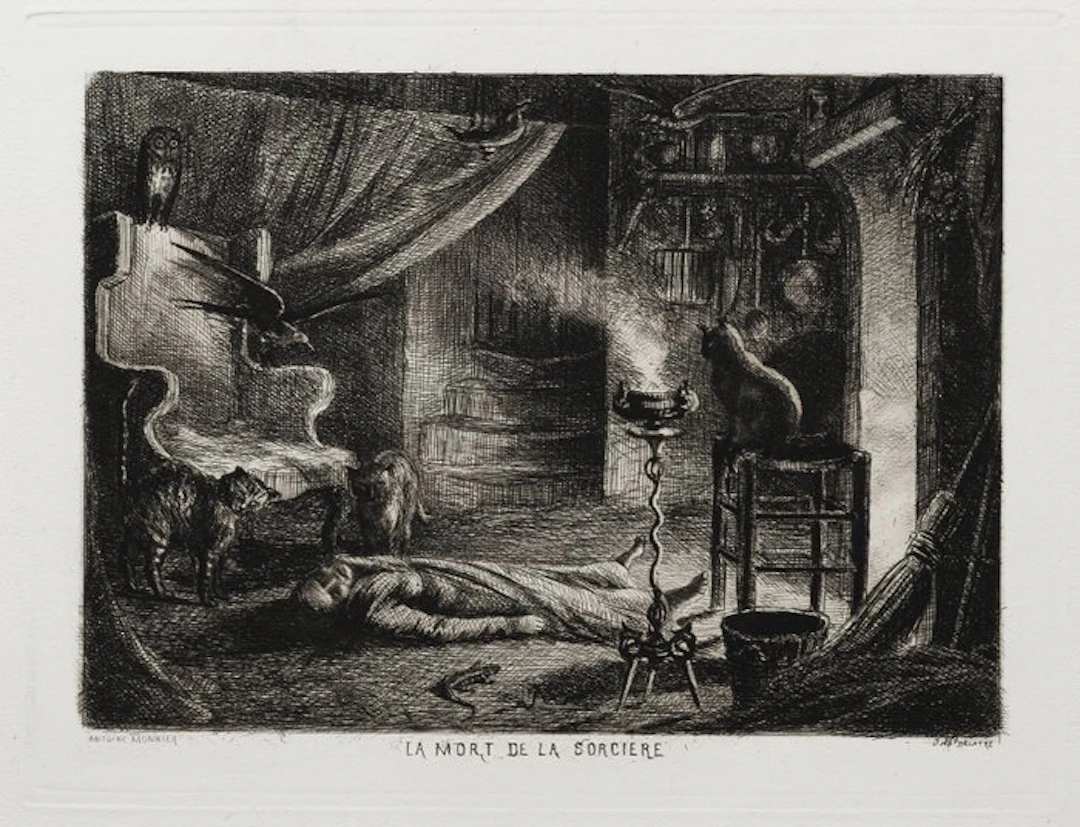
RARE ORIGINAL FRENCH ETCHING FROM A LIMITED EDITION OF ONLY 380 COPIES — PARIS, 1877 LA MORT DE LA SORCIÈRE THE DEATH OF THE WITCH An exceptionally atmospheric original nineteenth-century etching by the French writer and artist Antoine Monnier, created for his remarkable 1877 work “Le Haschisch”. Published in Paris by Léon Willem, the original edition was strictly limited to only 380 copies. This impression is printed on substantial natural-white papier vélin, the fine wove paper used for the limited issue of 340 copies. It is a genuine etching printed in Paris in 1877 from Monnier’s original plate — not a modern reproduction or later decorative print. RARITY AND COLLECTOR’S INTEREST “La Mort de la Sorcière” is one of the most immediately striking and macabre compositions associated with Antoine Monnier’s “Le Haschisch”, an unusual bibliophile work bringing together prose, poetry, dark Romanticism, visionary imagery and altered states of consciousness. Monnier dedicated the work to Charles Baudelaire, whose influence can be felt in its fascination with death, hallucination, the occult and the hidden poetry of disturbing subjects. The original edition comprised only 380 copies, of which 340 were issued on papier vélin. Complete copies have become scarce, and individual original etchings with the full printed title, artist’s inscription, printer’s imprint and broad margins are increasingly difficult to find. THE TALE BEHIND THE IMAGE The etching illustrates Monnier’s short prose tale “La Mort de la Sorcière” — “The Death of the Witch”. In the story, an old witch lies dead upon the muddy floor of her miserable dwelling. She has collapsed while preparing a potion intended to prolong her life. Bones are still being calcined in an iron tripod, their ashes destined to be mixed with plants possessing mysterious powers. The witch’s familiar animals cannot understand why their mistress remains motionless with her eyes open. Three cats circle around her and approach anxiously, only to discover that her body has become cold. Pluton, the black cat, climbs onto a stool and fixes the witch’s glassy eyes with his luminous green gaze. Two ravens fly through the room, an owl watches from the top of an old leather chair, and a scorpion, salamander and earthworm move restlessly across the floor. Monnier describes them as a strange household suddenly disturbed by an event beyond their understanding. At daybreak, two men arrive carrying a long white wooden box. They place the witch inside and hammer the coffin shut while the terrified creatures hide around the room. Once the coffin has been carried away, the animals begin to contemplate the uncertain fate awaiting them. Then the scorpion pushes a burning coal into a heap of straw and the abandoned dwelling catches fire. The ravens escape towards a distant gallows. The cats flee into the forest, where they will become wild again. The earthworm burrows into the ground to rejoin the witch beneath her shroud. The salamander runs through the flames, while the scorpion ends its own life with its venomous sting. Above them, the owl flies towards the witches’ Sabbath to announce to the horned Prince the death of the witch. THE COMPOSITION Monnier translates the entire tale into a densely constructed nocturnal interior. The witch’s body occupies the foreground, surrounded by her animals and magical implements. A brazier continues to burn beside her, sending smoke into the darkness. Three cats, two dark birds, an owl and the smaller creatures described in the story inhabit different corners of the room. The large empty chair, heavy drapery, shelves of mysterious vessels, broom and iron tripod transform the humble dwelling into an intimate cabinet of occult curiosities. The animals are not merely decorative symbols. Each participates in the narrative, reacting to the death of the woman upon whom their protected existence depended. This gives the scene an unusual mixture of macabre fantasy, melancholy and almost domestic tenderness. Dense cross-hatching and repeated layers of etched line create velvety shadows, while the pale body, the empty chair and the smoke from the brazier emerge dramatically from the darkness. BIBLIOPHILE ORIGIN The etching was created for: “Le Haschisch. Contes en prose, sonnets et poèmes fantaisistes” Text and etchings by Antoine Monnier Published by Léon Willem Paris, 1877 The plate was printed by Auguste Delâtre, one of the most respected Parisian intaglio printers of the nineteenth century. The original inscriptions remain clearly visible beneath the composition: “ANTOINE MONNIER” at lower left “LA MORT DE LA SORCIÈRE” at lower centre “Imp. DELÂTRE” at lower right TECHNIQUE AND IMPRESSION Original etching / eau-forte printed in black ink on substantial natural-white papier vélin. The impression is dark, crisp and richly detailed. Monnier’s fine etched lines and extensive cross-hatching remain clearly defined, including throughout the deepest areas of shadow. A strong plate mark surrounds the composition and inscriptions and remains clearly visible from both the front and reverse of the sheet. This relief was produced by the considerable pressure required during the original intaglio printing process. The broad margins preserve the physical presence of the original sheet and provide ample space for professional conservation mounting and framing. DETAILS Artist and etcher: Antoine Monnier Title: La Mort de la Sorcière English title: The Death of the Witch Date: 1877 Technique: Original etching / eau-forte Printer: Auguste Delâtre Publisher: Léon Willem Original publication: Le Haschisch Edition: 380 copies in total, including 340 on papier vélin Paper: Natural-white papier vélin / fine wove paper Country of origin: France Signature: Artist’s name printed within the original plate Frame: Unframed DIMENSIONS Sheet: 31.5 × 24.7 cm Approximately 12.4 × 9.7 inches Printed composition: 19.3 × 14.3 cm Approximately 7.6 × 5.6 inches CONDITION Good antique condition. The sheet is complete and well preserved, with broad original margins and a strong, sharply defined impression. The image, title and printed inscriptions remain clear and attractive. The paper presents light age-related toning, a few small scattered spots and faint handling marks, predominantly visible in the margins and on the reverse. There is some light discoloration and minor wear along the upper edge, with a few very small edge nicks and shallow creases, all clearly documented in the photographs. These traces remain outside the printed composition and are consistent with the age and bibliophile origin of the sheet. No losses or significant damage affect the image, title or inscriptions. The pronounced plate mark remains intact and clearly visible on both sides. Please examine all photographs carefully. They show the actual original etching offered and form an integral part of the condition description. SHIPPING Carefully packed flat with rigid protection. Tracked and insured shipping.

Estimation:€150

Vers la vente aux enchères

Voir tous les objets deCatawikiouArts Graphiques

Objets similaires

Résultats des ventes pour des objets similaires

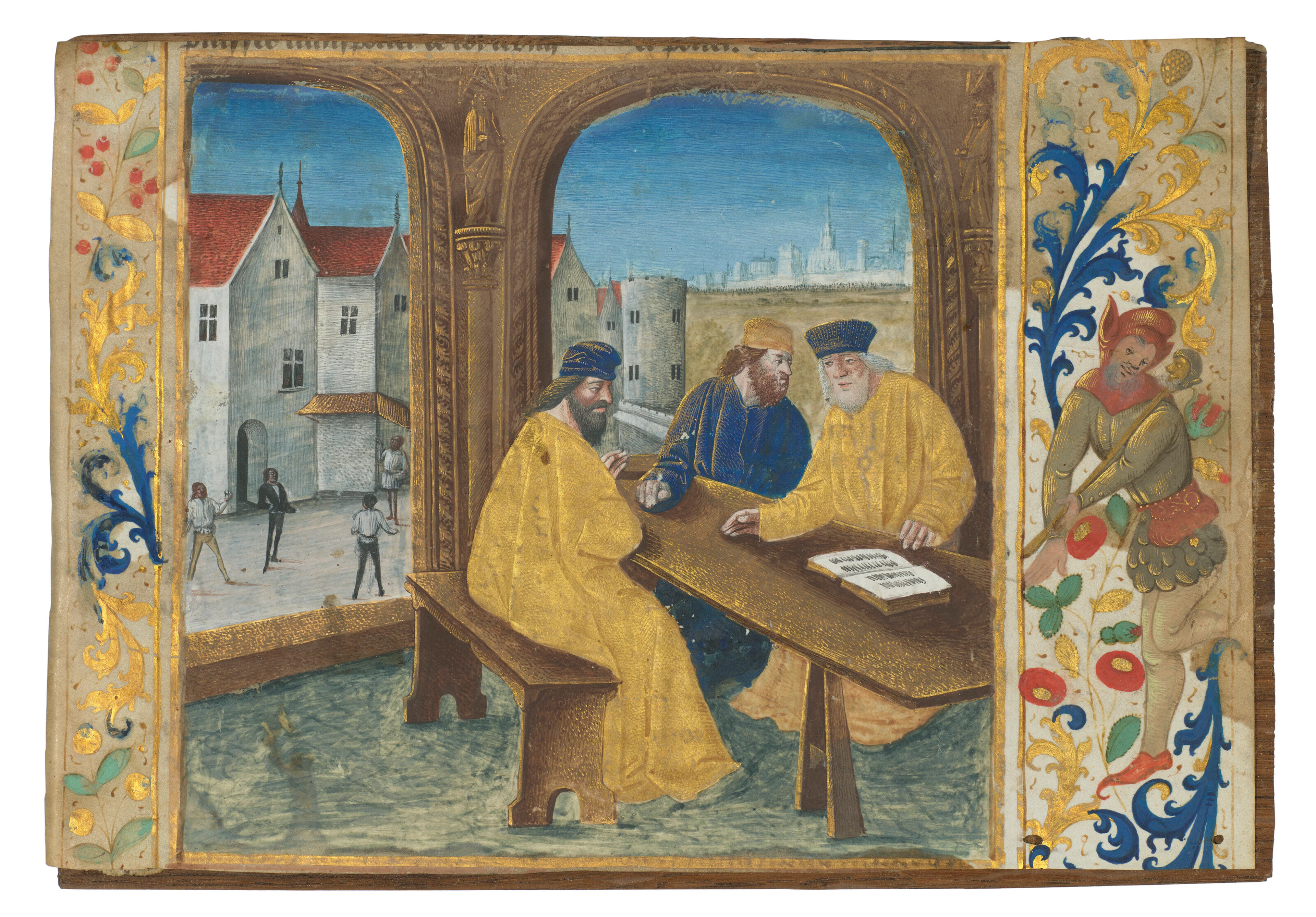
Master of the Munich Bocaccio
Vendu

Master of the Munich Bocaccio

07/08/2026

Christie's
GB

€11,927.99

Est. : €5,793.28

Détails
French school, 20th century
Vendu
French School, 18th century
Vendu
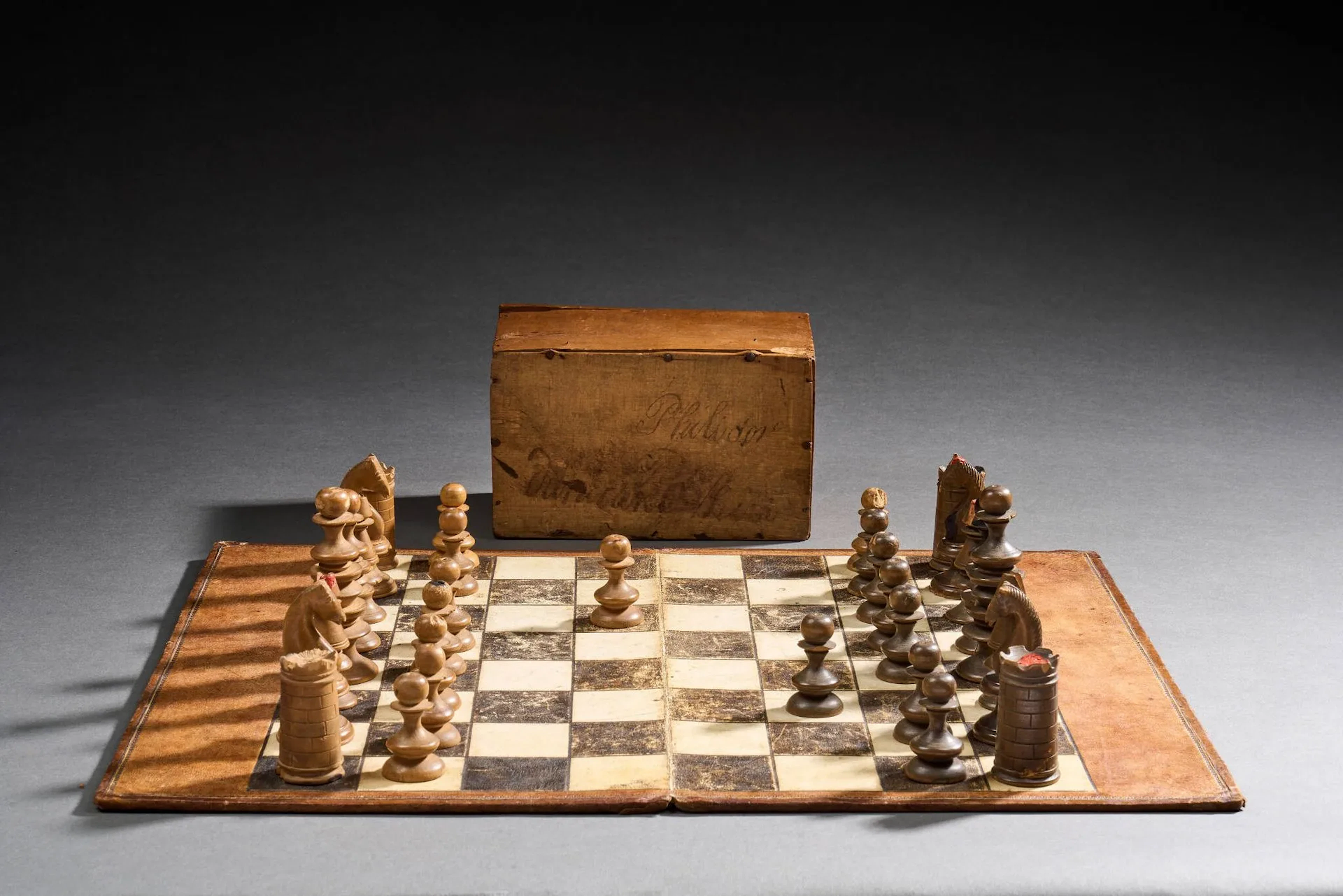
LE JEU PERSONNEL DU PLUS GRAND JOUEUR D’ÉCHECS DU XVIIIe SIÈCLE, ANDRÉ DANICAN-PHILIDOR (1726-1795). Exceptionnel ensemble comprenant l’échiquier, les pièces du jeu d’échecs et leur boîte, ayant appartenu au « Grand Philidor ». XVIIIe siècle, vers 1750. Le plateau rectangulaire s’ouvrant en deux gainé de vélin brun partiellement peint en damiers en noir et blanc, fine frise de roulette sur les bords. Petites taches et pliures, frottements du cuir. H. 43 x L. 34,5 cm. La boîte contenant les pièces du jeu en bois, de forme rectangulaire, s’ouvrant à charnières, pyrogravée sur le couvercle “Philidor / Boîte aux lettres…”, sur le côté droit “Buis et Palissandre / T Dx 7 / oo”, et inscrit à l’encre au revers “Philidor Danican (Philidor)”. H. 9 x L. 16 x P. 10 cm. Le jeu comprenant 31 pièces d’origine en buis et palissandre tournés et sculptés. Quelques éclats. Un pion « blanc » rapporté complète l’ensemble. Un des cavaliers « blancs » marqué au revers « Philidor grand joueur d’échecs ». H. 4 à 10 cm. Provenance - François-André Danican Philidor (1726-1795). - Puis par descendance. Expositions - « Philidor et son temps », Dreux, Chapelle de l’Hôtel-Dieu, 19 juin 1995 - 14 juillet 1995. - « Philidor, enfant de Dreux, Tricentenaire (1726-1795), Histoire d’un génie drouais », Dreux, Musée d’Art et d’Histoire de Dreux, 23 mai 2025 - 7 septembre 2025. Historique Né à Dreux en 1726, François-André Danican Philidor, dit « Le Grand Philidor », est issu d’une dynastie de musiciens reconnue depuis le règne du roi Louis XIII. Fils d’André Danican Philidor, dit l’Aîné, compositeur et bibliothécaire du roi Louis XIV, il entre à la Chapelle royale de Versailles en tant que page à partir de ses 10 ans, il compose ses premières œuvres dès 12 ans et donne des leçons de musique à 14 ans. Il épouse en 1760 Élisabeth Richer, elle-même cantatrice et claveciniste, fille du compositeur du Duc de Chartres, François-Joseph Riché. Il est l’un des créateurs de l’opéra-comique français, avec ses œuvres Blaise le Savetier créé en 1759 et Ernelinde, Princesse de Norvège : ce dernier est repris partiellement pour les festivités du mariage du Dauphin, futur Louis XVI, et de la Dauphine, future Marie-Antoinette, puis pour le mariage du Comte d’Artois et de Marie-Thérèse de Savoie en 1773, ce qui lui permet d’obtenir une pension de la part du roi Louis XV. Parallèlement à cette carrière musicale, François-André Danican Philidor est également connu pour sa pratique et sa théorisation du jeu d’échecs. En parallèle de ses leçons de musique données à Paris, il fréquente assidument le Café de la Régence et s’y impose comme le champion du club d’échecs. Connu pour son jeu à l’aveugle, il parcours l’Europe entière, aux Pays-Bas, en Allemagne et en Angleterre notamment, et bat les plus grands joueurs de son temps. En 1749, il publie L’Analyse des Échecs, un des premiers traités d’échecs, édité plus d’une centaine de fois et traduit dans plusieurs langues, dont l’anglais dès 1790. Par crainte de la guerre civile il s’exile en Angleterre à partir de 1792 ; il ne remettra jamais les pieds sur le sol français et meurt à Londres en 1795. Littérature - Louis Gabriel Michaud, Biographie Universelle ancienne et moderne, tome 33, Paris, chez Madame C. Desplaces, 1843. - Jean-François et Nicolas Dupont-Danican Philidor, Les Philidor, Une dynastie de musiciens, éditions Zurfluh, Bourg-la-Reine, 1995, p. 53. Œuvres en rapport - Augustin Pajou, Buste de François-André Danican Philidor, offert en 1783 par la ville de Paris à Mme Philidor, Paris, Musée Carnavalet (inv. S3340). - Anonyme, Philidor playing Blindfold at Parsloe’s in London in presence of the Turkish Ambassador 23 February 1784, eau-forte publiée par J. Wheble, Warwick Square London, dont un exemplaire conservé à la Wellcome Collection (inv. 33379i).
Vendu

LE JEU PERSONNEL DU PLUS GRAND JOUEUR D’ÉCHECS DU XVIIIe SIÈCLE, ANDRÉ DANICAN-PHILIDOR (1726-1795). Exceptionnel ensemble comprenant l’échiquier, les pièces du jeu d’échecs et leur boîte, ayant appartenu au « Grand Philidor ». XVIIIe siècle, vers 1750. Le plateau rectangulaire s’ouvrant en deux gainé de vélin brun partiellement peint en damiers en noir et blanc, fine frise de roulette sur les bords. Petites taches et pliures, frottements du cuir. H. 43 x L. 34,5 cm. La boîte contenant les pièces du jeu en bois, de forme rectangulaire, s’ouvrant à charnières, pyrogravée sur le couvercle “Philidor / Boîte aux lettres…”, sur le côté droit “Buis et Palissandre / T Dx 7 / oo”, et inscrit à l’encre au revers “Philidor Danican (Philidor)”. H. 9 x L. 16 x P. 10 cm. Le jeu comprenant 31 pièces d’origine en buis et palissandre tournés et sculptés. Quelques éclats. Un pion « blanc » rapporté complète l’ensemble. Un des cavaliers « blancs » marqué au revers « Philidor grand joueur d’échecs ». H. 4 à 10 cm. Provenance - François-André Danican Philidor (1726-1795). - Puis par descendance. Expositions - « Philidor et son temps », Dreux, Chapelle de l’Hôtel-Dieu, 19 juin 1995 - 14 juillet 1995. - « Philidor, enfant de Dreux, Tricentenaire (1726-1795), Histoire d’un génie drouais », Dreux, Musée d’Art et d’Histoire de Dreux, 23 mai 2025 - 7 septembre 2025. Historique Né à Dreux en 1726, François-André Danican Philidor, dit « Le Grand Philidor », est issu d’une dynastie de musiciens reconnue depuis le règne du roi Louis XIII. Fils d’André Danican Philidor, dit l’Aîné, compositeur et bibliothécaire du roi Louis XIV, il entre à la Chapelle royale de Versailles en tant que page à partir de ses 10 ans, il compose ses premières œuvres dès 12 ans et donne des leçons de musique à 14 ans. Il épouse en 1760 Élisabeth Richer, elle-même cantatrice et claveciniste, fille du compositeur du Duc de Chartres, François-Joseph Riché. Il est l’un des créateurs de l’opéra-comique français, avec ses œuvres Blaise le Savetier créé en 1759 et Ernelinde, Princesse de Norvège : ce dernier est repris partiellement pour les festivités du mariage du Dauphin, futur Louis XVI, et de la Dauphine, future Marie-Antoinette, puis pour le mariage du Comte d’Artois et de Marie-Thérèse de Savoie en 1773, ce qui lui permet d’obtenir une pension de la part du roi Louis XV. Parallèlement à cette carrière musicale, François-André Danican Philidor est également connu pour sa pratique et sa théorisation du jeu d’échecs. En parallèle de ses leçons de musique données à Paris, il fréquente assidument le Café de la Régence et s’y impose comme le champion du club d’échecs. Connu pour son jeu à l’aveugle, il parcours l’Europe entière, aux Pays-Bas, en Allemagne et en Angleterre notamment, et bat les plus grands joueurs de son temps. En 1749, il publie L’Analyse des Échecs, un des premiers traités d’échecs, édité plus d’une centaine de fois et traduit dans plusieurs langues, dont l’anglais dès 1790. Par crainte de la guerre civile il s’exile en Angleterre à partir de 1792 ; il ne remettra jamais les pieds sur le sol français et meurt à Londres en 1795. Littérature - Louis Gabriel Michaud, Biographie Universelle ancienne et moderne, tome 33, Paris, chez Madame C. Desplaces, 1843. - Jean-François et Nicolas Dupont-Danican Philidor, Les Philidor, Une dynastie de musiciens, éditions Zurfluh, Bourg-la-Reine, 1995, p. 53. Œuvres en rapport - Augustin Pajou, Buste de François-André Danican Philidor, offert en 1783 par la ville de Paris à Mme Philidor, Paris, Musée Carnavalet (inv. S3340). - Anonyme, Philidor playing Blindfold at Parsloe’s in London in presence of the Turkish Ambassador 23 February 1784, eau-forte publiée par J. Wheble, Warwick Square London, dont un exemplaire conservé à la Wellcome Collection (inv. 33379i).

03/13/2026

Rossini
FR

€65,000

Est. : €8,000

Détails

Upcoming auctions

Best of Auktion
Best of Auktion auction house logo

Best of Auktion

Global Treasures | Ancient & Ethnographic Art
Global Treasures | Ancient & Ethnographic Art auction house logo

Global Treasures | Ancient & Ethnographic Art

American, European and Ukrainian Fine Art
American, European and Ukrainian Fine Art auction house logo

OCT 23 | 8:00 AM

American, European and Ukrainian Fine Art

Présentez votre vente aux enchères à des collectionneurs du monde entier !

Soyez référencé dès maintenant


