


Présentez votre vente aux enchères à des collectionneurs du monde entier !
Soyez référencé dès maintenantEn vous abonnant, vous acceptez la politique de confidentialité. Désabonnez-vous à tout moment.
Barnebys HQ
Brahegatan 10
BOX 5038
114 37 Stockholm
Toutes les enchères / Bijouterie & Joaillerie / Antique Gold Ring with Carnelian Intaglio, Likely Sassanid, 4th to

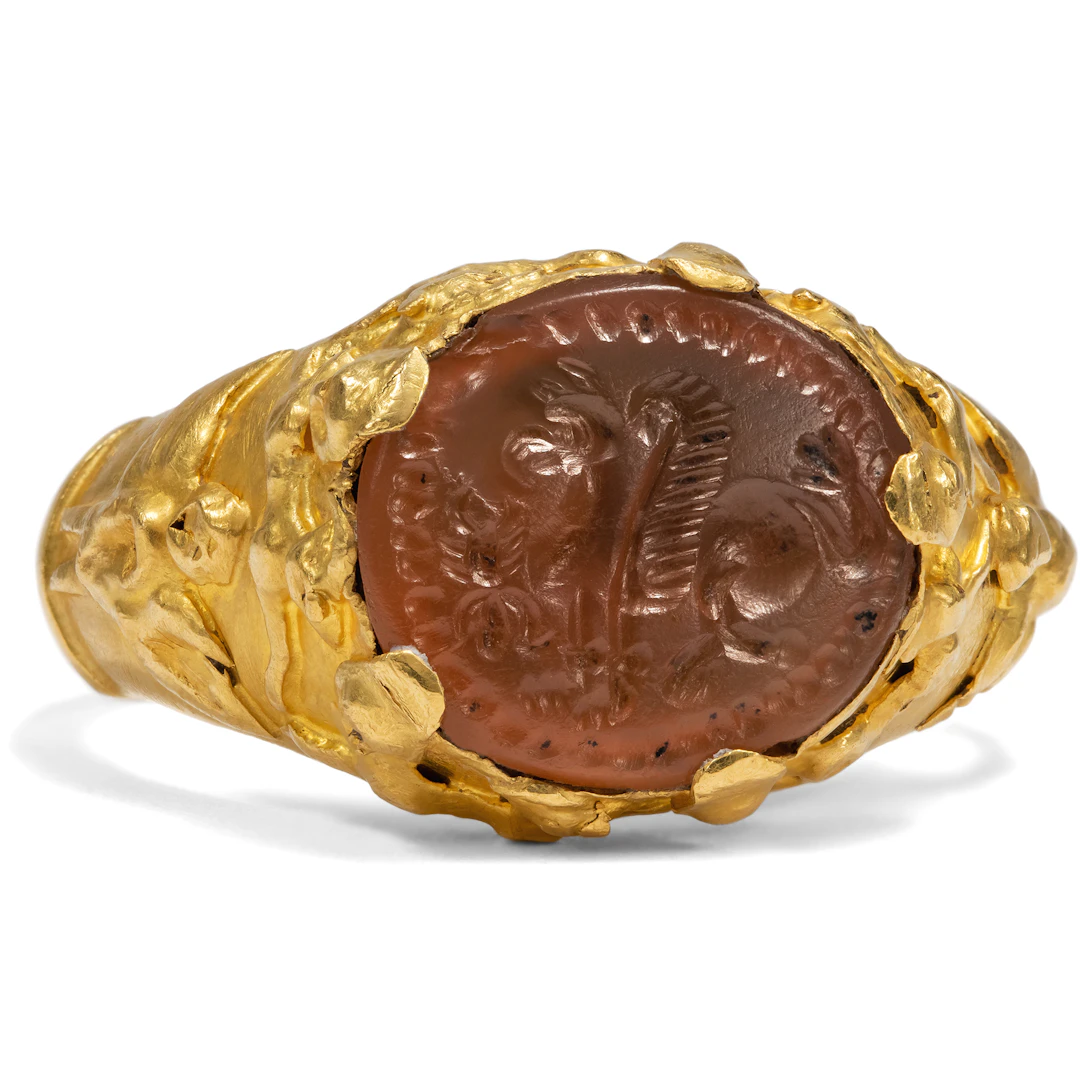
With the rise of the Sassanids in 224 CE, Persia emerged as one of the great powers of the Ancient World. At the height of its expansion, the empire stretched from present-day Syria to the borders of India and controlled the most important trade routes between the Mediterranean and Central Asia. Economic prosperity and political stability fostered the emergence of an art form whose goldwork, silver vessels, and seal stones rank among the most significant creations of the late antique world. Sassanid art and visual language were characterized by courtly refinement and blended ancient Iranian traditions with influences from Mesopotamia, Hellenistic culture of the Mediterranean region, and the steppe cultures into a distinctive style. This precious ancient signet ring, now part of a museum collection, also belongs to this cultural context. The ring, constructed with a hollow wall, features a flat-cut, transversely oval intaglio. It depicts a winged griffin with an eagle’s head facing left. To the left of its beak is a small animal whose identity remains uncertain, but which presumably represents a scorpion or an insect. A fine beaded border frames the image field. The elaborately designed ring setting is made of high-karat gold and features three-dimensionally embossed animal ornaments. Leaping ibexes with curved horns enliven the sides of the ring face, while birds depicted head-on with outstretched wings appear below. The reliefs are executed in repoussé, a technique characteristic of ancient goldsmithing, and are soldered onto the hollow ring. The iconography and goldsmithing techniques suggest that it was created within the Persian-Iranian cultural sphere, likely between the 4th and 7th centuries CE. Since Achaemenid times, the griffin has been one of the most important symbols of protection and sovereignty and remained a common motif in Sassanid art as well. The intaglio shows close stylistic parallels to Sassanid depictions of griffins; a fine example of this can be found, for instance, in the British Museum, Inv. No. 1956,0512.2. Ibex and birds are also part of the standard repertoire of Sassanid animal ornamentation and appear on silver vessels, textiles, stucco work, and jewellery. The elaborately designed gold setting, with its rich animal decoration, represents a remarkable example among the comparatively rare surviving Sassanid signet rings. The ring is also very good in preservation. It came to us from the London art market.
Estimation:€11,980
Vers la vente aux enchèresVoir tous les objets deHofer AntikschmuckouBijouterie & Joaillerie
Estimation:
€11,980
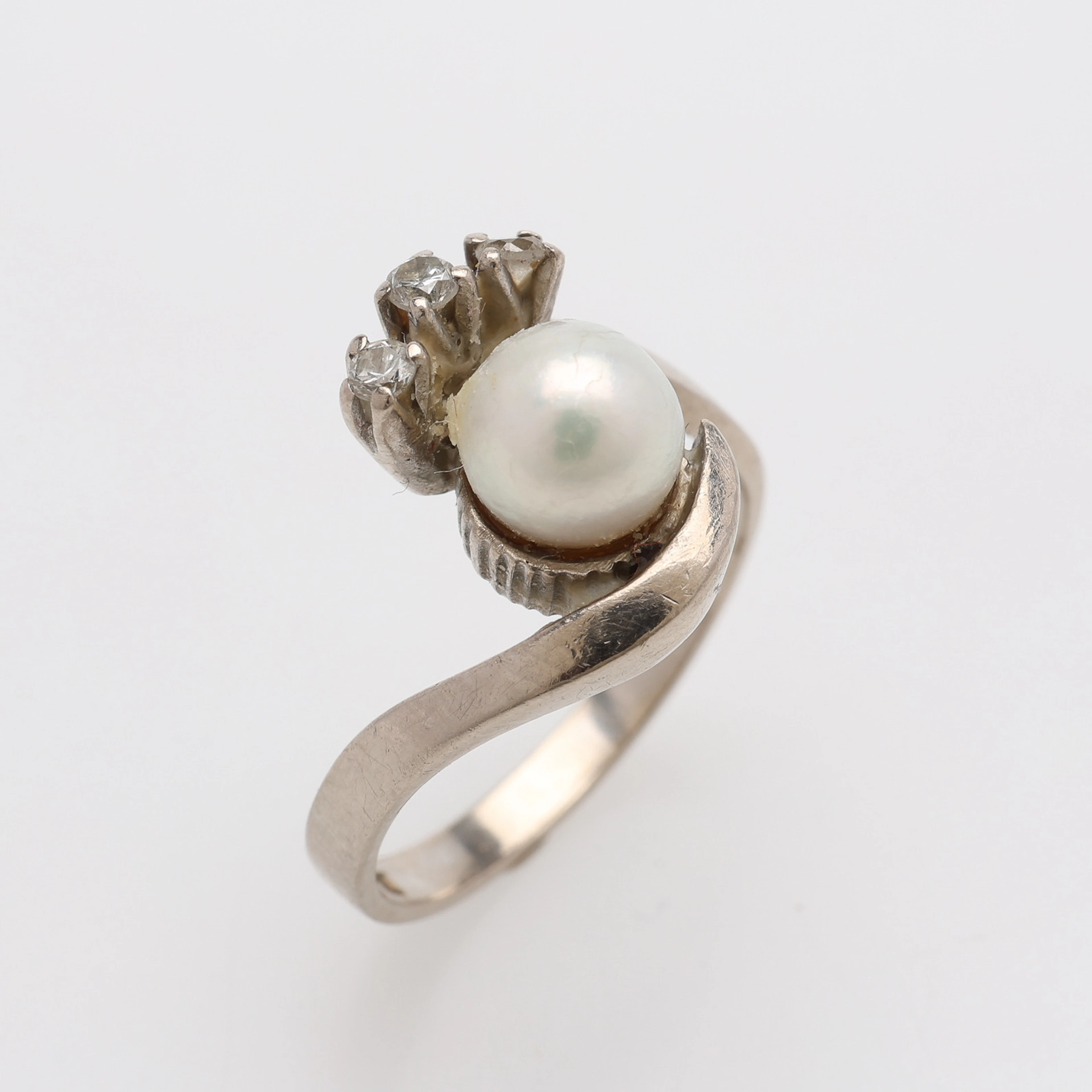
RING 18K VITGULD MED 1 ODLAD PÄRLA OCH 3 BRILJANTER.
09/29/2026
€264.6
Est. : €353.14
Présentez votre vente aux enchères à des collectionneurs du monde entier !
Soyez référencé dès maintenant
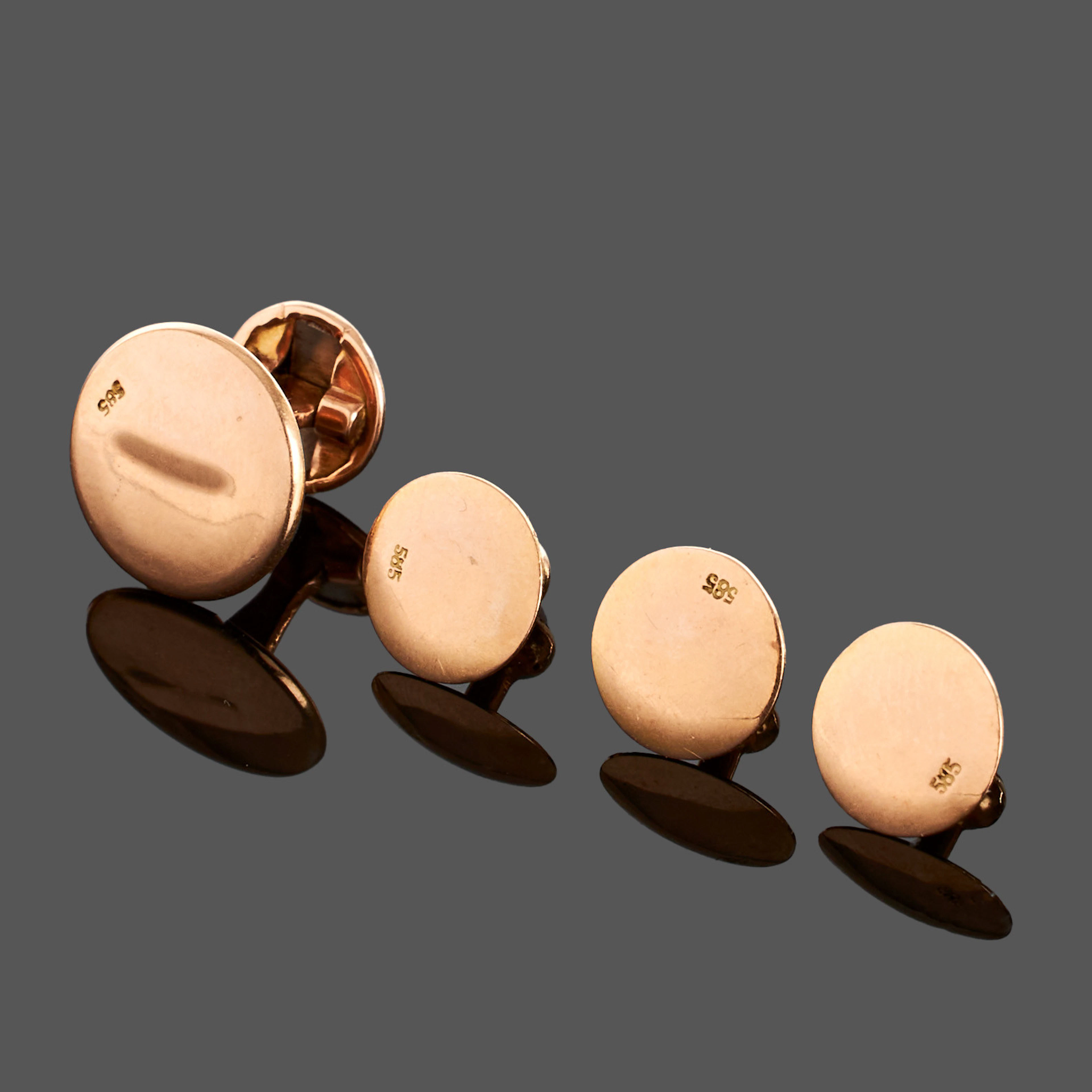
SKJORTKNAPPAR & MANSCHETTKNAPP, 14k guld, 3 st skjortknappar dekoretat
09/29/2026
€194.04
Est. : €194.22