


OCT 23 | 8:00 AM

Toutes les enchères / Bijouterie & Joaillerie / Antique Coral Cameo Depicting a Bacchante in Gold, as a Pendant, c. 1910

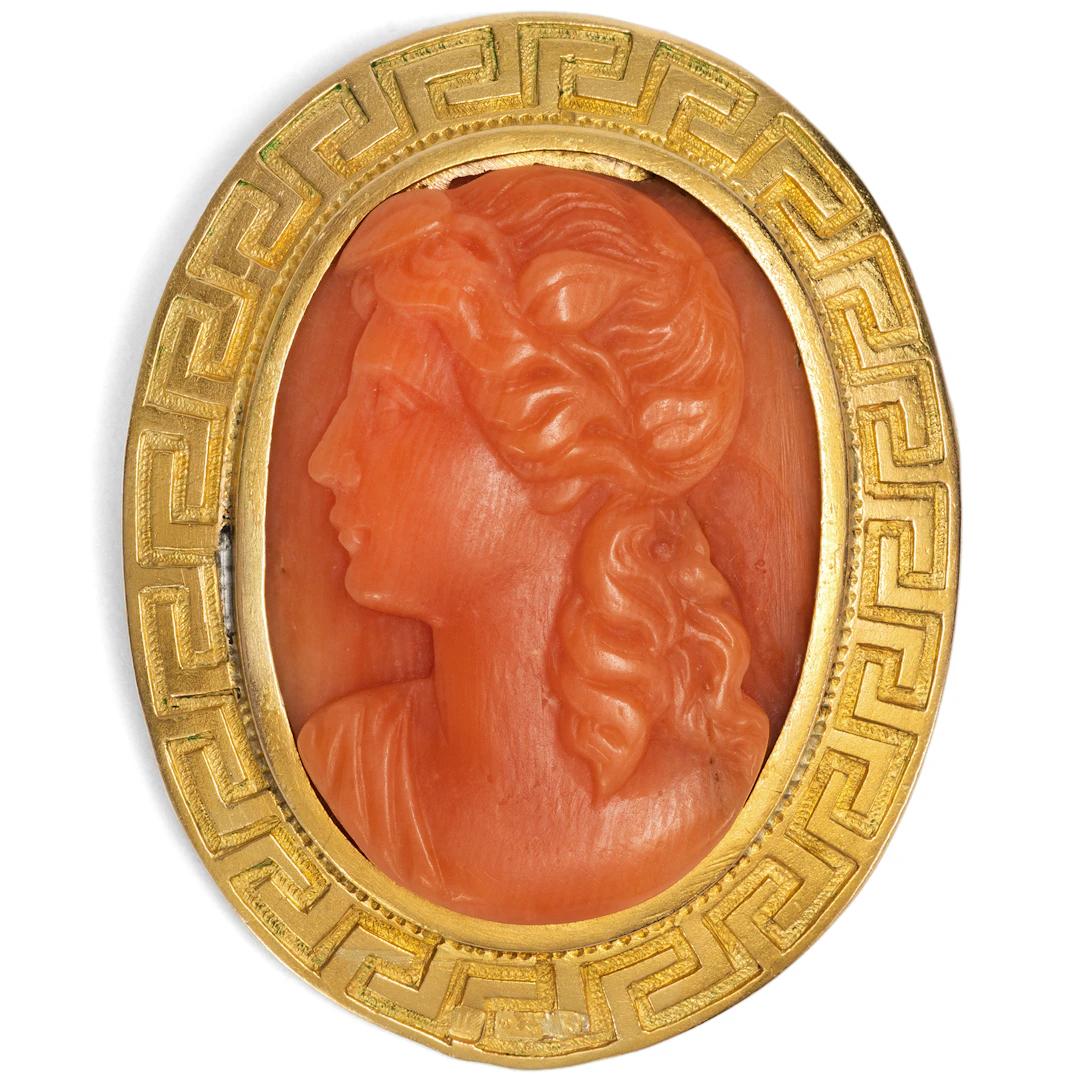
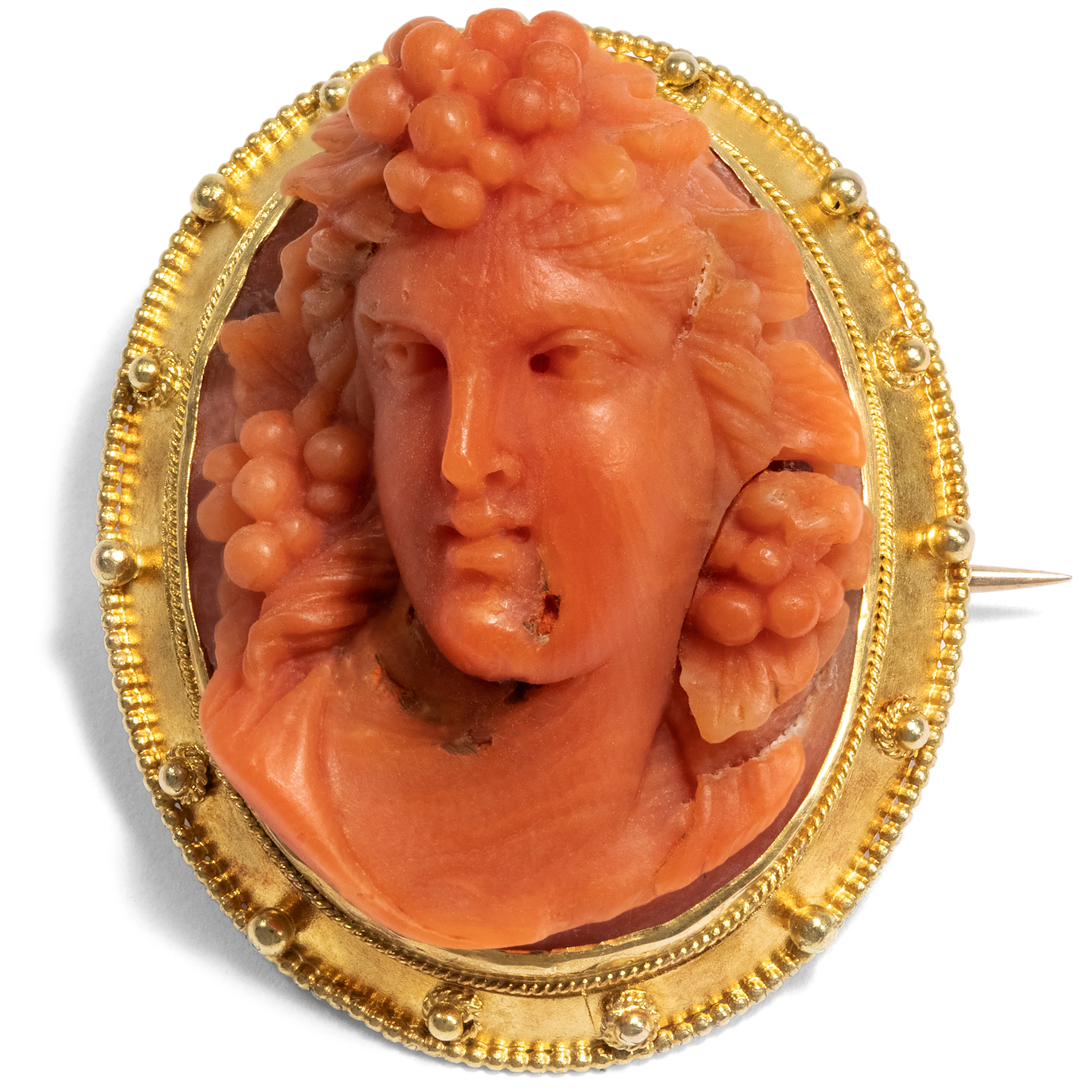
This cameo, dating c. 1910, depicts a figure from classical mythology: the woman portrayed is a Bacchante. Like her Greek counterpart, the Maenad, she was a follower of Bacchus (Dionysus), the god of wine, who was both famous and notorious for his wild festivals, known as the “Bacchanalia.” The Roman Bacchanalia likely originated from spring festivals. By the beginning of the 2nd century B.C., these religious celebrations had evolved into excessive feasts accompanied by dancing and orgies, which took place in secret. In later centuries, “Bacchants” became synonymous with revelers and bon vivants, but especially with lovers of good wine. Gemstone jewellery was particularly popular in the 19th and early 20th centuries. Almost every lady of high society owned carved pieces, which primarily depicted mythological motifs from antiquity. People admired the great figures of history, and so many philosophers and emperors—as well as goddesses and gods—can be found on the rings and brooches of that generation. Our brooch also belongs to this tradition and features such a cameo carved from Mediterranean coral. The region around the Gulf of Naples, in particular, specialized in the art of gem carving and produced a multitude of beautiful gems and cameos that were exported worldwide. It is also highly likely that our Bacchante was created at the foot of Mount Vesuvius. The bust is depicted in profile; we recognize her by the characteristic leaf motifs in her hair, which are rendered here in a slightly stylized manner and may represent both vine leaves and ivy. An elaborate gold setting with a continuous meander pattern frames the oval coral carving. The austere, slightly simplified style of the cameo, as well as the classical meander motif, allow us to date the piece of jewellery to the first decade of the last century. Originally, the piece was a brooch. At a later date, the pin was removed and two larger eyelets were added, so that the piece can now be worn as a pendant on a sturdier chain or silk cord. On the lower edge of the setting, the piece of jewellery bears a Soviet gold hallmark from the Tashkent Assay Office in the former USSR. Like most pieces of jewellery, it had to be re-hallmarked after the revolution. It was created c. 1910.
Estimation:€1,290
Vers la vente aux enchèresVoir tous les objets deHofer AntikschmuckouBijouterie & Joaillerie
Estimation:
€1,290
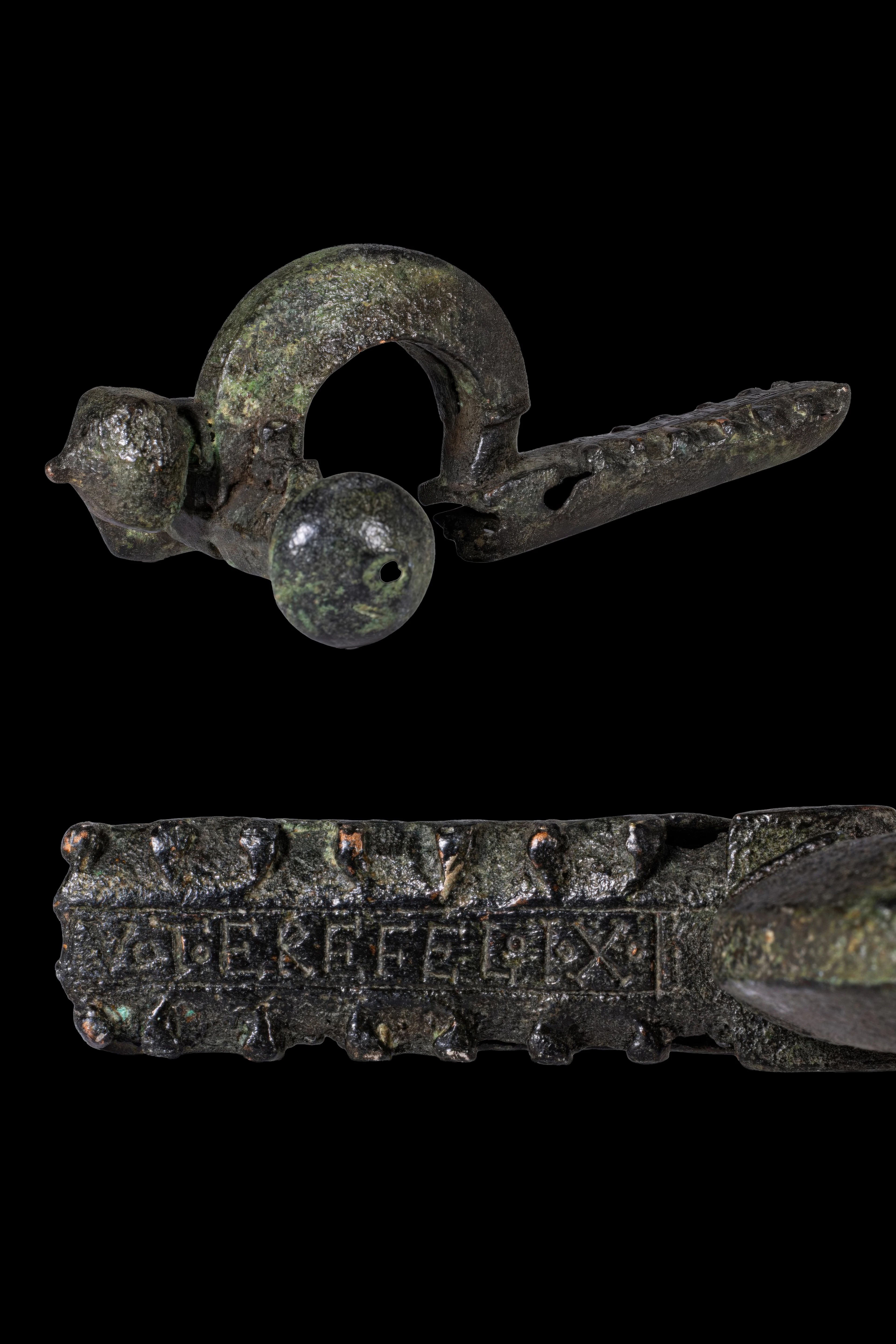
ROMAN LEGIONARY BRONZE BOW BROOCH WITH INSCRIPTION "VTERE FELIX"
10/04/2026

€707.04
Est. : €583.27
OCT 23 | 8:00 AM


OCT 27 | 4:00 PM


Présentez votre vente aux enchères à des collectionneurs du monde entier !
Soyez référencé dès maintenantEn vous abonnant, vous acceptez la politique de confidentialité. Désabonnez-vous à tout moment.
Barnebys HQ
Brahegatan 10
BOX 5038
114 37 Stockholm
