




Toutes les enchères / Médailles, armes & armures / Anonyme - Antiphonaire espagnol, parchemin enluminé - 1563

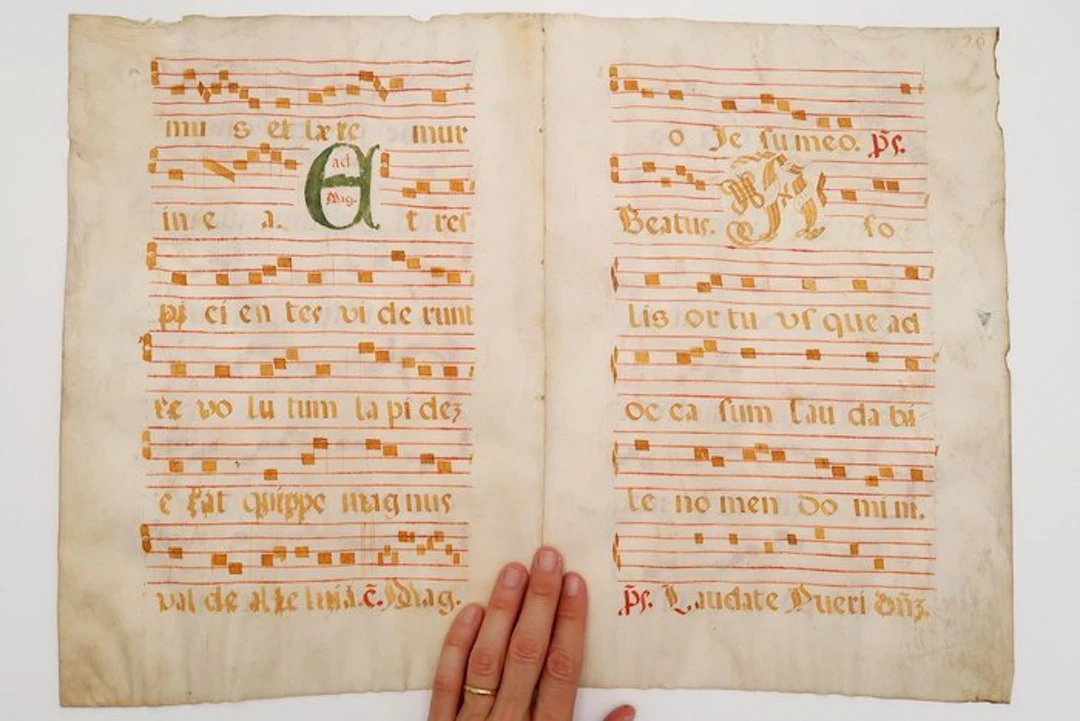
Two-page spread from a Spanish antiphonary, illuminated parchment, dated 1563 This double page, formed by a bifolium of parchment folded in two, offers four pages of chant notated. It measures about 41 by 29 centimeters when folded, i.e. folio format. An ancient foliation in Arabic numerals, at the upper corner of the leaf (the “26” is legible), attests that the bifolium belonged to a larger volume. The page is ruled with a pencil for a single column. Each line of text sits above a staff of four lines drawn in red ink. The notes, in square notation, are painted in ochre-brown. The text is written in Gothic rotunda, with a relatively ample module that allowed reading from a distance by several chanters gathered around a single lectern. The initials are painted in red and green. One of them, adorned with ribbons, is an example of “gifts,” those calligraphic intertwined initials typical of late Renaissance Iberian production. The text belongs to the Easter season. It includes the antiphon “Haec dies quam fecit Dominus,” the one for the account of the stone rolled away from the tomb (“revolutum lapidem”), as well as the antiphons for Vespers introducing the psalms “In exitu Israel” and “Laudate pueri.” The mention “ad Mag.” refers to the Magnificat, sung at the end of Vespers. It is thus pieces from the Divine Office, which structured the day for religious communities and cathedral chapters. An antiphonary gathers the chants of the hours, antiphons and responsories, classified according to the liturgical year or the sanctoral. The context is that of post-Tridentine Spain, after the Council and the Roman Breviary of 1568 standardized the liturgy. Spanish churches, however, continued to copy by hand by great singers, since printing music remained expensive. These monumental volumes remained in use throughout the Old Regime. Reuse of them was common: when obsolete or damaged, they were dismantled, and their bifolia served as covers for registries or were sold separately to collectors. The parchment, cream-colored and yellowed in places, bears the marks of time: irregular edges, humidity stains, grain visible on the flesh side.
Estimation:€150
Vers la vente aux enchèresVoir tous les objets deCatawikiouMédailles, armes & armures
Estimation:
€150
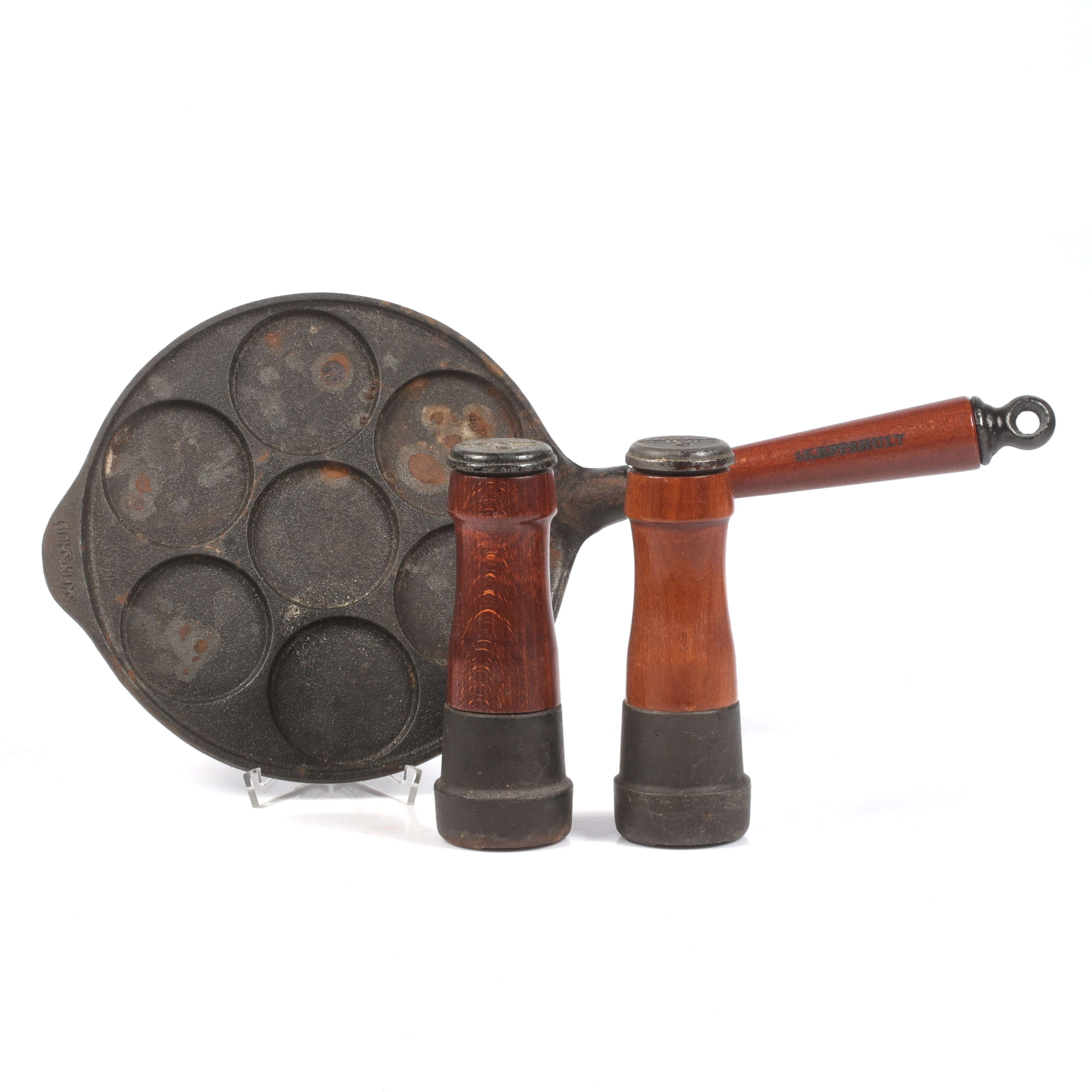
SKEPPSHULT, 3 delar, gjutjärn, 2000-tal.
10/09/2026
€26.77
Est. : €71.55
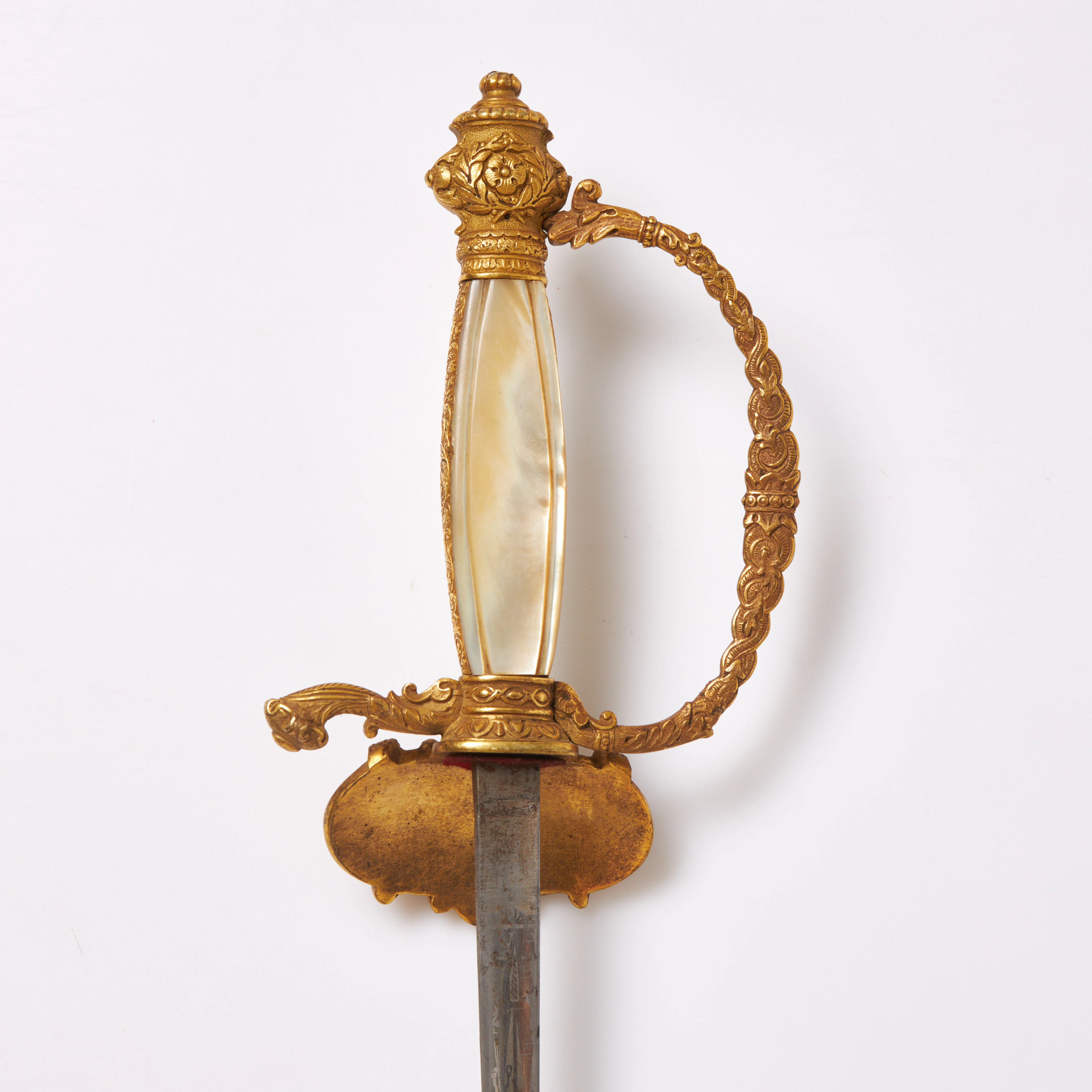
DRÄKTVÄRJA. S.k ämbetsmannavärja, kavelplattor i pärlemor, Sverige
10/09/2026
€251.35
Est. : €178.89
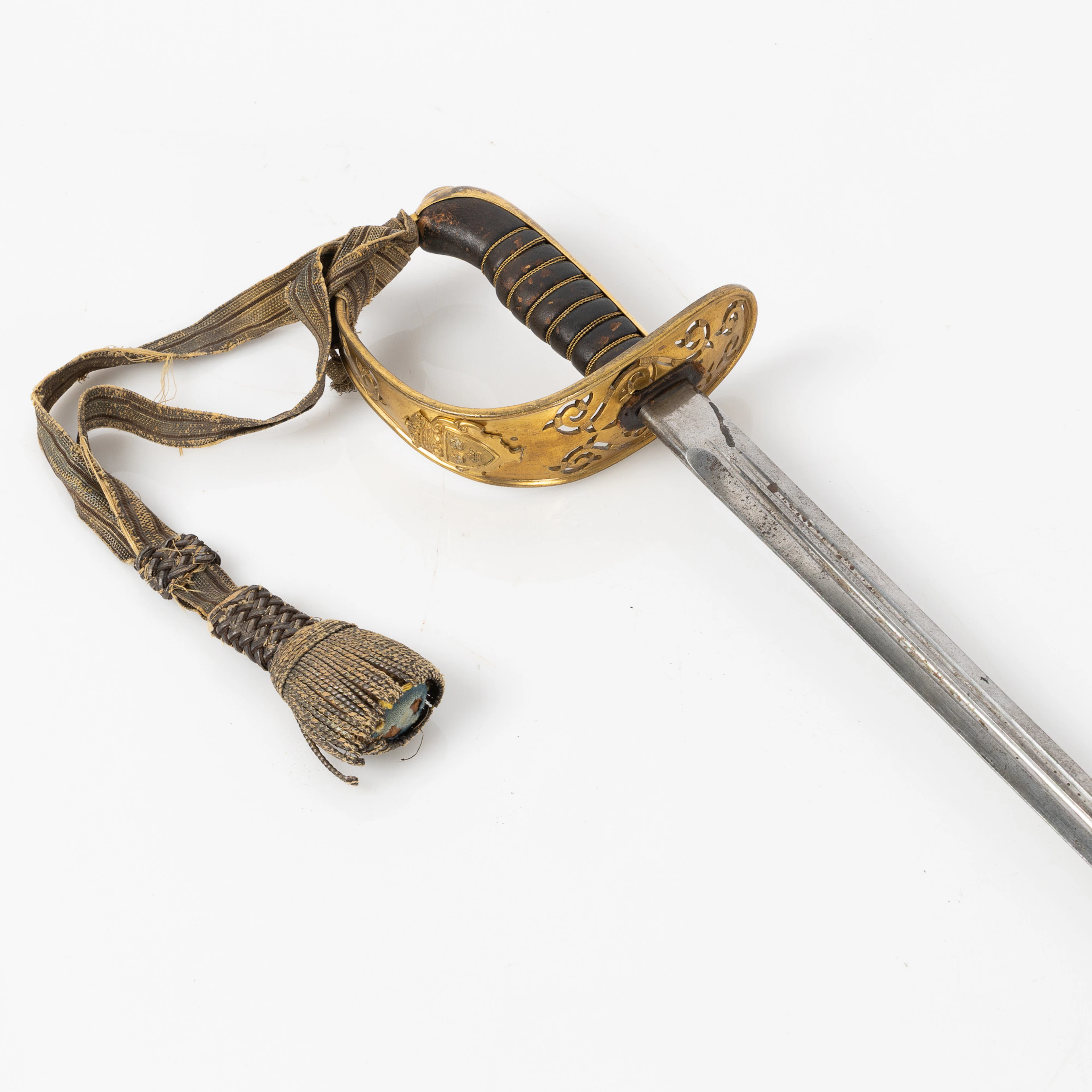
SABEL, m/1893, för officer, E Svalling Eskilstuna, Sverige.
10/09/2026
€151.73
Est. : €178.89
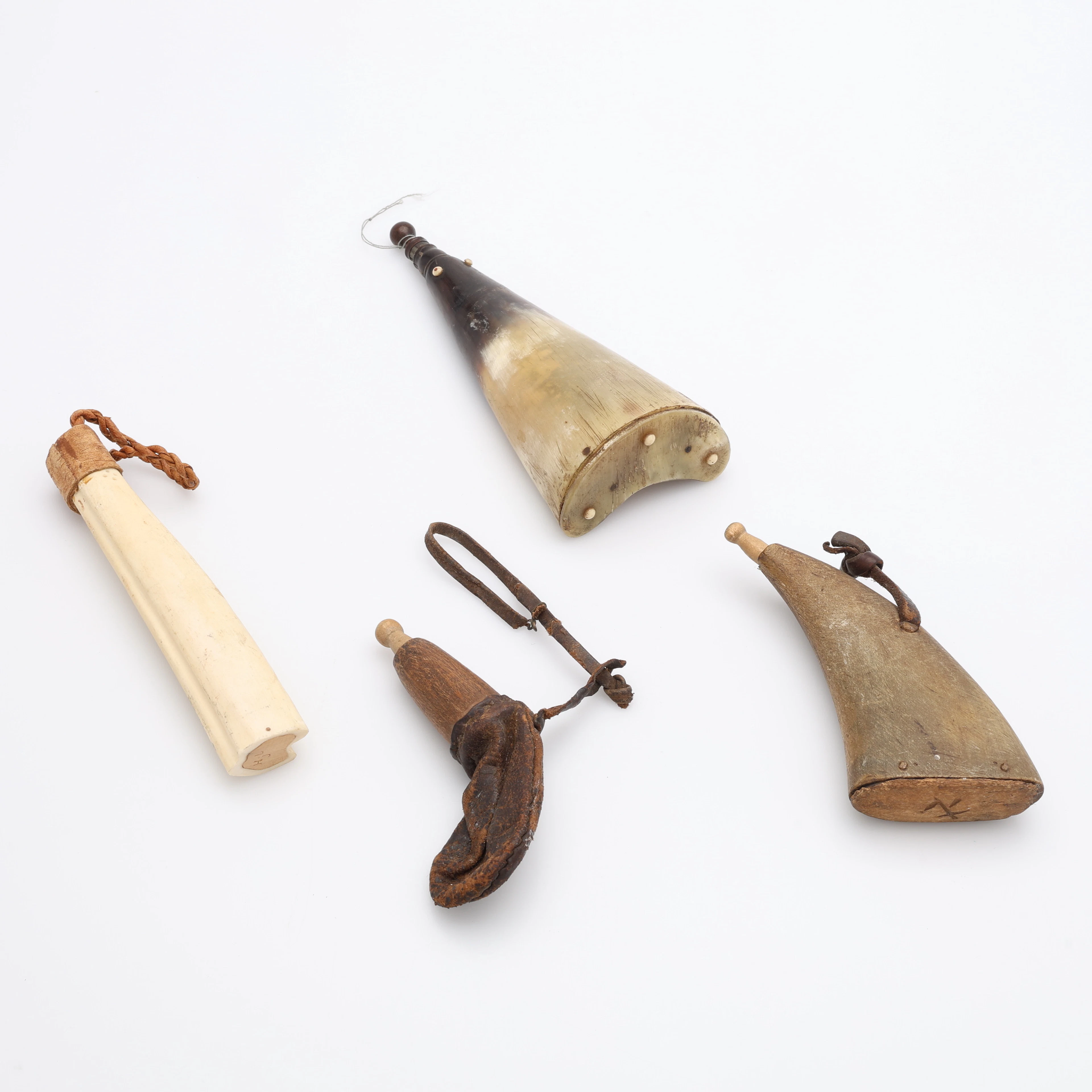
TVÅ KRUTHORN EN KULPÅSE SAMT NÅLHUS, BEN, HORN, LÄDER OCH TRÄ.
10/09/2026
€44.62
Est. : €71.55
Présentez votre vente aux enchères à des collectionneurs du monde entier !
Soyez référencé dès maintenantEn vous abonnant, vous acceptez la politique de confidentialité. Désabonnez-vous à tout moment.
Barnebys HQ
Brahegatan 10
BOX 5038
114 37 Stockholm
