



Toutes les enchères / Arts asiatiques / 19th C. Spanish Colonial Polychrome Wood Santo - Tonsured Friar-Saint

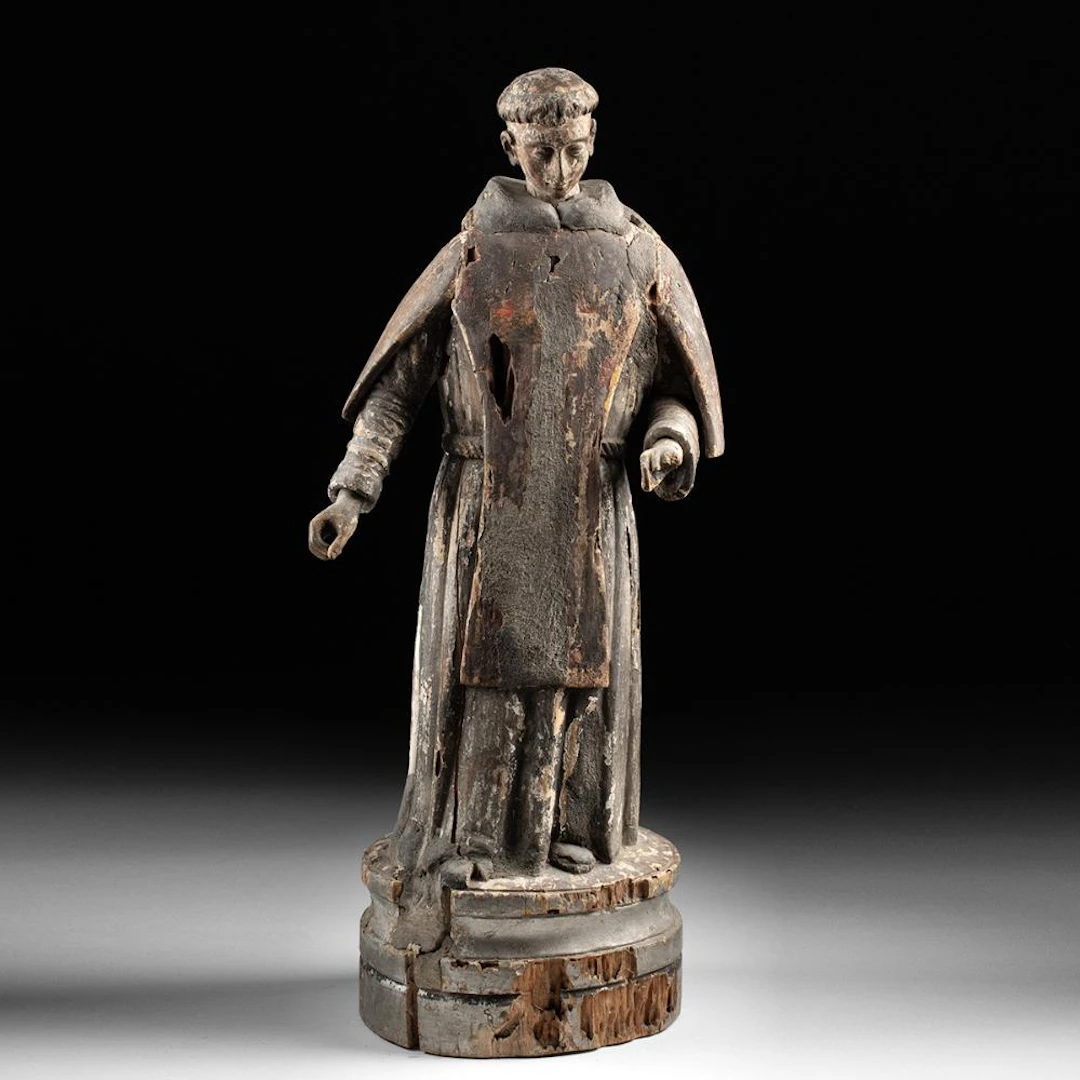
Southeast Asia, Philippines, Spanish colonial. A standing friar rendered in gessoed and polychromed hardwood, carved in the round atop an integral turned socle. The saint is beardless and youthful, his hair cut in a monastic tonsure, his features softened by generations of candle smoke and devotional handling. He wears a long belted habit gathered by a knotted cord, a hooded shoulder cape, and a broad scapular panel falling front and back, once painted red with a yellow cross and border. Both hands are open and pierced, suggesting lost attributes: a lily, a book, or the Christ Child. Such santos stood in domestic oratories and parish retablos across the Hispanic Pacific, where local carvers translated Iberian devotional models into island hardwoods for daily prayer rather than display. The tonsured, beardless, youthful friar with a scapular and cord cincture points to one of two saints carved in enormous numbers for colonial churches: San Nicolas de Tolentino, the Augustinian hermit usually shown with a star on his breast, a lily, and a book, or San Antonio de Padua, the Franciscan Doctor of the Church who cradles the Christ Child on a book and holds a lily. The surviving traces of a red panel with a yellow cross favor a scapular ornamented in the Augustinian manner, though repainting campaigns on colonial santos frequently altered such details. Santo carving in the Philippines was a guild craft practiced by Filipino and Chinese-mestizo escultores in Manila, Paete, and Betis, working in molave, batikuling, and santol. Figures were block-carved, coated in gesso, and finished in polychrome and estofado gilding, then dressed, garlanded, and processed on feast days. Their surfaces record that use: worn faces, secured hands, and successive layers of paint applied by the households that kept them. Item # 203886
Estimation:€401.39
Vers la vente aux enchèresVoir tous les objets deArtemis Fine ArtsouArts asiatiques
Estimation:
€401.39
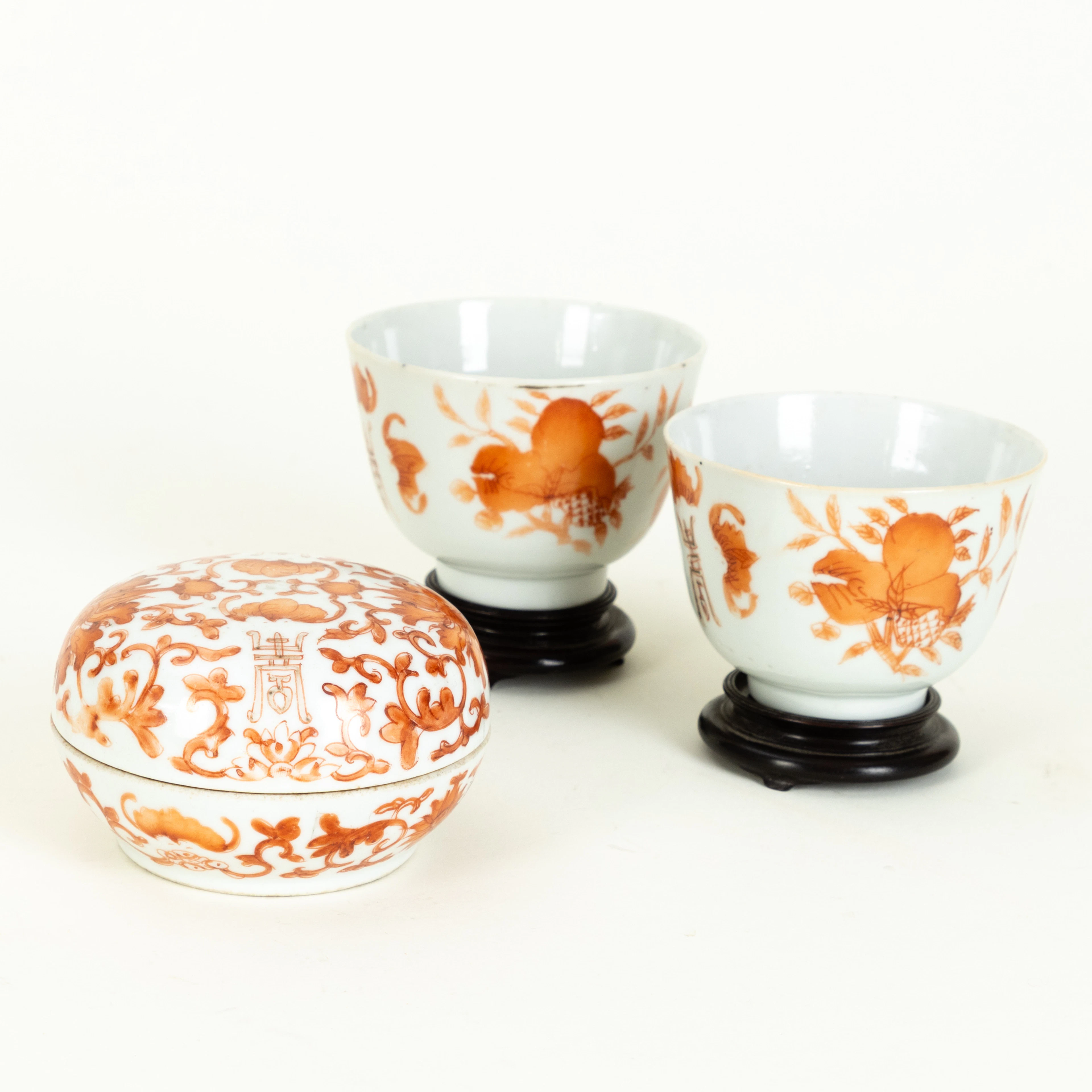
Zwei Teetassen, Tongzhi-Marke und eine Deckeldose, späte Qing-Dynastie
10/14/2026
€30
Est. : €100
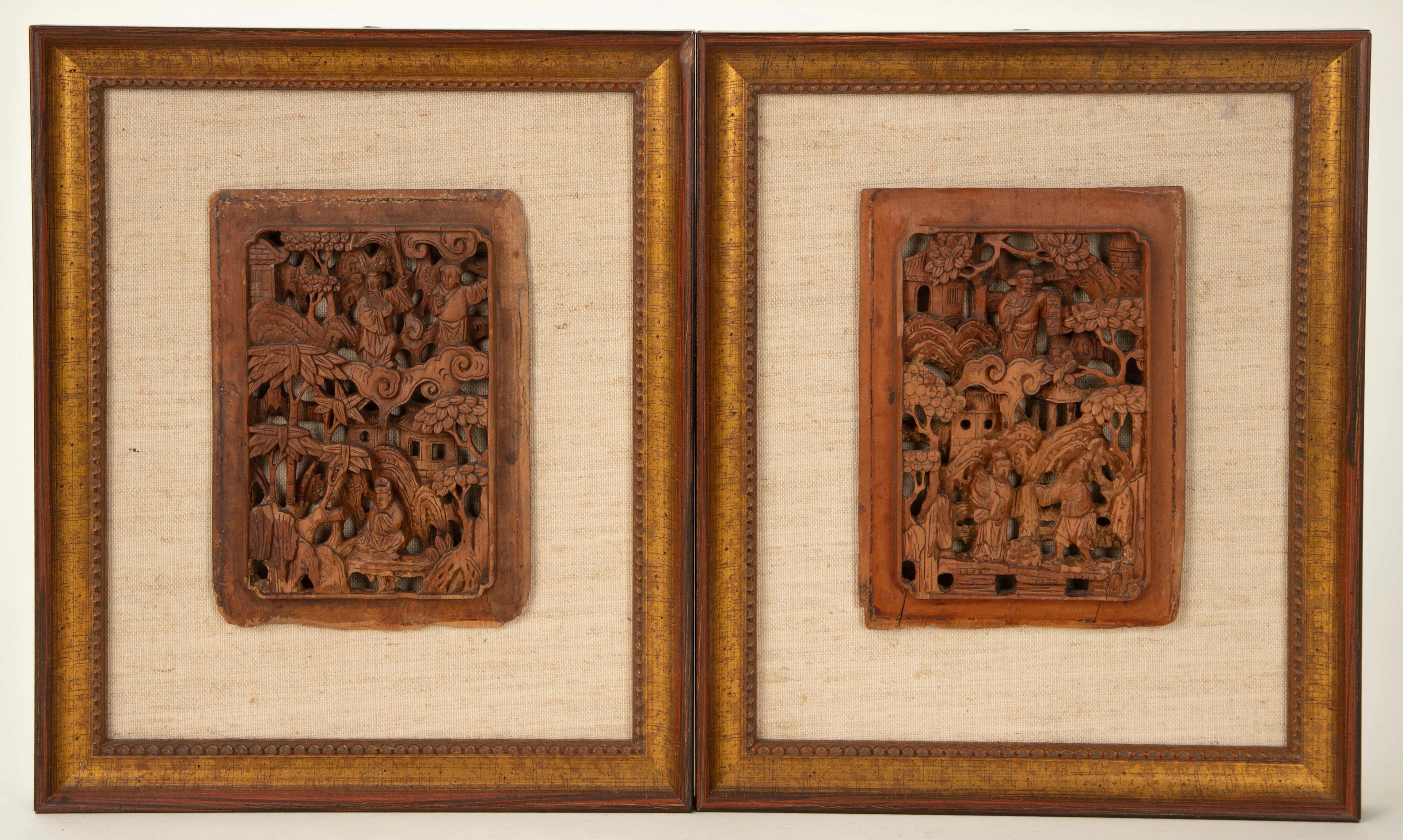
Zwei Reliefschnitzereien, China, Anfang 20. Jh. (2).
10/14/2026
€25
Est. : €100




OCT 23 | 8:00 AM
Présentez votre vente aux enchères à des collectionneurs du monde entier !
Soyez référencé dès maintenantEn vous abonnant, vous acceptez la politique de confidentialité. Désabonnez-vous à tout moment.
Barnebys HQ
Brahegatan 10
BOX 5038
114 37 Stockholm
